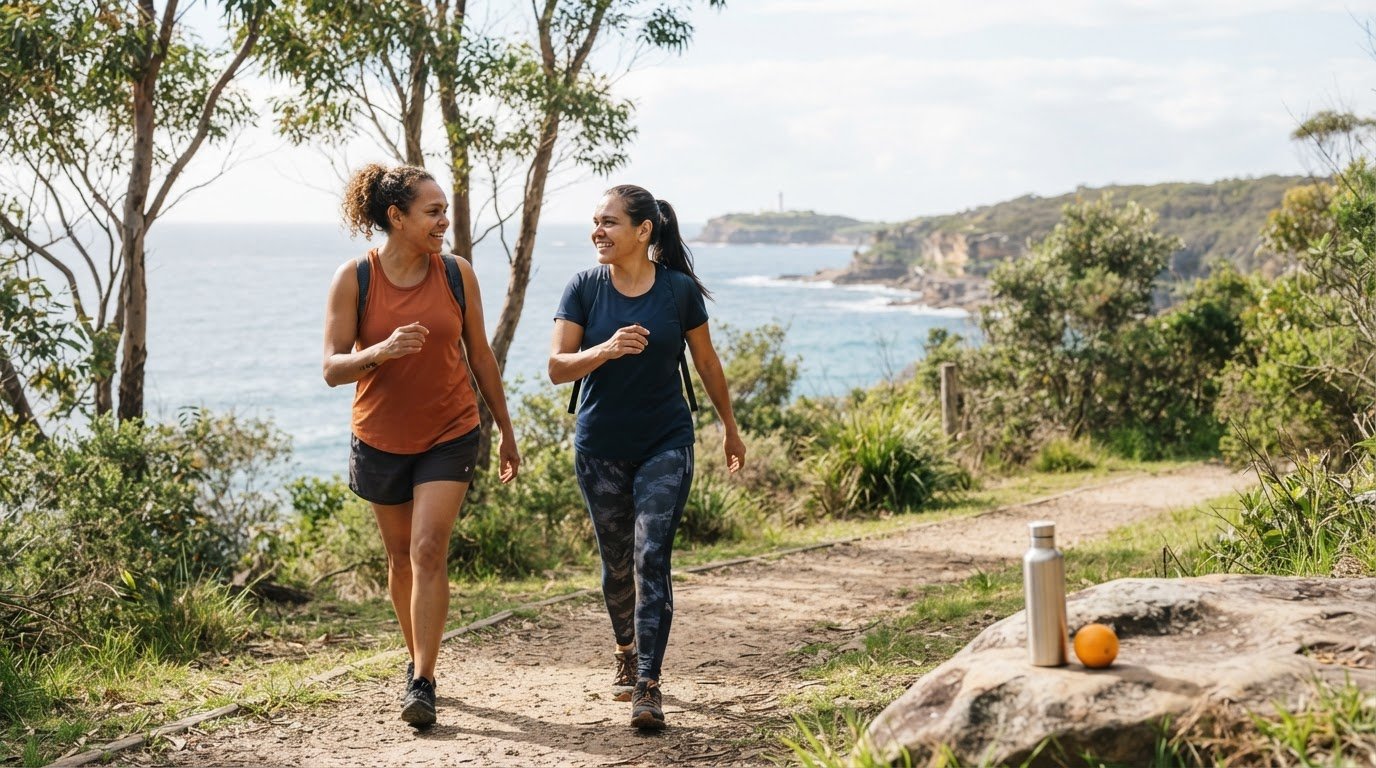
If you’re wondering how to start a weight loss journey, begin with a realistic target and a few manageable habits you can keep practising. The Centers for Disease Control and Prevention says losing 5% of your current body weight can be a starting goal, and recommends focusing on two or three goals at a time. Weight loss often has two stages: an earlier, faster phase followed by slower progress.
It’s understandable to look to the scales for proof that your efforts are working. But body weight alone can’t show whether a change comes from fat or other forms of weight, so a slower reading doesn’t automatically mean you’re failing. Focus on building a plan that supports steady progress, rather than chasing the quickest drop.
In this guide, you’ll learn how to set achievable goals, track progress beyond the scales, find support and respond to setbacks without giving up. You’ll also see how enjoyable movement and realistic routines can make your next steps easier to sustain.
Key Takeaways
- After a setback, return to your routine the next day and choose movement you enjoy enough to keep doing.
- The Centers for Disease Control and Prevention says losing 5% of your current body weight can be a starting goal; focus on a small number of manageable changes at once.
- Build a clearer picture of progress by recording a starting point and checking your weight or measurements once a week.
- Remember that scales can’t distinguish fat loss from other changes in body weight, so consider progress beyond the number alone.
1. Managing setbacks and choosing enjoyable activities
If you’re deciding how to start a weight loss journey, plan for interruptions as well as progress. A missed walk or an unplanned meal doesn’t erase earlier effort. Note what disrupted your routine, choose one manageable adjustment, then return to your plan the next day. A one-week food diary and a few days of tracking activity, sleep and stress can reveal patterns, such as late-night eating after poor sleep.
A consistent energy deficit can support weight loss, but the pace varies from person to person. Estimate your daily calorie needs using factors such as body size, age and activity level, then compare that estimate with your food and drinks. Your needs depend on these factors, so use the estimate as a planning guide.
For practical first steps at home, plan meals around vegetables, fruit and foods you enjoy, and record snacks and drinks. Add movement you can repeat, such as walking around your neighbourhood, gardening or cycling outdoors. Build towards 150 minutes of activity each week, split into shorter sessions if that suits your schedule. Include strength-training exercises twice per week.
How to start a weight loss journey in a lasting way also means choosing activity that fits your life. The Centers for Disease Control and Prevention recommends recording what you did, when and for how long. Use a calendar to notice consistency, not to judge every session. If motivation dips, make the next action smaller, such as taking a short walk after lunch.
To build habits that last, choose two practical actions, such as preparing lunch the night before and walking after work. Repeat them at a regular time, then review your notes each week. If a setback disrupts the routine, identify one barrier and adjust the plan. People who are overweight, over 40, or haven’t exercised regularly for a long time should check with a doctor before starting physical activity.
2. Setting achievable weight-loss goals
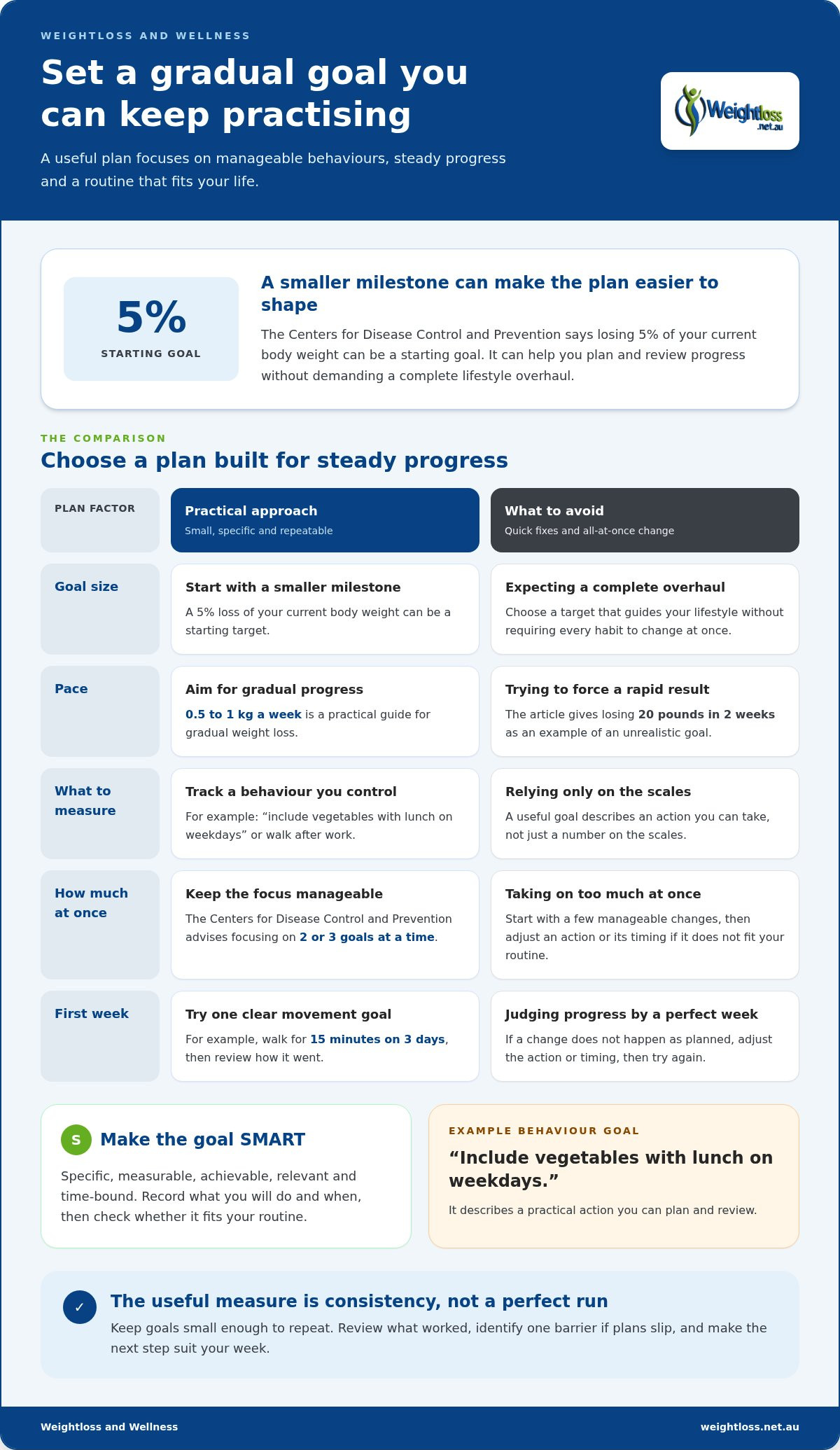
Choose a target that guides your lifestyle without demanding a complete overhaul. Losing 5% of your current body weight can be a starting goal, according to the Centers for Disease Control and Prevention. A smaller milestone can make progress easier to plan and review, especially if you’re currently overweight and unsure where to begin.
Make the goal SMART: specific, measurable, achievable, relevant and time-bound. Instead of “eat better”, try “include vegetables with lunch on weekdays”. For movement, set a clear action, such as walking after work or choosing swimming. Record what you’ll do and when, then review whether it fits your routine. A useful goal describes a behaviour you control, not just a number on the scales.
For gradual weight loss, a target of 0.5 to 1 kg a week is a practical guide. The Centers for Disease Control and Prevention gives losing 20 pounds in 2 weeks as an example of an unrealistic goal. Very rapid loss and very-low-calorie diets can make balanced nutrition harder to maintain; the risks depend on the approach and your health. Set a gradual target rather than trying to force quick results.
Keep short-term goals small enough to repeat. For example, walk for 15 minutes on 3 days during your first week, then review how it went. The Centers for Disease Control and Prevention advises focusing on two or three goals at a time. This helps you build habits alongside weight goals, such as eating fewer processed foods or planning meals before the week gets busy. If a change doesn’t happen as planned, adjust the action or timing, then try again. For practical support with everyday eating choices, explore healthy diet products.
3. Support from others and progress tracking
Choose one or two people who can encourage your efforts without policing your meals. Tell a friend or family member what support looks like, such as joining you for a walk or sharing a vegetable-rich lunch. If you feel hungry between meals, ask them to help plan filling options rather than criticise your choices. A health professional or structured weight-loss program can also offer guidance and accountability.
For a useful baseline, record your starting weight and body measurements. Then weigh or measure yourself once a week, rather than reacting to daily fluctuations. Keep a simple record alongside notes about exercise, activity and the habits you’re trying to change. This helps you spot patterns and recognise progress that a scale alone may miss, such as walking more consistently or feeling fitter during everyday tasks.
Make support practical. Arrange a regular check-in with someone you trust, and share one achievable action to focus on before your next conversation. For example, you might prepare vegetables for weekday lunches or schedule walks together. If motivation dips, review what helped you follow your plan previously and adjust the next step to suit your week. Support should help you stay engaged, not make food or weight a source of shame.
If you have concerns about your health or fitness, consider speaking with a health professional before starting physical activity. A GP can consider your health history and current activity level, including concerns such as heart disease, while primary care physicians like John Abroon M.D. emphasise comprehensive preventive health evaluations for ongoing wellness. A dietitian can help you plan eating habits around your preferences and routine, especially if you’re unsure how to meet your needs while losing weight. Bring your records and questions to make the conversation specific, such as how to increase activity safely or what to eat when you’re often hungry.
4. Fat loss versus overall weight loss
The number on a scale shows total body weight, not what changed. A standard scale can’t distinguish fat loss from changes in water, muscle or other body weight. So, a short-term drop doesn’t automatically mean you’ve lost body fat, and a steady reading doesn’t prove your efforts have stalled.
Water shifts can affect the number on the scale. For example, a low-carbohydrate diet can reduce the body’s stored water, causing an initial drop that isn’t all fat loss. Changes in eating, hydration and activity can also affect the reading. Look at the trend alongside your routines, rather than treating one weigh-in as a verdict.
Look at the broader picture: how clothes fit, whether everyday movement feels easier, and whether you’re maintaining strength while losing weight. A waist measurement can add context, but it doesn’t identify exactly what tissue has changed either. Wearables may help track physical activity, though their data doesn’t replace a direct measure of body composition.
This distinction matters because weight loss and fat loss aren’t interchangeable goals. If obesity, diabetes or another disease affects your health, discuss useful measures with your GP or dietitian. They can help interpret changes in context, including your health history and current plan. Friends can support habits such as preparing balanced meals, while planned snacks may help you follow an eating routine that suits you.
Use the scale as one tool, not the whole scorecard. Keep recording consistent measures and note changes in strength, energy and daily function. If you use health technology, explore wearable and health tech items to support activity tracking, while remembering that movement data doesn’t reveal fat loss on its own.
Weightloss and Wellness: Affiliate Products from Amazon, Walmart and others
Weightloss and Wellness offers affiliate products from Amazon, Walmart and others to help you find practical items for your routine. If you’re organising meals, healthy diet products may complement your eating plan; wearables and health tech items can help you record activity. Apparel and accessories can also support the everyday routines you’re building, while wellness brands like Nutrahara offer targeted supplements to support women’s everyday health needs.
Choose items to suit your goals and habits, rather than expecting a product to create lasting change on its own. A wearable, for example, can help you review movement patterns, while comfortable apparel may make planned activity easier to fit into your day. For your next step, visit Weightloss and Wellness.
Make your next step easier to repeat
Lasting change often starts with shaping your surroundings, rather than relying on motivation alone. Before your next shop or workout, decide what would make the routine you want to build easier. That might mean planning meals, setting out comfortable clothes or choosing a way to track your activity. If you’re weighing up how to start a weight loss journey, focus on one practical choice that makes tomorrow’s healthy action easier.
Weightloss and Wellness offers affiliate products from Amazon, Walmart and others, including healthy diet products and wearables and health tech items. These options can complement your personal plan, while the habits and decisions remain your own.
Explore the range and take a considered next step with Weightloss and Wellness. Choose what fits your routine, give it time, and keep moving forward at a pace you can sustain.
Frequently Asked Questions
What are the stages of losing weight?
Weight loss often has an early, faster stage followed by a slower, longer stage. The initial rapid change usually occurs within the first few weeks, and can include shifts in body water as well as fat. Later, the rate may ease as your body weight and routines change. Think of these stages as a reason to review your approach, not as a deadline for reaching a particular result.
What is the physiology of burning fat?
Fat loss occurs as your body uses stored energy over time. When energy intake is lower than energy used, the body draws on stored fuel; that doesn’t mean every change on the scale is fat. A low-carbohydrate diet, for example, can cause an initial loss of body water because less water is stored. A standard scale can’t identify which type of body weight has changed.
Which body part loses fat first?
There isn’t one body part that loses fat first for everyone. The order and visibility of changes vary, so exercises focused on one area shouldn’t be treated as a way to choose where fat comes off. For example, abdominal exercises can train those muscles, but the scale alone won’t show whether fat has changed around your waist. Track overall trends instead of expecting a specific area to change first.
What is a realistic and safe rate of weight loss per week?
A gradual target commonly used for weight loss is 0.5 to 1 kg a week. Your starting weight, health and ability to maintain changes all affect what is realistic for you. Avoid treating a faster drop as the measure of success: early scale changes can include water, particularly after changing carbohydrate intake. Focus on routines you can sustain, and discuss your plan with a GP if health concerns affect your approach.
How do you set a healthy weight-loss goal and track progress?
Choose a goal that combines an outcome with a behaviour you can control, such as planning lunches to support your broader weight goal. Record a baseline, then review your progress regularly alongside changes in your routines. If the plan repeatedly clashes with work, family or energy levels, adjust the action rather than abandoning the aim. A goal is useful when it helps you decide what to do next.
What foods and meal-planning habits support sustainable weight loss?
Build meals around a variety of foods from the Australian Guide to Healthy Eating’s five food groups. Plan meals that suit your preferences and weekly routine, rather than relying on a restrictive pattern that’s difficult to maintain. For instance, prepare a few lunch components ahead, then combine them in different ways. Including vegetables, fruit and filling options can help make everyday eating more balanced and practical.