
You don’t need a restrictive “PCOS diet” for nutrition to support weight loss. A balanced eating pattern that includes fibre-rich foods, protein and slower-digesting carbohydrates can help make changes more sustainable, while a 5% weight loss may improve insulin resistance, hormone levels and menstrual cycles. These PCOS weight loss tips focus on practical nutrition, not a one-size-fits-all plan.
If weight feels difficult to manage with PCOS, conflicting advice can be frustrating, especially when it seems to assume one food plan suits everyone. Insulin resistance is common with PCOS and can affect people at different body weights, so understanding how nutrition may support blood glucose and overall health matters beyond the number on the scales.
This guide explains how insulin resistance relates to PCOS, which food choices may support weight management, and what symptoms and associated health conditions are helpful to understand. The aim is a steady, informed approach that considers your health as a whole, not quick fixes or unnecessary food rules.
Key Takeaways
- Build meals around a balanced mix of fibre-rich foods, protein and slower-digesting carbohydrates rather than relying on a restrictive PCOS diet.
- Understand how insulin resistance can affect PCOS, and why regular physical activity may support health even when weight doesn’t change.
- Learn which symptoms and related health conditions are worth recognising, and why ongoing health checks matter.
- Explore how sleep, stress management and support from others can help make healthy habits easier to maintain.
Why is insulin resistance bad?
Insulin resistance can affect weight, hormone levels and long-term health with PCOS. Understanding these links helps explain why nutrition and exercise can support wellbeing beyond changes on the scales.
Insulin resistance and weight retention
Insulin resistance means the body’s cells respond less effectively to insulin, which helps move glucose from the blood into cells. The pancreas may then produce more insulin to compensate. Between 65 and 80 per cent of women with PCOS have measurable insulin resistance, regardless of body weight. Higher insulin levels can make weight management harder, while weight gain may further aggravate insulin resistance. This cycle can affect people at different weights, so the scales don’t tell the whole story.
Insulin and androgen levels
Insulin can influence androgen production, and higher insulin levels may prompt the ovaries to produce more androgens. Everyone produces androgens, but excess levels can contribute to PCOS symptoms. This connection matters because hormonal changes may appear as irregular periods, acne or increased hair growth, as well as weight changes. Addressing insulin resistance through consistent habits may support broader PCOS management, rather than focusing on weight loss alone.
Type 2 diabetes risk
Insulin resistance can raise the risk of developing type 2 diabetes because the body has more difficulty keeping blood glucose in a healthy range. People with PCOS have a 2-3 times greater risk of developing type 2 diabetes or pre-diabetes, including impaired glucose tolerance. This risk can remain relevant at a healthy weight, so ongoing health checks matter. Discussing blood glucose and other risk factors during routine care helps make monitoring part of a considered health plan.
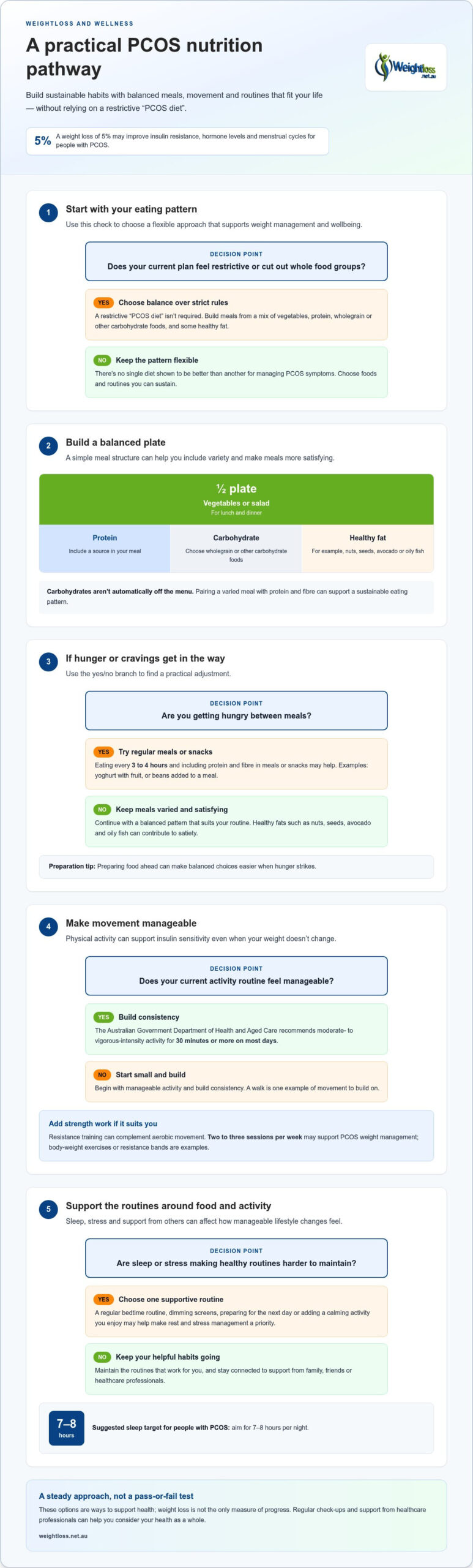
Exercise supports insulin sensitivity, including when weight doesn’t change. The Australian Government Department of Health and Aged Care recommends moderate- to vigorous-intensity physical activities for 30 minutes or more on most days. Resistance training can complement aerobic movement; two to three sessions per week may support PCOS weight management. For example, body-weight exercises or resistance bands can add strength work to a walking routine. Start with manageable activity and build consistency, rather than treating exercise as punishment for weight gain. These PCOS weight loss tips work best as part of a sustainable approach.
PCOS symptoms and associated health conditions
A weight loss of 5% may improve insulin resistance, hormone levels, menstrual cycles, fertility and quality of life for people with PCOS. This is a potential health benefit, not a measure of personal worth or the only way to support wellbeing.
Polycystic ovary syndrome is usually diagnosed when at least two of three features are present. Symptoms can include irregular periods, acne and excess hair growth; an ultrasound may show 20 or more small follicles. PCOS is also associated with other health concerns. People with PCOS are up to four times more likely to have irritable bowel syndrome, and high cholesterol, impaired glucose tolerance and type 2 diabetes remain relevant risks, even at a healthy weight. Regular check-ups help monitor these conditions as part of ongoing care.
How can you manage hunger and cravings? Try eating regularly every 3 to 4 hours, and include protein and fibre in meals or snacks. For example, pair yoghurt with fruit, or add beans to a meal. Preparing food ahead can make these choices easier when hunger strikes. Vegetables and salad can fill half your lunch and dinner plate, while a source of protein and some healthy fat can make meals more satisfying.
Healthy fats from foods such as nuts, seeds, avocado and oily fish can contribute to satiety within a balanced eating pattern. One study found that six months of omega-3 supplementation decreased lipid profiles and waist circumference in women with PCOS; supplements aren’t a substitute for a varied diet. Lifestyle changes can also support emotional wellbeing. Fertility concerns and unpredictable symptoms may affect mental health, so include trusted support in your plan. Jean Hailes recommends a strong support network, including healthcare professionals, family and friends, to help people make and maintain changes. A sustainable approach can support health without making weight loss the only way to achieve progress.
Is it difficult to lose weight with PMOS?
PCOS can make weight management challenging, but a restrictive plan isn’t the only approach. Sleep, stress, social support and sustainable nutrition can all affect how manageable lifestyle changes feel.
Sleep, stress and social support
Sleep and stress management support the routines that make dietary changes and physical activity easier to maintain. Aim for 7-8 hours of sleep per night, a suggested target for people with PCOS. A regular bedtime routine, such as dimming screens and preparing for the next day, can help make rest a priority. Stress may disrupt meal planning or activity, so build in a calming activity you enjoy. Support from family, friends or healthcare professionals can also help you stay connected to your goals; for instance, some individuals incorporate complementary wellness care such as acupuncture at Zhong Centre to aid stress reduction and overall balance.
Balanced eating for weight management
A balanced eating pattern can support weight management without requiring a named diet or cutting out entire food groups. Jean Hailes notes that no single diet has been shown to be better than another for managing PCOS symptoms. For weight loss, reducing overall food intake may matter more than following a particular eating style. Build meals with vegetables, a protein source, wholegrain or other carbohydrate foods, and some healthy fat. This offers variety and can help you choose foods you can sustain.
Individualised dietary management
An individualised approach adapts nutrition to your preferences, routine, health needs and response to foods. What works on a busy workday may differ from what suits a weekend, so notice which meals leave you satisfied and support steady energy. Prepare practical options, such as lentils, vegetables and grains for lunch, or fruit with yoghurt for a snack. Jean Hailes recommends experimenting with foods that work for you and preparing meals and snacks ahead. This can make consistency easier without rigid rules.
Fibre and weight management
Fibre-rich foods add texture and volume to meals and can help you feel satisfied. The suggested fibre intake for many women with PCOS is 25-30 grams per day, although individual needs vary. Include foods such as beans, lentils, oats, vegetables, fruit and wholegrain bread across the day. For example, add beans to soup or choose oats at breakfast. Increasing fibre through foods can support nutrition and glucose management as part of a balanced eating pattern.
Nutrition and weight loss with PCOS
For weight management with polycystic ovary syndrome, nutrition can help shape energy intake and support insulin sensitivity. A practical meal includes vegetables, protein, healthy fats and a portion of slower-digesting carbohydrates, such as oats, lentils or brown rice. This offers structure without a rigid list of foods.
Evidence doesn’t show that one specific diet is best for managing PCOS symptoms. Instead, focus on meals that are satisfying and realistic to repeat. Protein from eggs, tofu, fish or legumes, alongside fibre-rich vegetables, can make meals more filling. Very low-calorie diets may raise cortisol and worsen insulin resistance, so severe restriction isn’t a sound shortcut.
A study of 57 people with PCOS compared a high-protein diet with a standard diet. The high-protein group lost an average of 4.4 kilograms after six months. That finding describes one study, not a required protein target or a result everyone should expect. A clinician or dietitian can help assess nutrition needs alongside symptoms, medicines and health history.
Make changes manageable by planning one meal at a time. Add a protein source to breakfast, swap refined grains for slower-digesting options, or prepare vegetables and snacks in advance. These steps can reduce reliance on convenience foods when your schedule is busy. Notice how meals affect hunger, energy and routine, rather than judging progress by weight alone.
Seek medical advice if weight concerns are affecting your wellbeing, PCOS symptoms change, or you’re considering a restrictive diet or medical weight-loss treatment. A health professional can consider your health history, goals and risk factors, then help shape a safe plan. For ongoing support with weight-loss goals, explore medical weight-loss support.
Weightloss and Wellness: Affiliate Products from Amazon, Walmart and others
Weightloss and Wellness features affiliate products that may support practical routines alongside nutrition and activity changes. Its selection includes healthy diet products, wearables and health tech items, and apparel and accessories. For example, a wearable may help you track activity habits, while meal-planning products may make preparing balanced meals more convenient.
These items are tools, not substitutes for personalised medical advice or treatment, and featuring a product does not mean it is endorsed. Choose options that suit your needs and routine, rather than expecting any item to manage PCOS or guarantee weight loss. For practical resources to support your next steps, visit weightloss.net.au.
Make your next step one you can sustain
Choose one change that feels manageable in your current routine, then give yourself time to practise it. You might plan a balanced breakfast, prepare a snack before a busy day, or find an enjoyable way to move more. Small, repeatable choices can feel less overwhelming than trying to change everything at once.
Focus on wellbeing, not perfection. If you’re looking for practical tools for your routine, Weightloss and Wellness features affiliate products from Amazon, Walmart and others, including healthy diet products and wearables and health tech items. These resources can complement your plan, but they don’t replace personalised medical care, and their inclusion does not constitute product endorsement. The most useful PCOS weight loss tips are the ones you can adapt to your needs and maintain over time.
Explore the available products and take your next step at Weightloss and Wellness. Progress can begin with one thoughtful choice, and you can build from there.
Frequently Asked Questions
Can nutrition help with PCOS?
Yes, nutrition can support PCOS management by helping you build regular, nourishing meals that suit your routine. For example, pair wholegrain toast with eggs and tomato, or add chickpeas to a salad for a more filling lunch. Don’t treat food as a cure or use severe restriction. This information is for reference only, not medical advice. Consult your doctor before changing your diet or starting a weight-loss programme.
What foods should I avoid with PMOS?
There isn’t one food everyone with PCOS needs to avoid. Rather than banning whole food groups, consider having refined, highly processed options less often, such as sugary drinks or lollies, and include filling alternatives such as fruit, unsalted nuts or wholegrain foods. Individual needs and preferences matter, so notice how different meals fit your energy, hunger and daily routine.
What type of physical activity is best?
The best activity is one you can make part of your regular routine. Walking, cycling, swimming and dancing provide aerobic movement; strength exercises such as squats or resistance-band rows can complement them. If structured workouts feel difficult, everyday movement, such as walking to the shops, counts too. Choose activities you enjoy and vary them to keep movement engaging and sustainable.
Why is stress reduction essential with PCOS?
Reducing stress may make it easier to maintain routines around meals, sleep and movement, especially when PCOS symptoms feel demanding. Try a short walk, slow breathing or a calming activity after a stressful day. If worries about symptoms, body image or fertility are difficult to manage, talk with someone you trust or seek support from a health professional. Stress care is part of wellbeing, not a test of willpower.
What diet patterns help with weight loss and PCOS?
A balanced, varied eating pattern is a practical starting point; no single named diet suits everyone with PCOS. Build meals from foods you enjoy, such as vegetables, lentils, eggs, fish, wholegrain bread or rice, and yoghurt. Planning a few familiar meals can make dietary changes easier to repeat. Consider taste, budget, culture and routine so your approach remains realistic over time.
What exercise plan is recommended for weight loss with PCOS?
Australian guidance recommends moderate- to vigorous-intensity physical activity for 30 minutes or more on most days. You can break movement into shorter bouts, such as a brisk walk before work and another later. Add strength exercises, such as a simple body-weight circuit, on separate days. Start at a manageable level and build up as your fitness and confidence develop.