
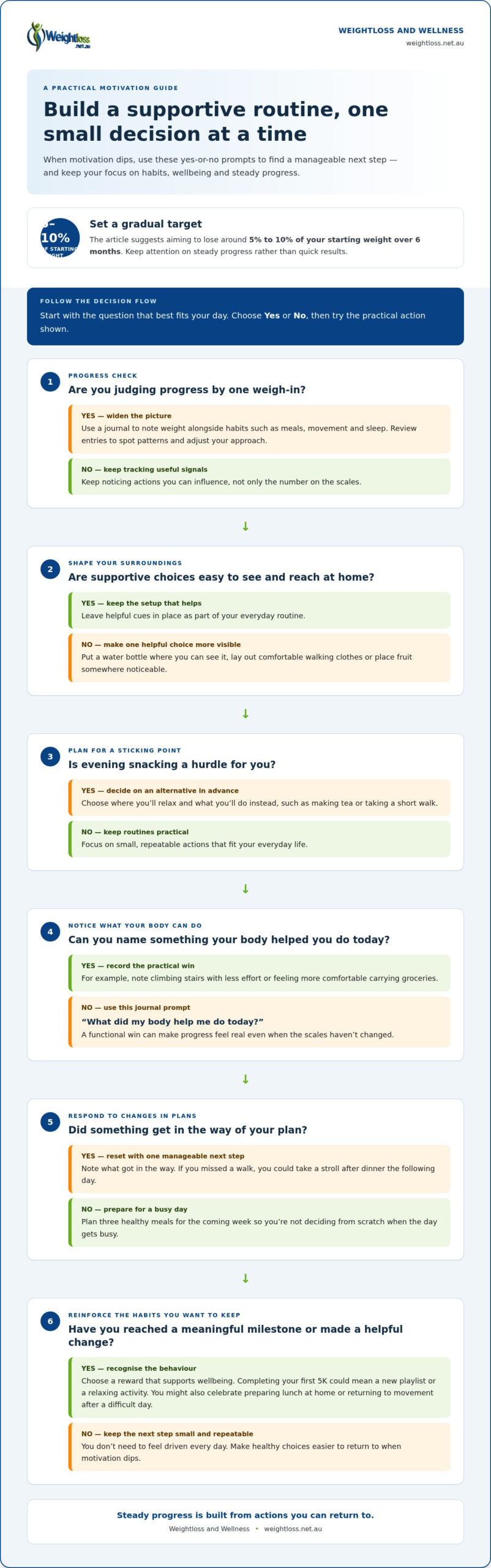
Healthier weight loss motivation strategies combine a supportive environment, movement you enjoy, meaningful personal inspiration and goals centred on long-term wellbeing. A gradual target, such as losing around 5% to 10% of your starting weight over 6 months, can help keep the focus on steady progress rather than quick results. Small, repeatable actions make the process easier to return to when motivation dips.
It’s understandable to seek motivation when progress feels slow or routines become difficult to maintain. Lasting change doesn’t depend on feeling driven every day. It can grow from making healthy choices more manageable and noticing what your body can do along the way.
This article explores practical ways to shape your surroundings, find enjoyable activity, draw on personal inspiration and set goals that support wellbeing beyond the number on the scales. Adapt these ideas to your circumstances and build a routine that feels sustainable, not punishing.
Key Takeaways
- Make healthy choices easier by adjusting your surroundings and noticing what your body can do, not only how it looks.
- Choose movement that suits your interests and use an encouraging role model to help you stay engaged.
- Experiment with enjoyable ways to be active so movement can become a natural part of your routine.
- Set wellbeing goals beyond the scales, then focus on small, repeatable actions that support them.
1. Changing the environment and appreciating body function
Set a realistic weight-loss goal by aiming to lose around 5% to 10% of your starting weight over 6 months. Track progress in a journal, noting weight alongside habits such as meals, movement and sleep. Reviewing these entries helps you spot patterns and adjust your approach instead of judging progress by one weigh-in. Practical weight loss motivation strategies can include tracking actions you can influence, not just the number on the scales.
Make supportive choices easier by changing what you see and reach for at home. Keep a water bottle visible, lay out comfortable walking clothes or place fruit where you’ll notice it. If evening snacking is a hurdle, decide in advance where you’ll relax and what you’ll do instead, such as making tea or taking a short walk. These weight loss motivation strategies work best when they fit your everyday routines.
Notice what your body helps you do, not only how it looks. After a walk, record a practical win, such as climbing stairs with less effort or feeling more comfortable carrying groceries. These observations can make progress feel real even when the scales haven’t changed. Try this simple journal prompt: “What did my body help me do today?”
Celebrate behaviour changes and meaningful milestones with rewards that support your wellbeing. Completing your first 5K could be a reason to choose a new playlist or enjoy a relaxing activity. You might also celebrate preparing lunch at home or returning to movement after a difficult day. Recognising these actions reinforces routines you want to continue.
Prepare for setbacks before they happen. Plan three healthy meals for the coming week so a busy day doesn’t leave you deciding from scratch. If your plans change, note what got in the way and choose one manageable next step. Missing a walk, for example, could prompt a stroll after dinner the following day.
2. Choosing enjoyable exercise and finding a role model
Choose movement that fits your interests, schedule and current routine. If you enjoy music, try dancing at home; if you like fresh air, take a walk. Test a few options and notice which leave you feeling energised rather than dreading the next session. A realistic plan might pair a short walk after work with a weekend activity you genuinely look forward to.
Use this as a broad guide, not a weekly test you must pass. A longer-term approach gives you space to practise habits such as regular movement and balanced meals, rather than relying on restrictive bursts that are hard to maintain.
A useful role model doesn’t need to be a celebrity or have a particular body shape. Choose someone whose actions you respect, such as a friend who makes time for a walk or an athlete who speaks openly about persistence. Focus on their routines and mindset, not their appearance. You could borrow one practical idea, such as laying out walking shoes the night before.
Sleep, stress and social support can affect how manageable healthy routines feel. A late night may make a planned morning walk harder, while a stressful day can disrupt meal planning. Try keeping a consistent bedtime and asking a friend to join you for a walk. Shared plans can add structure and encouragement, and community-focused personal training studios such as tryumphfitness.com illustrate how structured coaching and positive accountability can help sustain momentum.
Choose a sustainable approach to eating that fits your preferences and everyday life. Build meals around foods you enjoy, and plan simple options for busy evenings, such as adding vegetables to a familiar meal. Don’t make a rigid menu your only measure of success. Instead, notice whether your choices are satisfying and practical to repeat.
If home workouts suit your schedule, home exercise equipment can help make movement more accessible. Choose an activity you’re comfortable doing, then set a modest routine you can revisit consistently.
3. Finding enjoyable physical activity
Enjoyable movement is easier to return to than exercise chosen only for its calorie burn. Think about what makes an activity appealing: company, music, scenery or a sense of progress. A coastal walk, dancing to a favourite playlist or gardening can all add movement to your day. Try different options and notice which ones fit your energy, interests and routine.
Make activity convenient. If a park is on your usual route, plan a walk there after work. If rain makes outdoor plans less appealing, keep a simple indoor option ready, such as following a dance routine at home. A wearable activity tracker can help you notice patterns, such as which days naturally include more walking. Use that information to plan movement around your real life, rather than chasing a perfect schedule.
Dog walking can turn a daily responsibility into an opportunity for regular activity. People living with a dog for one month walked an average of 2,589 additional steps per day compared with people who didn’t have a dog. If you have a dog, make walks more engaging by varying the route or letting your dog explore new surroundings. If you don’t, you can still borrow the idea: connect a walk with a pleasant destination, such as a favourite local park.
Focus on the experience, rather than trying to make every session harder. Notice whether you enjoy the route, feel more alert afterwards or look forward to doing it again. If an activity feels like a chore, change one element: choose a different setting, invite a walking companion or switch to music. These small adjustments can help you find movement that feels rewarding in its own right and becomes a more natural part of everyday life.
4. Focusing on long-term wellness rather than a target weight
A number on the scales can’t capture every change that matters. Set goals around how you want to feel and function, such as sleeping more consistently or having stamina for a family outing. A review in the International Journal of Behavioral Nutrition and Physical Activity found that internally driven weight goals may be more likely to support lasting change. Connect your goal to a personal reason that matters beyond appearance.
Choose process goals you can practise, then review how well they fit your life. Examples include exercising four times a week or eating a vegetable with each meal. These actions give you something meaningful to work towards when your weight stays steady. Weight loss motivation strategies can focus on behaviours that support wellbeing, instead of making every week’s progress depend on the scales.
Exercise can matter for health even when weight doesn’t change. A study of more than 3,400 participants found exercise had a positive effect on health, including reduced heart disease risk, without weight loss. Use that perspective to recognise the value of movement for its own sake, such as feeling more capable during everyday tasks.
When progress plateaus, keep the routines that support your wellbeing and review what’s working. If a setback disrupts your plans, don’t treat it as failure. Choose one manageable next action, such as preparing your next meal or returning to your usual routine tomorrow. This is one of the weight loss motivation strategies that can stop a temporary disruption from defining your progress.
To avoid all-or-nothing thinking, replace “I’ve ruined the day” with a practical reset, such as preparing your next meal. To find affordable support in Australia, compare group-based, online and self-guided options, considering their fees, inclusions and ongoing costs.
Seek medical advice before changing your eating or activity routine if you have a health condition, take regular medicines, have mobility concerns or have had bariatric surgery. Share your intended changes with a health professional so they can consider your circumstances. For products that may support your routine, explore wellness options.
Weightloss and Wellness: Affiliate Products from Amazon, Walmart and others
Weightloss and Wellness features affiliate products from Amazon, Walmart and other retailers to help you find practical items for your wellness routine. If you’re putting the ideas in this article into action, explore healthy diet products, wearables and health tech, or apparel and accessories for everyday use. A wearable, for example, may help you track activity, while comfortable apparel can make it easier to get ready for a planned walk.
Choose items that support habits you’ve already decided to build, rather than expecting a product to create motivation on its own. A useful next step is to identify what would make your routine more convenient, then explore relevant options at your own pace.
Visit Weightloss and Wellness online to explore products for your wellness routine.
Choose a next step that fits your life
Progress can begin with a decision small enough to repeat. Choose one action that feels relevant this week, such as planning a regular walk or making a simple meal plan, then notice what helps you follow through. If it doesn’t fit your routine, adjust the action instead of treating the change as failure. This flexible approach helps you learn from everyday experience and shape weight loss motivation strategies around your needs, preferences and priorities.
You don’t have to make every decision at once. Start with what would make your next step easier, and build from there at a pace you can sustain. For product options that may support your personal wellness routine, connect with Weightloss and Wellness. Keep moving forward with patience: consistent choices can create a steadier path towards the wellbeing you value.
Frequently Asked Questions
What are evidence-based strategies for staying motivated during weight loss?
Use specific plans and regular reflection to make healthy actions easier to repeat. For example, write, “If I finish work late, I’ll prepare the simple dinner I planned,” then note whether the plan worked. This helps you identify practical obstacles and adjust your approach instead of relying on motivation alone. Focus on actions you can influence, such as planning meals or choosing an activity.
How can I build healthy eating and exercise routines that last?
Start with manageable habits that fit your daily schedule, such as preparing lunch while making dinner or walking during a regular break. Link each new action to an existing routine, then adapt it if work, family or energy levels change. Weightloss and Wellness content is for reference only, not medical advice or product endorsement. The site contains affiliate links and may earn a commission at no extra cost to you. The site provides informational content, not product sales. Consult a doctor before changing your diet or starting a weight-loss programme.