
The most useful anti-inflammatory diet isn’t a strict list of forbidden foods. It’s an eating pattern built around vegetables, fruit, wholegrains, legumes, nuts, seeds, fish and healthy oils, with fewer highly processed foods, sugary drinks and processed meats. Mediterranean-style eating is one practical way to put that pattern into practice.
If choosing foods feels confusing, you’re not alone. Advice can sound like a long list of rules. Instead, focus on what you can add to meals, then make changes gradually. This guide explains which foods and nutrients feature in an anti-inflammatory diet, what to limit and how Mediterranean-style eating can help you make informed, manageable choices.
Key Takeaways
- Build meals around vegetables, fruit, wholegrains and other minimally processed foods, then make changes gradually.
- Use Mediterranean-style eating as a practical pattern, with healthy oils, legumes, nuts and seeds among the foods to explore.
- Learn how omega-3 fats, fibre, magnesium and antioxidants contribute to a varied eating pattern.
- Choose swaps that suit your needs and routine rather than following a rigid list of foods to avoid.
1. What are the best anti-inflammatory diet foods?
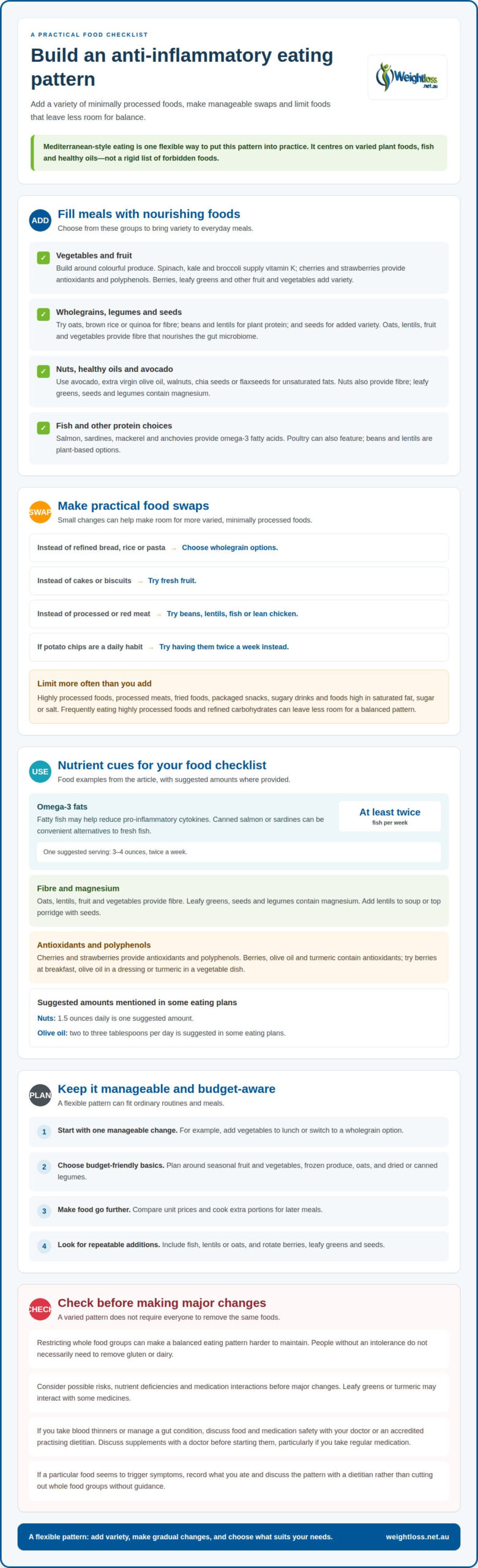
Build meals around colourful vegetables, fruit, wholegrains, legumes, nuts, seeds and unsaturated fats. Spinach, kale and broccoli supply vitamin K, while cherries and strawberries provide antioxidants and polyphenols. Add oats, brown rice or quinoa for fibre, and beans or lentils for plant protein. These nutrient-dense foods support a varied eating pattern without restrictive rules.
For healthy fats, choose avocado, extra virgin olive oil, walnuts, chia seeds or flaxseeds. Salmon and sardines provide omega-3 fatty acids, which may reduce pro-inflammatory cytokines. Nuts also offer unsaturated fats and fibre; one suggested amount is 1.5 ounces daily. Olive oil can flavour vegetables, grain bowls and dressings, with two to three tablespoons per day suggested in some eating plans.
For a practical swap, choose wholegrain bread, rice and pasta instead of refined options. Have fresh fruit instead of cakes or biscuits, and try beans, lentils, fish or lean chicken in place of processed or red meat. Limit processed meats, fried foods, packaged snacks, sugary drinks and foods high in saturated fat, sugar or salt. Frequently eating highly processed foods and refined carbohydrates can leave less room for a balanced pattern. Alcohol may also disrupt the gut barrier and affect sleep.
Consider possible risks, nutrient deficiencies and medication interactions before making major changes. Restricting whole food groups can make a balanced eating pattern harder to maintain, and people without an intolerance don’t necessarily need to remove gluten or dairy. Leafy greens or turmeric may interact with some medicines. If you take blood thinners or manage a gut condition, discuss food and medication safety with your doctor or an accredited practising dietitian.
2. Mediterranean-style eating and inflammation
Mediterranean-style eating is flexible, not a rigid menu. It centres on fruit and vegetables, wholegrains, legumes, nuts, seeds, fish and healthy oils. Poultry can also feature, while highly processed foods are eaten less often. The DASH diet likewise emphasises produce and limiting ultra-processed choices, so both patterns offer practical ideas for everyday meals.
Research suggests these eating patterns may help with inflammation. A study published in Nutrients found that older adults following a Mediterranean eating plan for six months had lower levels of inflammatory markers in their blood. This finding describes a group, not a guaranteed result for every person or a treatment for disease. The useful takeaway is the overall pattern: combine varied plant foods with fish and unsaturated fats.
To follow this approach on a budget in Australia, plan meals around seasonal fruit and vegetables, frozen produce, oats, and dried or canned legumes. Compare unit prices and cook extra portions for later meals. An accredited practising dietitian can help adapt food choices to your health needs and budget.
A simple one-week example can make this eating pattern easier to picture:
- Monday: Porridge with fruit, then lentil soup with wholegrain bread.
- Tuesday: Vegetable and bean bowl with brown rice.
- Wednesday: Oats at breakfast, then salmon with frozen vegetables.
- Thursday: Chickpea curry with vegetables and wholegrain rice.
- Friday: Wholegrain toast, then a bean and vegetable pasta.
- Saturday: Fruit with breakfast, then roast vegetables and chicken.
- Sunday: Leftover vegetables and legumes in a grain bowl.
Start with one manageable change, such as adding vegetables to lunch or switching to a wholegrain option. If a particular food seems to trigger symptoms, record what you ate and discuss the pattern with a dietitian instead of cutting out whole food groups without guidance.
For broader routine-building, you can explore wearable health technology options alongside your food choices.
3. Omega-3 fatty acids, magnesium, fibre and antioxidants
Fatty fish supplies omega-3 fatty acids, which may help reduce pro-inflammatory cytokines. Salmon, mackerel and anchovies are examples; aim to include fish at least twice per week. One suggested serving is 3 to 4 ounces, twice a week. If fresh fish doesn’t suit your routine, canned salmon or sardines can be convenient alternatives. They also work in sandwiches, salads or grain bowls.
Plant foods provide other useful nutrients. Leafy greens, seeds and legumes contain magnesium, which helps regulate nerve and muscle function. Oats, lentils, fruit and vegetables supply fibre that nourishes the gut microbiome, which plays a role in inflammation control. Try adding lentils to soup or topping porridge with seeds. These small additions increase variety without relying on supplements.
Berries, olive oil and turmeric contain antioxidants that may protect nerves from oxidative stress and support immune balance. Add berries to breakfast, use olive oil in a dressing, or season a vegetable dish with turmeric. Walnuts, chia seeds and flaxseeds contribute healthy fats, and nuts also provide fibre. Eating a variety of fruit, vegetables, seeds and nuts brings different nutrients to meals.
Fish oil has been studied for possible effects on joint tenderness, morning stiffness and disease activity in rheumatoid arthritis. However, higher doses may interact with some medicines, including those for high blood pressure. Discuss supplements with a doctor before starting them, particularly if you take regular medication. Foods such as salmon can be part of your meals, but they are not a replacement for prescribed care.
Focus on choices you can repeat. Add fish to a meal twice weekly, include lentils or oats for fibre, and rotate berries, leafy greens and seeds. If potato chips are a daily habit, try having them twice a week instead. These practical steps make nutrient-rich foods a more consistent part of your eating pattern, alongside fewer processed foods.
4. What an anti-inflammatory diet involves
An anti-inflammatory diet is an overall eating pattern, not a strict menu or a list of foods everyone must avoid. It prioritises minimally processed foods, including vegetables, fruit, wholegrains, legumes, nuts, seeds, lean protein, fish, herbs and healthy oils. The balance matters more than any single ingredient. Individual triggers and symptoms differ, so the same food may not suit everyone.
Use a simple plate to guide everyday choices: fill half with vegetables, then leave room for protein and grains. For example, pair roast vegetables with lentils and brown rice, or serve fish with greens and quinoa. Choose wholegrains more often than refined options, and season meals with garlic, rosemary or turmeric. This makes the eating pattern practical without elaborate recipes.
Start reducing highly processed foods with one routine swap. Replace a packaged snack with fruit and nuts, or choose water instead of a sugary drink. Check ingredient lists on packaged foods, as products with several ingredients can still be made from whole foods. There’s no general need to remove gluten or dairy without a known intolerance. If you suspect certain foods affect you, keep a simple food-and-symptom record instead of restricting several groups at once.
Consistency comes from changes that fit your meals, budget and preferences. Add an extra vegetable to a familiar dish, use beans in a mince recipe, or cook additional brown rice for another meal. Chronic health conditions and medicines can affect what suits you, so an accredited practising dietitian can help tailor food choices. If you’d like to complement meal planning with a broader wellness routine, explore wearable health technology.
Weightloss and Wellness: Affiliate Products from Amazon, Walmart and others
Weightloss and Wellness can help you find practical products to support the routines discussed in this guide. Explore healthy diet products for meal planning, or wearables and health tech items to help you keep track of everyday activity. Apparel and accessories may also suit your personal wellness routine.
Use this information as reference material only. It is not medical advice, and the site’s opinions do not constitute product endorsement. Consult your doctor before changing your diet or beginning a weight-loss program. The page contains affiliate links, and Weightloss and Wellness may earn a small commission at no extra cost to you.
Visit weightloss.net.au to explore Weightloss and Wellness’ product range and find options that fit your next steps.
Make your next step manageable
A lasting change doesn’t need to begin with a complete overhaul. Choose one adjustment that fits your usual meals, such as adding a vegetable to lunch or planning a simple breakfast ahead. Keep it realistic enough to repeat, then notice what makes it easier to maintain. That steady approach can help an anti-inflammatory diet become part of everyday life rather than a short-lived set of rules.
Your needs, preferences and health circumstances matter. If you take medication, have a health condition or are considering supplements, discuss changes with your doctor or an accredited practising dietitian. Their guidance can help you make choices that suit your circumstances and avoid unnecessary restrictions.
If you’re ready to explore practical products that support your wellness routine, take the next step at Weightloss and Wellness. Start with one choice that feels useful today, and build from there at your own pace.
Frequently Asked Questions
What are the best anti-inflammatory diet foods?
There isn’t one best food; variety across meals matters more. An anti inflammatory diet can include ingredients that are easy to use regularly, such as legumes, wholegrain staples, vegetables and fruit. For example, add chickpeas to a salad or serve a vegetable-based sauce with wholegrain pasta. Simple combinations can make nourishing choices easier to repeat without relying on specialised ingredients.
Should I try this diet?
This approach may suit you if you want to build healthier meals without following a strict menu. Start by changing one familiar meal and consider whether the new routine works for your preferences and health needs. If you have a health condition or take medication, discuss dietary changes with your doctor or an accredited practising dietitian before making substantial changes.
Are refined carbs inflammatory?
Refined carbohydrates aren’t automatically harmful in every meal, but relying on them frequently can leave less room for nutrient-dense choices. A practical approach is to replace one refined option, such as white toast, with a wholegrain alternative. Consider the overall pattern of your meals rather than labelling a single food as the cause of inflammation.
How can you reduce inflammation in the body?
Focus on consistent habits rather than a quick fix. Alongside balanced meals, make regular movement part of your routine, protect time for sleep and reduce alcohol if it affects your wellbeing. If symptoms persist or change, record when they occur and discuss them with your doctor. This information can help guide decisions about your care.
What is an anti-inflammatory diet and what does the evidence say about its benefits?
An anti inflammatory diet describes an overall eating pattern intended to support health, not treat a chronic disease. Research on Mediterranean and DASH-style patterns suggests they may help with inflammation, but this doesn’t establish a cure or replace standard care. This site’s information is reference material, not medical advice or product endorsement. It contains affiliate links and may earn a commission at no extra cost. Consult your doctor before changing your diet or starting a weight-loss programme.
Which foods are recommended on an anti-inflammatory diet?
Choose a varied mix of vegetables, fruit, legumes, wholegrains, nuts, seeds and fish. When shopping, compare ingredient lists and select foods that fit your meals, such as plain oats for breakfast or beans added to soup. You don’t need specialised products to follow this eating pattern. Everyday ingredients can form the basis of balanced meals and keep your choices practical.