Slow, steady progress is generally easier to maintain than trying to lose weight quickly, with about ½ to 1 kg per week considered a reasonable pace. Drinking water can help indirectly if it replaces drinks with kilojoules, but water alone isn’t a weight-loss shortcut. These sustainable weight loss tips focus on consistent habits, not dramatic changes.
It’s understandable to want clear results, especially when progress fluctuates. A sustainable approach gives you room to build routines that fit everyday life, rather than relying on a strict plan that’s hard to maintain.
You’ll learn what a sustainable pace can look like, how to track changes beyond the scales, and how water can fit into your routine. We’ll also cover practical ways to make eating and activity habits manageable, so you can focus on progress you can maintain.
Key Takeaways
- The NHS recommends aiming to lose 0.5 to 1 kg per week, a steady pace to keep in mind as you set your own goals.
- Track food, activity and changes over time to spot patterns and understand progress beyond a single weigh-in.
- Build achievable action goals around habits you can maintain, rather than relying only on a target number on the scales.
- Learn how water may support your efforts, and explore practical products that can complement a considered weight-loss routine.
1. How fast should I lose weight?
The NHS recommends aiming to lose 0.5 to 1 kg (1 to 2 lb) weekly. This is a measured pace, not a deadline; progress can vary as routines and eating patterns change. A loss plan is easier to maintain when it uses manageable choices rather than severe restrictions.
Start with one practical adjustment. For example, fill about half your plate with vegetables or salad, then choose moderate portions of other foods. This approach can reduce kilojoules by up to half. Eat at a table, turn off the television and slow down so you can notice when you feel satisfied. At social meals, choose foods you enjoy and pay attention to portions instead of eating automatically.
A food diary for a week can reveal patterns you might otherwise miss. Record meals, snacks and drinks, along with the circumstances around each choice. Note whether you were hungry, distracted, stressed or eating with others. Then choose one pattern to address, such as grazing while watching television or reaching for snacks during a stressful afternoon.
Protein- and fibre-rich foods can help make meals balanced while losing weight. Include options such as eggs, legumes, fish or yoghurt for protein, and vegetables, fruit, wholegrains or legumes for fibre. Portion awareness still matters: serve your meal once, eat without a screen, and pause before deciding whether you want more.
Sleep and stress can influence eating habits and how consistently you follow a routine. Most adults need 7 to 9 hours of sleep; identify stress triggers and plan another response, such as a short walk or a relaxing activity. Exercise can support a broader routine, but it doesn’t need to compensate for every meal.
Rapid weight loss and very-low-calorie diets can be difficult to sustain and may make balanced eating harder. Restriction can also leave you with too little energy or variety in your meals. Focus on nourishing foods and portions you can maintain, rather than chasing the fastest result.
2. Self-monitoring food intake, weight, measurements and activity
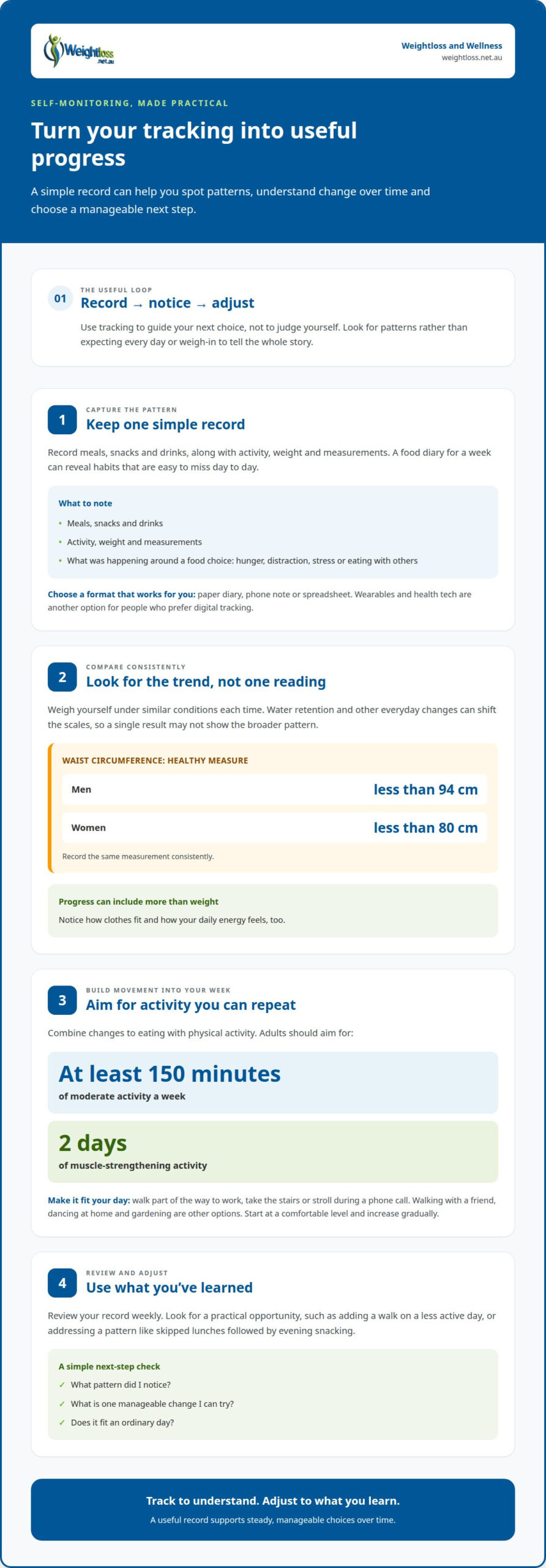
Tracking turns a broad goal into useful information. Record meals, snacks and drinks, then note your activity, weight and measurements in one place. A paper diary, phone note or spreadsheet can reveal patterns, such as skipped lunches followed by evening snacking. Use the record to guide your next choice, not to judge yourself.
For a useful comparison, weigh yourself under similar conditions each time and look at the trend rather than reacting to one reading. Water retention and other everyday changes can shift the scales. Measurements can add context: waist circumference is less than 94 cm for men and less than 80 cm for women as a healthy measure. Record the same measurement consistently, and consider how clothes fit and daily energy feel, too.
Combine changes to eating with physical activity. Adults should aim for at least 150 minutes of moderate activity a week and muscle-strengthening activity on two days. If that feels like a lot, build movement into existing routines: walk part of the way to work, take the stairs, or stroll during a phone call. Short walks still help establish a pattern, and you can gradually add time as it feels manageable.
Enjoyment matters because an activity you dislike is harder to repeat. Try walking with a friend, dancing at home, gardening or a beginner-friendly strength session. If you’re overweight or returning after a break, start at a comfortable level and increase gradually. Choose movement that fits your day, not an idealised schedule.
Log each activity, including what you did and how it felt. Review the record weekly to spot practical opportunities, such as adding a walk on a less active day. Wearables and health tech items may suit people who prefer digital tracking; explore wearable and health tech items as one option for supporting your routine.
3. What does sustainable weight loss mean?
Sustainable weight loss means building a routine that can flex around work, family meals and social occasions. One of the practical sustainable weight loss tips is to pair an outcome goal with a behaviour you can practise, such as preparing lunch before a busy day. That way, progress isn’t defined only by the number on the scales.
Make action goals SMART: specific, measurable, achievable, relevant and time-bound. “Eat 2 pieces of fruit each day” gives you a clear action to track, unlike “eat better”. Review the goal after a set period and adjust it if it clashes with your lifestyle. A good goal should ask for effort while still feeling possible on an ordinary day.
To understand your eating pattern, record meals, snacks and drinks for a week. Look for one realistic change, such as planning a filling afternoon snack if you often arrive home very hungry. Calorie needs vary with body size and activity, so a target copied from someone else may not fit. Focus on balanced choices from the 5 food groups rather than severe restriction.
Track actions as well as outcomes. You might note planned meals, movement and how consistently you followed your routine, then review the record at week’s end. Losing 5 to 10% of starting body weight can improve blood pressure, blood sugar and cholesterol. Health progress can therefore include meaningful changes beyond weight alone.
Popular diets differ in their food rules, but the Mediterranean diet can support weight loss and heart health. A balanced way of eating that includes all 5 food groups may be easier to adapt to everyday meals than rigid rules. These sustainable weight loss tips are most useful when they help you choose a pattern you can follow, including during busy weeks and shared meals.
4. Slow, sustainable weight loss
A gradual pace leaves room to practise habits that fit ordinary days, not just a perfect week. Choose one manageable change, such as planning weekday lunches, and stick with it before adding another. A gradual approach also lets you notice what supports your energy, appetite and routine. Success means building choices you can continue, rather than treating each meal as a test.
Water supports hydration, but drinking it alone doesn’t cause weight loss. It can help if you choose water instead of drinks with kilojoules, such as soft drink or sweetened tea. Keep water handy at meals and during the day, and consider whether thirst is influencing your drink choice. The useful change is what water replaces, not a special timing or quantity.
Make meals satisfying enough to repeat. Add vegetables, include a protein-rich food and serve a portion that suits your hunger. If a plan bans foods you enjoy, social meals and busy evenings can become harder to manage. Instead, decide how favourite foods can fit your usual routine, then return to that routine after an occasion that differs from it.
Movement works best as a lasting habit, not punishment for eating. Pair walking with a regular part of your day, such as a commute or lunch break. Add strength activities that suit your ability and available equipment. If a week gets busy, keep a smaller version of your routine, such as a short walk, then resume your usual plan when time allows.
Review what is working at the end of each week. Keep changes that feel practical, and adjust the ones that repeatedly clash with work, family meals or sleep. For simple tools to support a steady routine, explore weight-loss support options.
Weightloss and Wellness: Products that support medical weight loss
Weight Loss and Wellness features healthy diet products, wearables and health tech items, and products that support medical weight loss. These options can complement steady eating and activity habits, whether you’re organising meals or looking for tools to monitor your routine.
Treat products as practical supports, not substitutes for a balanced approach. For example, healthy diet products may help with meal planning, while a wearable can help you track activity. The right choice depends on which part of your routine you want to make easier.
Browse the available options when you’re ready to add a useful tool to your plan, and contact Weightloss and Wellness with any questions.
Choose a next step that fits your life
Lasting change doesn’t require a perfect plan. It starts with a choice you can repeat, even when work, family commitments or social plans shift your routine. Pick one habit to focus on this week, then notice what makes it easier to keep going. These sustainable weight loss tips are most useful when they support your real life, rather than add pressure.
If a practical product could support your next step, Weightloss and Wellness features healthy diet products, wearables and health tech, and affiliate products from retailers including Amazon and Walmart. These options can help you organise parts of your routine, while progress remains grounded in choices you can maintain.
For a considered way to explore products that may suit your goals, contact Weightloss and Wellness. Keep your next step small, make it your own, and give yourself the space to build steady momentum.
Frequently Asked Questions
Does drinking water help weight loss?
Water may help if it replaces drinks that contain kilojoules, such as soft drink or sweetened beverages. For example, choose water with lunch instead of a sugary drink, and keep the change if it suits your routine. Water itself isn’t a weight-loss treatment, and drinking more than you need won’t replace balanced eating habits.
How do I avoid regaining weight?
Keep the habits that helped you make progress, including regular meals and movement, rather than treating them as temporary rules. If a holiday, illness or busy period disrupts your routine, restart with one manageable action, such as planning breakfast the night before. Notice changes early and adjust your routine without turning to severe restriction.
How fast should I lose weight?
The NHS recommends aiming to lose 0.5 to 1 kg (1 to 2 lb) per week. Treat this as a guide, not a weekly pass-or-fail test. Your weight can fluctuate, so consider the trend alongside energy, hunger and how manageable your eating and activity habits feel. A pace you can maintain matters more than a rapid start.
What does sustainable weight loss mean?
Sustainable weight loss means making changes you can keep practising as everyday life shifts. For instance, if meal preparation suits your weekdays but not weekends, plan a simple fallback meal rather than abandoning your routine. A useful goal supports your wellbeing and fits your circumstances, instead of demanding perfect choices at every meal.
When should I get medical support?
Consult your doctor before starting any weight-loss or wellness programme, particularly if you have a health condition or take medication. Information from Weight Loss and Wellness is for reference only, does not constitute medical advice, does not replace professional advice and is not an endorsement of any product. This page contains affiliate links. We may earn a small commission at no extra cost to you if you purchase through these links. Read the Terms of Use and Disclaimer pages for details.
What is a safe, sustainable rate of weight loss per week?
The NHS recommends aiming to lose 0.5 to 1 kg (1 to 2 lb) per week. A sustainable rate should also leave room for nourishing meals and an activity routine you can continue. If your approach relies on skipping meals or extreme restriction to reach that pace, reassess the plan with your doctor before continuing.