
The best holistic weight loss approach isn’t built around food alone. It brings together nourishing whole foods and mindful eating with attention to sleep, stress, movement and relevant health factors. This can offer a more sustainable foundation than restrictive rules alone. Hormonal factors may also play a part, so changes in weight can call for a broader look at health and daily habits.
If progress feels harder than expected, it’s understandable to wonder whether willpower or meal choices tell the whole story. A steady, whole-person approach can help you see how different aspects of wellbeing fit together, without making weight the only measure of health.
Here, you’ll learn how whole-food nutrition and mindful eating can inform everyday choices, why sleep and stress matter, and how hormones may influence weight regulation. You’ll also find practical ways to think about gradual changes that fit your circumstances and support wellbeing over time.
Key Takeaways
- Explore how relaxation, mindful movement and steady sleep habits can support stress management and broader wellbeing.
- Build meals around nourishing whole foods, and use mindful eating to become more aware of hunger and fullness cues.
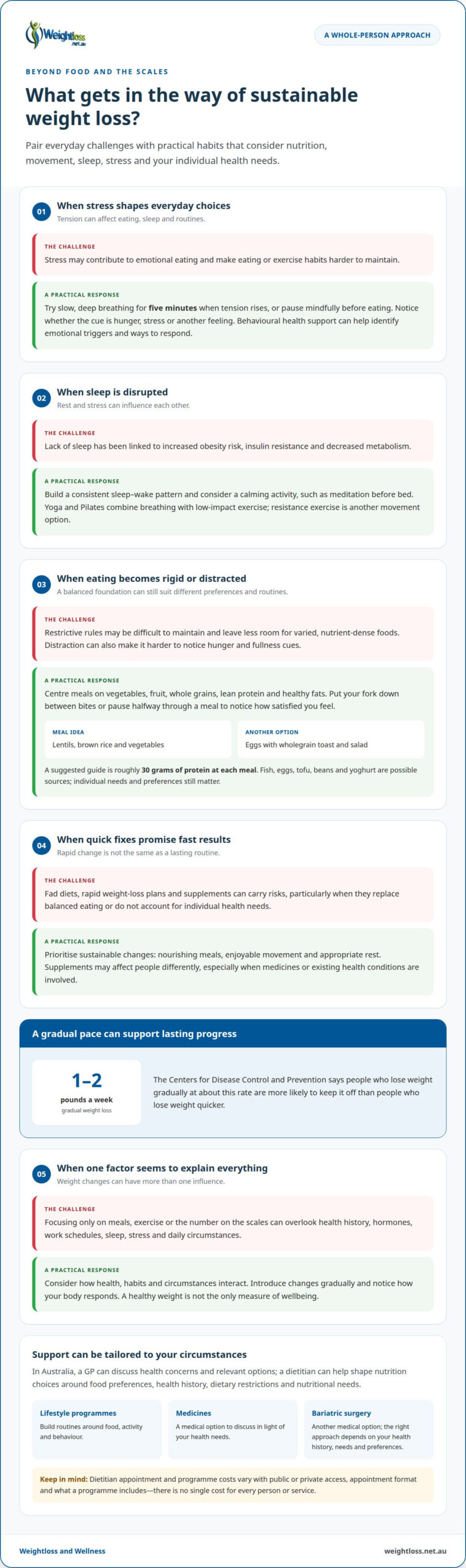
- The Centers for Disease Control and Prevention says people who lose weight gradually at about 1 to 2 pounds a week are more likely to keep it off than people who lose weight quicker.
- Consider how hormones, health history and daily habits may connect with weight changes, rather than focusing on one factor alone.
What’s the best approach to holistic weight loss?
A holistic weight loss approach brings together nutrition, movement and habits that support mental and physical wellbeing. In Australia, a GP and dietitian can help tailor those choices to your health needs.
Stress management and emotional wellbeing
Stress management uses relaxation and behavioural strategies to support mental wellbeing and everyday choices. It matters because stress can contribute to emotional eating, disrupt sleep and make it harder to maintain eating and exercise habits.
Try slow, deep breathing for five minutes when tension rises, or take a short mindfulness pause before eating. This can help you notice whether you’re responding to hunger, stress or another feeling. Yoga and Pilates combine breathing with low-impact exercise, while resistance exercise is another way to include movement in your routine.
Stress and sleep are connected. Lack of sleep has been linked to increased obesity risk, insulin resistance and decreased metabolism. A consistent sleep-wake pattern and a calming activity, such as meditation before bed, can support a steadier routine. Behavioural health support can help you identify emotional triggers and practical ways to respond.
Lifestyle programmes and other weight-loss options
Lifestyle programmes build routines around food, activity and behaviour, while medicines and bariatric surgery are medical options. The right approach depends on your health history, needs and preferences. Lifestyle changes can also complement medical treatment.
In Australia, a GP can discuss health concerns and relevant options, while a dietitian can help shape your nutrition choices. Dietitian appointment and programme costs vary depending on public or private access, appointment format and what a programme includes. There isn’t one cost that applies to every person or service.
Risks of rapid weight-loss methods
Fad diets, rapid weight-loss plans and supplements can carry risks if they replace balanced eating or are used without considering individual health needs. Restrictive diets may be difficult to maintain and leave less room for varied, nutrient-dense foods.
Rapid changes can also make it harder to build habits that support lasting progress. Supplements may affect people differently, particularly if they take medicines or have existing health conditions. In Australia, a GP or dietitian can offer tailored support. Prioritise sustainable changes over promises of fast results, with nourishing meals, enjoyable exercise and appropriate rest forming a more practical routine.
Whole-food nutrition and mindful eating
Whole-food nutrition centres meals on vegetables, fruit, whole grains, lean protein and healthy fats. These foods offer a practical foundation that can suit different preferences and routines. For example, combine lentils, brown rice and vegetables, or serve eggs with wholegrain toast and salad. Aim for balance, not a rigid menu that excludes traditional foods or makes everyday meals difficult.
Mindful eating means paying attention to the experience of eating, including hunger, fullness, flavour and pace. Try putting your fork down between bites or pausing halfway through a meal to notice how satisfied you feel. These small steps can help you recognise when distraction, rather than hunger, is shaping your eating. They also turn lifestyle changes into choices you can practise at home.
Personalised nutrition planning considers your food preferences, health history, dietary restrictions and nutritional needs. A dietitian can help shape meals around those factors, including any underlying concerns that influence food choices. One suggested guide is roughly 30 grams of protein at each meal; suitable sources include fish, eggs, tofu, beans and yoghurt. Your needs and preferred foods still matter when setting a useful target.
In Australia, you can start by discussing nutrition goals with a GP and asking about dietitian support. Choose evidence-based programmes that focus on balanced eating, sustainable habits and individual needs rather than promises of rapid change. For multivitamins or other supplements, a health professional can consider whether a deficiency needs attention. Supplements shouldn’t replace varied meals, and targeted supplements are best guided by relevant testing and individual response.
Insulin and blood sugar are part of how the body manages energy, but no single meal or food explains every person’s weight changes. A food diary can help you notice patterns in meals, hunger and energy, then discuss useful adjustments with a dietitian. If you’re considering additional support alongside nutrition changes, explore products that support medical weight loss as one part of a broader plan.
Whole-person health and sustainable weight loss
Whole-person health looks beyond weight to daily habits, physical health and emotional wellbeing. According to the Centers for Disease Control and Prevention, people who lose weight gradually at about 1 to 2 pounds a week are more likely to keep it off than people who lose weight quicker.
Lifestyle factors in whole-person health
Whole-person health considers how lifestyle, health history and everyday circumstances interact. Losing weight can involve more than changing meals or adding exercise. Work schedules, sleep, stress and medical history, for example, can shape which habits feel manageable. Introduce changes gradually and notice how your body responds to help make the process more sustainable. A healthy weight is not the only measure of wellbeing.
Potential health and wellbeing benefits
Sustainable weight management supports a broader focus on wellbeing, not just changes on the scales. Regular movement can build fitness and strength, while balanced routines may support energy and daily function. These benefits can make lifestyle changes meaningful even when weight shifts slowly. If weight concerns are connected with other health issues, a treatment plan can consider those alongside nutrition, movement and emotional health.
Emotional health and eating triggers
Emotional health includes recognising feelings and situations that influence eating. Stress, low mood or a difficult day can sometimes prompt eating without physical hunger. Notice the context, such as whether a snack follows a tense meeting or a skipped meal. This isn’t about blame. Recognising patterns can help you find more useful responses, such as pausing, having a nourishing meal or seeking support for mental wellbeing.
Digestive health and the microbiome
Digestive health involves processes such as digestion and the balance of microorganisms in the gut. These are part of whole-person health, although they don’t explain every change in weight. Keeping a record of digestive symptoms, meals and daily routines can make patterns clearer. Gut health testing may assess microbiome balance, digestion and intestinal integrity; findings can inform discussions about health needs and next steps.
Hormones and weight loss
Hormones can be one part of weight management, but they don’t explain every change in weight. Insulin resistance can make weight loss more challenging for some women with polycystic ovary syndrome (PCOS). Perimenopause and menopause can also coincide with weight gain. These examples show why health history matters more than assuming every weight change has a single cause.
A medical evaluation for weight gain may consider hormonal imbalances, thyroid problems and sleep disorders. Thyroid and hormone panels can assess thyroid function, insulin sensitivity, cortisol levels and related markers. Results may help identify patterns to discuss alongside symptoms, daily routines and emotional wellbeing. They’re one part of understanding a person’s health, not a measure of effort or commitment.
Hormones also feature in medical weight-management options. Clinical trials of GLP-1 receptor agonists, including semaglutide and tirzepatide, have shown weight reduction in the range of 15 to 20 percent. These medicines are distinct from lifestyle changes, and a result from a trial doesn’t predict an individual patient’s outcome. Food, movement, sleep and mental health remain relevant parts of a broader loss journey.
The practical takeaway is to look for patterns rather than blame hormones or calories alone. For example, note when weight gain began and whether it coincided with changes in sleep, menstrual patterns, medication or energy. This gives a clearer starting point for discussing possible causes and options with a health professional. If you’re exploring products that support medical weight loss, explore weight-management support options as part of a considered plan.
Weightloss and Wellness: Products that support medical weight loss
Weightloss and Wellness offers products to support medical weight loss, as well as healthy diet products and wearables and health tech items. These may be useful if you’re looking for practical additions to nutrition, activity or a medical weight-management plan.
Browse affiliate products from Amazon, Walmart and others for items relevant to your routine. Health technology, for example, can help track activity, while healthy diet products can support meal planning. Choose options that suit your needs and use them as practical additions, not replacements for individual health advice or sustainable lifestyle changes.
Explore product options from Weightloss and Wellness to find practical additions for your weight-management journey.
Choose a next step that fits your life
Lasting change often starts with a decision that feels manageable in your current routine. Before adding another goal, consider what would help you follow through: a regular time, a simple reminder or support that keeps your intentions in view. The best next step is one you can return to, even when work, family or energy levels change.
A holistic weight loss approach can be personal without becoming complicated. Set a clear intention, notice what helps you stay consistent and adjust your plan as circumstances change. Progress doesn’t have to follow a perfect line; steady choices can still move you towards the wellbeing you want.
If you’d like to explore supportive products for your goals, contact Weightloss and Wellness. Take the next step at your own pace, with a plan that feels realistic for you.
Frequently Asked Questions
What does a holistic approach to weight loss include?
It brings together eating habits, movement, sleep, stress management and relevant health factors, rather than focusing only on the scales. In practice, you might plan balanced meals, choose activities you enjoy and notice changes in your energy or routine. A GP can help identify health concerns that affect your plan, while a dietitian can tailor nutrition support to your needs.
How should diet and portion sizes be adjusted for healthy weight loss?
Start with meals that balance vegetables, protein-rich foods and grains, then adjust serving sizes to suit your hunger and routine. For example, serve food onto a plate rather than eating directly from a packet, and pause before deciding whether you want more. A food diary can reveal patterns, and a dietitian can help adapt portions to your nutritional needs.
What types and amounts of exercise support weight loss and overall health?
Choose activities you can do consistently, such as walking, cycling, swimming or resistance exercises with bands. One integrative programme uses five days of cardio and two days of strength training each week; this is an example, not a universal prescription. Your fitness, health and preferences shape a suitable routine. If you have health concerns, discuss activity plans with your doctor first.
How do sleep, stress, and mental health affect weight management?
Sleep, stress and mental wellbeing can influence routines that support weight management. A disrupted sleep pattern, for example, may affect energy for activity, while emotional strain can prompt eating outside regular meals. Notice how these experiences relate to your habits without judging yourself. A consistent sleep-wake routine and mental health support can help you identify practical changes to discuss with a health professional.
What steps help set realistic goals and maintain weight loss long term?
Choose a behaviour you can track, such as preparing lunch at home or taking a regular walk, then review how it fits your week. A food journal or fitness tracker can help you record progress; adjust goals as circumstances change. This page contains affiliate links. We may earn a small commission at no extra cost to you if you purchase through these links. The information is for reference only, does not constitute medical advice and is not an endorsement of any product. Consult your doctor before beginning a weight-loss or wellness programme, and read the Terms of Use and Disclaimer for more details.