
Steady progress matters more than a dramatic deadline. When setting realistic weight loss goals, aim for gradual loss of 0.5 to 1 kilogram per week, while recognising that a useful goal also includes actions you can repeat. A focus on everyday habits, not just the number on the scales, can make your plan more practical.
It’s understandable to want clear results, especially when progress feels slow. But goals built around manageable changes can help you stay focused without expecting every week to look the same.
This article explains how to choose a realistic target and turn it into specific food and activity goals. You’ll also find ways to eat mindfully, track progress beyond weight, and use tools and support to maintain motivation. The aim is to create a steady plan that can adapt as your routines and circumstances change.
Key Takeaways
- Build mindful eating habits with practical food choices you can maintain day to day.
- Start with a manageable target: the National Heart, Lung, and Blood Institute suggests aiming to lose 5–10% of your current weight.
- Track more than the scales by recording habits and noticing progress over time.
- Use journals, apps or wearables to support consistency, and explore weight-loss products that fit your plan.
1. Healthy food choices and mindful eating
Choose food habits you can repeat instead of a strict plan that feels difficult to maintain. A practical starting point is to add fruit or vegetables to meals and choose lower-fat dairy and meat instead of full-fat versions. Mayo Clinic recommends eating at least four servings of vegetables and three servings of fruit a day. For a specific routine, plan a salad for lunch every weekday.
Mindful eating can help you notice what, when and why you eat. At one meal each day, slow down, put away distractions and pay attention to hunger, fullness and flavour. Before reaching for food between meals, pause and identify the reason: physical hunger, boredom, stress or habit. This brief check-in can help you respond to what you’re feeling instead of eating automatically.
Keep a simple food and activity diary for a few days. Record meals, snacks, exercise and the circumstances around each choice, such as eating while watching television or skipping lunch on a busy day. Look for patterns, not reasons to criticise yourself. If a long gap between meals leaves you very hungry later, plan a balanced meal or snack beforehand.
Build changes gradually. For example, add vegetables to dinner first, then plan fruit for breakfast once that habit feels manageable. A flexible 80/20 approach means choosing nutritious, whole foods most of the time while leaving room for treats. This can make eating feel less all-or-nothing and help keep you motivated through ordinary changes in routine.
Pairing balanced eating with regular activity, including exercise, can support a broader health plan. If you’re tracking blood pressure as part of your health goals, keep those readings separate from food choices and follow the measurement routine recommended for you. Review your diary weekly: keep habits that fit your life and adjust one that repeatedly gets in the way.
2. How Do You Set Weight Loss Goals?
Start with a target that reflects your health, daily routine and reasons for losing weight. Setting realistic weight loss goals means choosing a direction, then breaking it into actions you can repeat. Rather than focusing only on a final number, decide which healthy habits could support your journey, such as planning meals or scheduling exercise.
The National Heart, Lung, and Blood Institute suggests beginning with a goal to lose 5–10% of your current weight. Treat this as a starting point, not a deadline or a promise of a particular result. The percentage offers a way to define an initial milestone; your health, lifestyle and ability to maintain new routines shape how you approach it.
For an Australian reader asking about health guidelines, this percentage is a recommendation from the named institute, not a specific Australian guideline. A gradual target of 0.5 to 1 kilogram per week is another planning reference. Weight can fluctuate, so review the trend over time rather than treating one week’s change as the whole story.
How can the target feel attainable? Choose two or three goals at a time, as the Centers for Disease Control and Prevention suggests. Make each goal specific and action-based: for example, schedule a 30-minute walk on several days, or prepare a balanced lunch for work. These steps give your fitness routine clear direction, even when the scales change slowly.
If you have a long-term health condition, take prescription medicines or receive medical weight-loss treatment, speak with a GP or dietitian before changing your eating or activity plan. They can consider your health needs and current treatment when helping you choose an appropriate approach. Revisit your goals when work, caring responsibilities or other changes disrupt your routine. Adjusting your plan can keep healthy habits practical as your circumstances change.
Set a realistic target that fits your health and daily routine, then break it into specific, repeatable actions. The 5–10% starting milestone is attributed to the National Heart, Lung, and Blood Institute, rather than to an Australian guideline.
3. Tracking progress and maintaining motivation
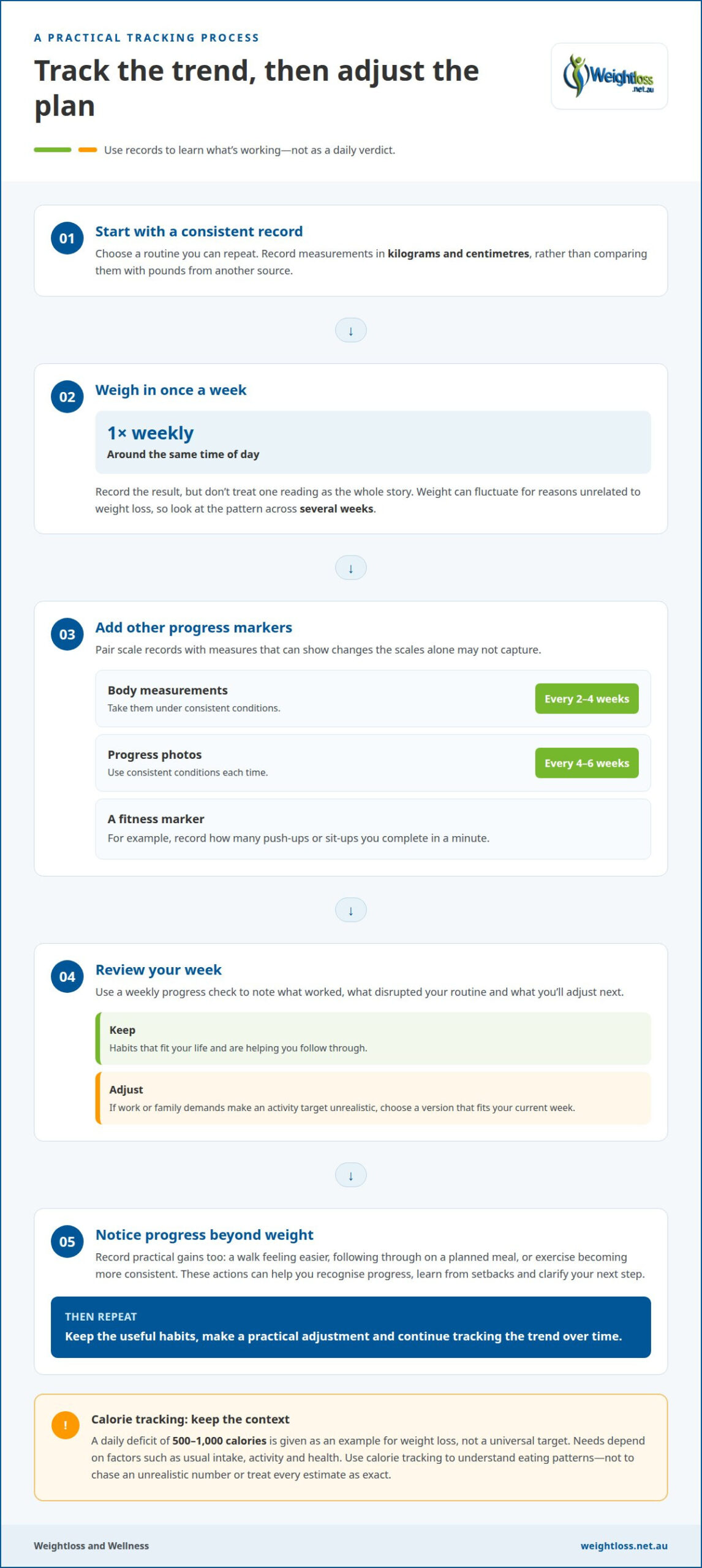
Tracking gives you information to adjust your plan, not a daily verdict on whether you’re succeeding. Weigh yourself once a week, around the same time of day, and record the result. A single reading can change for reasons unrelated to weight loss, so look at the pattern across several weeks. Record measurements in kilograms and centimetres rather than comparing them with pounds from another source.
What daily calorie deficit is safe and effective for weight loss? A daily deficit of 500–1,000 calories is given as an example for weight loss. It isn’t a universal target: your needs depend on factors such as your usual intake, activity and health. Use calorie tracking to understand eating patterns, not to chase an unrealistic number or treat every calorie estimate as exact.
Pair scale records with other measures. Take body measurements every 2–4 weeks and progress photos every 4–6 weeks, using consistent conditions each time. You can also record a fitness marker, such as the number of push-ups or sit-ups you complete in a minute. These measures can show changes that the scales alone may not capture.
Review your goals regularly, for example during a weekly progress check. Note what worked, what disrupted your routine and what you’ll adjust next. If work or family demands made your activity target unrealistic, choose a version that fits your current week. Flexible weight management is more useful than abandoning your plan after a difficult stretch.
Motivation can come from noticing practical gains as well as changes in weight. Record when a walk feels easier, when you follow through on a planned meal, or when your exercise becomes more consistent. Celebrate these actions without expecting the same result every week. Tracking helps you recognise progress, learn from setbacks and clarify your next step.
4. Apps, calculators, journals and support
Choose one tracking tool that suits your routine instead of trying several at once. A journal can capture meals, mood and physical activity in your own words. An app may help organise entries, while a calculator can provide an estimate to discuss with a health professional. Treat estimates as planning aids, not exact instructions for what your body needs.
Give each tool a clear job. For example, use a journal to note what made a planned walk easier or harder. A wearable can help you keep physical activity visible throughout the day. If you set a step target, choose one that fits your current routine, then build gradually rather than treating 10,000 steps as a requirement for everyone.
Accountability works best when it feels supportive. Ask a friend to join you for a regular walk, or share one specific goal with someone you trust. A practical check-in could cover whether you completed your planned activity and what might help next time. If a group setting feels uncomfortable, reviewing a private journal can still help you recognise patterns and stay on track.
Reward actions, not only changes in weight. After completing a week of planned physical activity, mark the achievement in your calendar or choose a meaningful non-food reward. This keeps the focus on sustainable routines during your weight-loss journey, including weeks when the scales move slowly. Keep rewards within your budget and connected to wellbeing, such as setting aside time for a relaxing activity.
For a simple starting point, choose one journal or digital tool, record one behaviour, and review it regularly. If wearable technology would help you notice movement, explore wearable health technology as part of your approach. The best support is the kind you’ll keep using, whether it comes from a trusted person, a written record or a digital reminder.
Weightloss and Wellness: Products that support medical weight loss
Weight Loss and Wellness features products that support medical weight loss, including practical tools to complement your personal plan. If your goals include making meals easier or keeping activity visible, healthy diet products and wearables may fit your routine. These items can support everyday habits, but they don’t replace guidance from your healthcare team.
Explore options that match the actions you’ve chosen, such as planning balanced meals or recording movement. Weight Loss and Wellness also features affiliate products from Amazon, Walmart and other retailers. Focus on what fits your needs and supports consistent progress, rather than expecting a product to deliver weight loss on its own.
Explore Weight Loss and Wellness for products that fit your approach to weight management.
Choose your next small step
Your next step doesn’t need to be a complete lifestyle overhaul. Choose one practical action for this week, such as planning tomorrow’s lunch or setting aside time for a walk. A clear, manageable commitment gives you a specific place to start, and you can build on it as it becomes part of your routine.
Setting realistic weight loss goals is an ongoing process, not a test of willpower. If your circumstances change, use that as a cue to rethink your next step rather than abandon your efforts. Notice what helps you follow through, and make room for those supports in your plan.
For practical products that can complement your approach, contact Weightloss and Wellness today. Keep your focus on the actions that fit your life, and take the next step at a pace you can sustain.
Frequently Asked Questions
How Do You Set Weight Loss Goals?
Choose a health-focused outcome, then decide which daily action can help you work towards it. For example, if you want more energy for weekend activities, plan a regular walk and consider how it fits around work or family commitments. Keep the first goal manageable, and consult your doctor before beginning a weight-loss or wellness programme to ensure it’s safe for you.
What’s a safe amount to lose in a month?
A gradual monthly milestone could be around 2–3 kilograms, but the right pace varies with your health, starting point and routine. Treat this figure as a planning reference, not a pass-or-fail measure. Weight can shift from week to week, so assess your approach over time. If you’re unsure whether a target suits you, discuss it with your doctor or dietitian.
What Are SMART Goals, and How Can They Help?
SMART goals are specific, meaningful, action-based, realistic and timely. They turn a broad intention into a clear commitment, such as preparing lunch at home on workdays for the coming week. This makes it easier to see whether you followed through and decide what to change. The information here is for reference only, isn’t medical advice or a product endorsement, and isn’t a substitute for professional advice. Read the Terms of Use and Disclaimer pages for more information.
What if I don’t see results right away?
Keep your routine steady and check whether you’ve followed your planned actions before changing your target. A short period without scale movement doesn’t show the whole picture, so consider other signs, such as completing planned walks or finding daily tasks easier. Avoid reacting with drastic food restrictions. This page contains affiliate links. We may earn a small commission at no extra cost to you if you purchase through these links.
What if I hit a plateau?
Review your recent routine before making changes: note missed activity, altered meal patterns, disrupted sleep or changes in stress. Choose one practical adjustment, such as returning to planned lunches, then see whether it’s sustainable. If weight remains a concern or your health needs change, talk with your doctor or dietitian. They can help assess your circumstances and whether your plan needs a different approach.
What is a realistic and healthy rate of weight loss per week?
A gradual rate of 0.5 to 1 kilogram per week is a useful general benchmark. Weekly changes won’t necessarily be even, so avoid treating one weigh-in as proof that your plan is working or failing. Focus on following your agreed eating and activity routine, and discuss your progress with your doctor if you have a health condition or take medicines that may affect weight.