
Recovery depends on what you take as well as what you eat. In life after bariatric surgery, meals usually progress from liquids to puréed foods, then soft foods and small portions of regular food. Follow your surgical team’s plan, which takes priority. Vitamin and mineral supplements are generally needed for life, while medication instructions depend on your procedure and care plan.
It’s natural to focus on what you’ll be able to eat and how quickly you may lose weight. Both matter, but recovery also involves building steady habits and keeping up with the supplements and medicines prescribed for you.
This guide explains the usual stages of eating, how weight loss may unfold, and how activity can return gradually after surgery. It also covers why supplements and medication need ongoing attention, so you can understand the changes ahead and take them one step at a time.
Key Takeaways
- Follow your surgical team’s food progression and adjust portions as your tolerance changes.
- Weight loss often continues over time, while your progress depends on consistent eating and activity habits.
- Keep up with prescribed supplements and medicines, and attend follow-up appointments to monitor your nutritional health.
- Return to movement gradually: walking can support recovery, but wait for clearance before lifting weights or resuming strenuous exercise.
How much weight will I lose after gastric sleeve surgery?
Weight loss after gastric sleeve surgery is often fastest during the first six months and can continue for 12 to 18 months or longer. One estimate puts loss of excess weight at around 10% by one month, 30% by three months, 60% by six months and 80% by 12 months. These figures describe a possible progression, not a personal target.
Food texture changes in stages to give your stomach time to recover. The usual progression is liquids during weeks one to two, puréed foods during weeks three to four, soft foods during weeks five to six, then small portions of regular food from week seven. UCSF Health says blended and puréed foods may begin after two weeks. Your surgical team’s plan takes priority. Eat slowly, choose protein-rich foods as advised, and stop when you feel full.
Life after gastric sleeve and life after gastric bypass both involve staged eating, smaller portions, supplements and follow-up. The specific food plan and medicines can differ depending on the operation and your individual needs. Large meals can cause discomfort or vomiting, so small portions can help you adjust.
In Australia, there isn’t one cost that applies to every bariatric operation. The amount depends on the treatment pathway and related hospital and surgical costs. Medicare and private health insurance contributions depend on eligibility and policy cover.
Nutrition remains important beyond the early diet stages. Bariatric programs commonly set protein goals of 60 to 100 grams per day, depending on the patient. Vitamin and mineral supplements, including a multivitamin, calcium, vitamin D, B12 or iron, may be needed for life. After sleeve surgery, acid-reducing medication is prescribed for at least one month. Follow-up with your surgeon and dietitian helps monitor nutrition and respond to issues such as difficulty tolerating foods.
Vitamin and mineral supplements
After bariatric surgery, vitamin and mineral supplements are generally needed for life. A smaller stomach and changes to digestion can make it harder to meet nutritional needs through food alone. A sleeve or bypass can affect absorption differently, so your supplement plan should match your procedure and blood test results. Your dietitian can help explain which nutrients your plan covers and how to take them consistently.
Common supplements include a bariatric multivitamin, calcium, vitamin D, vitamin B12 and iron. Recommendations differ between services: UCSF advises 1,000 to 1,500 milligrams of calcium daily, while UCLH lists 800mg calcium and 20mcg vitamin D. These targets aren’t interchangeable instructions. Use the amounts prescribed for you, rather than combining products or changing doses independently. UCSF says its recommended calcium supplement provides 500 IU of vitamin D3 per chew or capsule.
Hydration also supports recovery. UCSF recommends 1.5 to 2 litres of fluid daily after surgery, unless a medical condition requires restriction. Sip slowly throughout the day; drinking too quickly or trying to manage large amounts at once can be difficult during early recovery. If your prescribed supplements are hard to swallow, ask your bariatric team about an appropriate form, such as a liquid or chewable option. Don’t crush or change a supplement without their advice.
Follow-up blood tests help your care team identify deficiencies and adjust your nutrition plan. UCSF schedules tests at three, six and 12 months after surgery, followed by annual testing. UCLH recommends vitamin B12 injections every three months at the patient’s GP surgery. Keep a written list of your supplements and doses for appointments, and tell your team about persistent nausea, vomiting or difficulty taking them. If you’re organising recovery supplies, explore supplements and recovery products as part of your preparation.
When can I start resuming exercising or lifting weights after bariatric surgery?
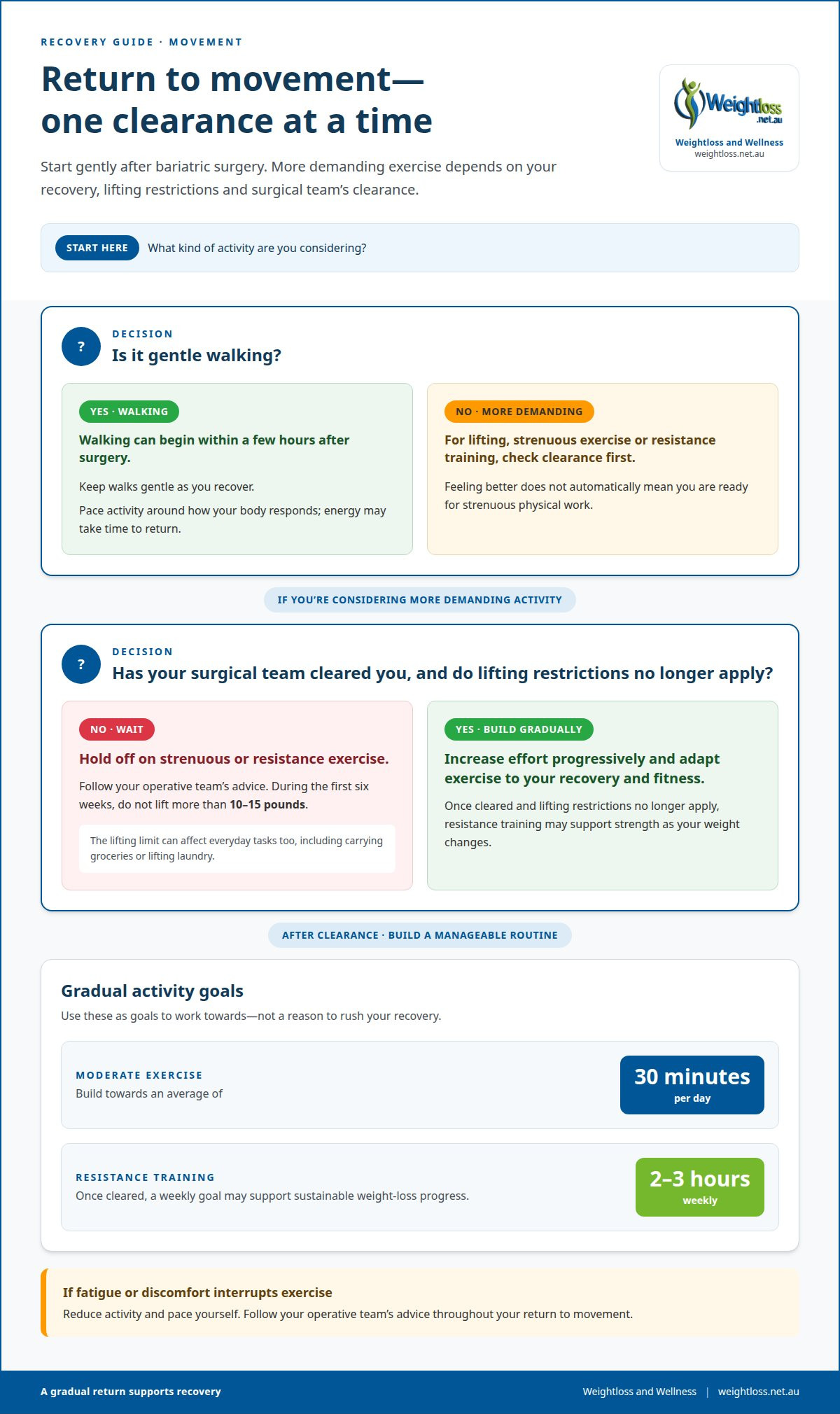
Return to movement gradually after surgery, starting with gentle activity before more demanding exercise. Walking, lifting limits and clinical clearance all help shape a safe routine.
Gradual return to physical activity
Gradual activity means increasing movement as recovery progresses, rather than jumping straight into strenuous exercise. Walking can begin within a few hours after surgery and can help patients recover. Once cleared, build towards an average of 30 minutes of moderate exercise per day. Your energy may take time to return, so pace activity around how your body responds and follow your operative team’s advice.
Walking and lifting restrictions
Walking is a practical early activity, while heavy lifting needs more caution as the body heals. After bariatric surgery, patients are advised not to lift more than 10 to 15 pounds for six weeks. This restriction can affect everyday tasks as well as gym sessions, including carrying groceries or lifting laundry. Keep walks gentle, and don’t treat feeling better as automatic clearance for strenuous physical work.
Resistance training after surgery
Resistance training works muscles against a load, such as weights or resistance bands. It can support strength as your weight changes, but timing matters: wait until your surgical team clears you and lifting restrictions no longer apply. Once cleared, a goal of two to three hours of resistance training weekly may support sustainable weight-loss progress. Increase effort gradually and adapt exercises to your recovery and fitness.
Pregnancy may become easier after weight loss surgery for people who previously had difficulty getting pregnant. UCSF advises waiting at least 12 months after surgery before starting a pregnancy, and recommends effective contraception for 12 to 18 months following bariatric surgery.
Regular activity can make weight management part of everyday life, rather than a short-term focus during weight loss. After clearance, combine manageable movement with a consistent routine, such as walking for daily activity and resistance work for strength. If fatigue or discomfort interrupts exercise, reduce the intensity and discuss persistent concerns with your care team before progressing.
Bariatric vitamins and medications
After gastric surgery, medication routines may change along with eating patterns and weight loss. Tablets can be harder to tolerate while your stomach is healing, and some medicines need specific timing or forms. Keep an up-to-date list of prescriptions, over-the-counter medicines and supplements, including doses, so your surgical team can review your routine as a whole.
UCSF advises patients to break up or crush tablet medications for the first three months after bariatric surgery. This does not mean every medicine can be crushed safely, as some tablets have special formulations. Follow the directions provided for each medicine, and raise swallowing difficulties with your bariatric team rather than changing a tablet yourself.
Some medicines are prescribed for a defined period after surgery. UCSF advises taking omeprazole for six months after surgery, or indefinitely if directed by the bariatric surgery team. It also advises taking ursodiol for six months to reduce gallstone risk during rapid weight loss, unless the patient doesn’t have a gallbladder. These examples show why it’s important to follow your gastric sleeve or bypass medication plan medicine by medicine.
Your procedure matters too. UCSF advises people who have had gastric bypass to avoid non-steroidal anti-inflammatory drugs (NSAIDs) indefinitely because they increase the risk of stomach ulcers. Don’t assume a pain reliever is suitable just because you used it before surgery. Note its name and discuss it with your surgical team, especially if pain continues beyond the prescribed recovery period.
Set a daily routine that separates medicine instructions from meal habits. A phone reminder or written schedule can help track doses, while follow-up appointments give the team an opportunity to review side effects and ongoing needs. Keep your lifelong vitamin and mineral plan alongside that medication record, rather than treating supplements as a short-term part of recovery.
For practical recovery supplies to support your routine, explore post-bariatric surgery essentials.
Weightloss and Wellness: Post-Bariatric Surgery Essentials
Weightloss and Wellness offers Post-Bariatric Surgery Essentials to help you organise practical items for recovery and daily routines. Once your surgical team has set your food, supplement and activity plan, these essentials can complement the steps you’re already following.
The range also includes Healthy Diet Products, Wearables and Health Tech items, and Affiliate Products from Amazon, Walmart and others. These may support everyday planning, but they don’t replace personalised medical advice or prescribed treatment. Choose items that suit your needs and the guidance you’ve received, rather than expecting a product to determine your recovery.
If you’re preparing for surgery or adjusting to life afterwards, contact Weightloss and Wellness to explore the available post-bariatric essentials.
Make your next step manageable
Lasting change comes from routines you can return to, even when a day doesn’t go to plan. Choose one practical focus, such as keeping your recovery supplies organised or setting a reminder for your prescribed routine. Small decisions can add structure to the weeks ahead without turning every choice into a test of willpower.
Life after bariatric surgery is personal, and your priorities may change as recovery progresses. Keep your surgical team involved in decisions about food, supplements, medicines and activity, and make each change at a pace that fits their advice. You don’t need to manage every part of the journey at once; a steady next step is enough.
If you’d like to explore practical products that support your wellness routine, contact Weightloss and Wellness. Keep moving forward with patience, informed choices and care for your long-term wellbeing.
Frequently Asked Questions
What should I eat after surgery?
Choose foods allowed by your current plan, and use nutrition labels to guide choices. For example, UCLH uses 7g of sugar per 100g as a yoghurt guide after bariatric surgery. In life after bariatric surgery, practical label-reading can help you select options that fit your prescribed diet. Your care team’s instructions take priority, especially if a particular food causes discomfort or is difficult to tolerate.
Side effects: What’s normal and how to manage them?
Persistent symptoms need attention, not guesswork. After gastric bypass, contact your doctor if symptoms of a blocked stomach opening continue for more than two days. Note when symptoms begin and whether they follow eating or drinking. This information can help your care team understand the pattern and decide what assessment or support is appropriate.
What happens after weight loss surgery?
Recovery brings physical changes beyond the number on the scale. UCSF says it can take five to six weeks for presurgery energy levels to return after bariatric surgery. In life after bariatric surgery, energy can affect how you manage work, household tasks and daily routines. Build activity around your recovery plan, and discuss ongoing fatigue with your care team rather than pushing through it.
What are some unexpected or less common issues after bypass surgery?
Alcohol may affect you more strongly after gastric bypass because it can enter the bloodstream faster and remain at higher levels for longer than before surgery. As a result, the effects of a drink may be less predictable. Bariatric guidance also advises avoiding alcohol after bypass. Discuss alcohol with your surgical team, particularly before drinking again or if you’re taking medicines that may interact.
What is the basic diet after bariatric surgery?
Alongside choosing foods that fit your prescribed stage, manage the timing of drinks around meals. UCLH advises waiting at least 30 minutes before and after eating before drinking after gastric bypass or sleeve gastrectomy. Separating fluids from meals can help you follow your eating plan without trying to drink and eat at once. Your care team can guide you on applying this routine.
What kind of follow-up with my surgeon or care team happens after surgery?
Follow-up may include separate reviews with your surgeon and dietitian. UCLH guidance places the first dietitian appointment at approximately 12 weeks after discharge. Use appointments to discuss eating difficulties, changes in your routine and questions about your recovery. This information is for reference only, isn’t medical advice and doesn’t endorse products. Consult your doctor before starting a weight-loss or wellness program. This page contains affiliate links. We may earn a small commission at no extra cost to you if you purchase through these links. Read the site’s Terms of Use and Disclaimer for more details.