
Clear protein drinks can fit the clear-liquid stage after gastric sleeve surgery, but the right choice needs to suit your prescribed stage and protein goals. During the initial liquid phase, a practical guide is a supplement providing 20 to 30 grams of protein per serving, while daily protein targets after bariatric surgery commonly sit around 60 to 100 grams, depending on individual needs.
It’s understandable to look for an easy drink after gastric sleeve surgery, but protein content is only part of the picture. This guide explains what high protein clear liquids are, which supplement types may fit and how protein and fluid needs are considered after surgery. It also explains why protein is best approached as a steady daily goal, not something to make up in one drink. Your bariatric team’s staged plan remains the guide to what you can have and when.
Key Takeaways
- Choose a clear protein drink that fits your current post-surgery stage, and compare its protein, sugar and fat content per serve.
- Different supplements contribute protein in different ways; learn which options may help build a practical routine.
- Small, regular sips can help you work towards fluid needs while your stomach adjusts after surgery.
- Daily protein goals vary, so spreading intake across the day can be more manageable than relying on one drink.
1. What Is Clear Liquid Protein?
A clear liquid protein drink fits the clear-liquid stage in texture and appearance. Clear whey is one example, but a transparent appearance alone doesn’t make a drink suitable after gastric sleeve surgery. Follow your bariatric team’s staged plan before adding any supplement.
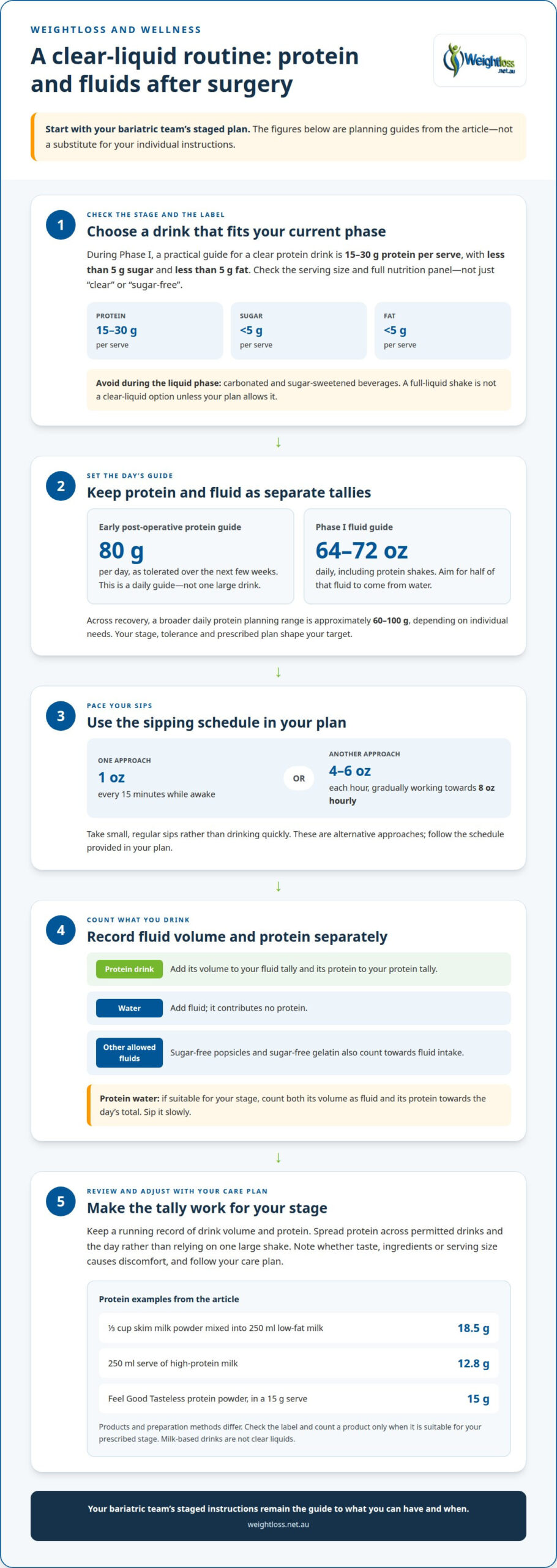
For high-protein clear liquids after gastric sleeve surgery, compare the nutrition panel and serving size. During Phase I, a practical guide is a clear protein drink providing 15-30 grams of protein per serving, with less than 5 grams of sugar and less than 5 grams of fat. Avoid carbonated and sugar-sweetened beverages during the liquid phase. A common mistake is choosing by the words “clear” or “sugar-free” alone, without checking the full label.
Australian clear whey drinks don’t have a standard calorie or protein amount. Both vary by product and serving size. Check the nutrition panel for the protein and energy in the serve you’ll consume, then compare those figures with your plan’s requirements.
Sugar-free clear protein drinks aren’t automatically suitable just because they contain no sugar. They may fit if they meet the requirements for your prescribed stage, including any Phase I limits for sugar and fat. Carbonation and other ingredients matter too. Follow your bariatric team’s staged instructions to determine when clear protein is appropriate.
High-sugar products may trigger dumping syndrome in some bariatric patients, particularly after gastric bypass. A clear protein drink doesn’t inherently cause dehydration, but relying on it instead of sipping enough fluid can leave your fluid needs unmet. Intolerance can also make a drink difficult to consume. Note whether the taste, ingredients or serving size causes discomfort, and follow your care plan.
Ready-to-drink bottles can simplify protein measurement, while powders need to be mixed according to the label. With either option, take small sips rather than drinking quickly. Don’t use a full-liquid shake during a clear-liquid stage unless your plan allows it.
2. High-protein nutritional supplements
Protein supplements can help build daily intake when early meals are small or limited. During the initial post-operative liquid phase, a shake with 20 to 30 grams of protein per serving is one option. Check the serving size and protein amount, then fit it into the staged plan rather than treating one shake as the whole day’s nutrition.
Australian examples show how different products contribute. Mixing one-third cup of skim milk powder into 250 ml of low-fat milk provides 18.5 g of protein. A 250 ml serve of high-protein milk provides 12.8 g. Feel Good Tasteless protein powder provides 15 g of protein in a 15 g serve. These figures help with planning, but products and preparation methods differ.
Some recovery plans advise including at least two VLCD, LCD or high-protein nutritional supplements during post-operative recovery. VLCD and LCD refer to very-low-calorie and low-calorie diet products. Their role depends on your recovery stage and nutrition goals. Count their protein towards your intake rather than adding servings without considering the whole day.
Collagen powder has a different role. It isn’t as complete a protein source as animal or soy protein, so use it to top up intake rather than as your main source. For example, a collagen drink shouldn’t replace a more complete protein supplement when that is the primary protein choice in your plan.
Protein shakes may remain useful beyond the first liquid stage, particularly when it’s difficult to meet your planned intake through food alone. As your diet progresses, use them to complement meals, not automatically replace them long term. Whenever you change products, review the nutrition panel, serving size and ingredients, and track each serve’s contribution to your daily total.
Record the protein in each supplement alongside meals and snacks. This simple tally makes gaps easier to spot and helps you spread intake across the day instead of relying on one large shake.
3. Post-bariatric-surgery protein and fluid needs
During the clear-liquid stage, an early post-operative target may be 80 grams of protein per day, as tolerated over the next few weeks. That’s a daily goal, not a requirement to drink one large serve. Divide protein across permitted drinks and follow the stage in your bariatric plan.
Fluid intake matters alongside protein after surgery. A Phase I guide is 64 to 72 ounces daily, including protein shakes, with half of that fluid coming from water. Keep a running tally of water, permitted protein drinks and other allowed fluids so each sip contributes to your total.
Small, regular sips make that total more manageable. One approach is 1 ounce every 15 minutes while awake. Another starts at 4 to 6 ounces each hour, then gradually works towards 8 ounces hourly. These rates align at the lower starting point; use the schedule in your plan.
Protein water may fit a clear-fluid diet if it’s suitable for your current stage. Count its volume towards fluid intake and its protein towards your daily total. Sip slowly rather than trying to finish a bottle quickly. Sugar-free popsicles and sugar-free gelatin also count towards fluid intake after bariatric surgery.
Meal replacements need a different stage. A serve made with skim milk provides 25g of protein, but a milk-based drink isn’t clear. Keep it for a stage that allows full liquids, rather than using it to meet a clear-fluid goal.
So, how many grams of protein should bariatric patients get during the clear-liquid stage? The early post-operative guide is 80 grams per day as tolerated, alongside steady fluids. For a practical check, record each drink’s volume and protein separately; a protein shake contributes to both totals, while water adds fluid without protein.
4. Daily protein targets after bariatric surgery
A useful planning range is approximately 60-100 grams of protein daily after bariatric surgery, depending on individual needs. This is a whole-day target, not a single-meal quota. Your stage of recovery, tolerance and prescribed plan shape how you work towards it. In the early weeks, meeting the target may require different choices than later, when more foods are permitted.
The practical takeaway is to spread protein across the day instead of trying to consume it all at once. Keep a simple tally of protein from permitted drinks, supplements and meals. Record each serve as you have it, then use the running total to spot where another suitable protein choice could fit.
Once creamy foods are permitted, two tablespoons of skim milk powder can add approximately 9g of protein to a suitable creamy liquid, with less than 100 calories. High-protein yoghurt can provide approximately 15g of protein per serve. These examples can help diversify intake as your food stages progress; they aren’t clear liquids.
Protein quality and timing matter alongside the daily total. The American Society for Metabolic and Bariatric Surgery recommends prioritising protein after bariatric surgery. When your current stage allows meals and snacks, one practical way to apply that principle is to choose the protein component before other foods.
Protein also supports lean body mass during weight loss, particularly when combined with exercise. As your routine changes, track protein consistently and include physical activity that suits your recovery plan. Aim for a steady pattern, not a last-minute effort to reach the day’s number.
To support practical recovery planning, explore post-bariatric surgery essentials that can fit alongside your nutrition routine.
Weightloss and Wellness: Post-gastric sleeve fast recovery products
Weightloss and Wellness features post-gastric sleeve recovery products to support practical planning during recovery. Its selection includes healthy diet products, supplements and recovery products, as well as affiliate products from Amazon, Walmart and other retailers.
Use products to complement, not replace, the staged eating and drinking plan provided by your bariatric team. Consider a supplement’s protein content and whether it suits your current liquid stage. Wearables and health tech items may support broader health routines, while exercise products can help with activity planning when appropriate.
Explore these options as you prepare for recovery or organise essentials for a later stage. For guidance on the products available, contact Weightloss and Wellness.
Build a routine that supports your next stage
As recovery progresses, your needs and permitted choices can change. Keep your nutrition routine adaptable: use your bariatric plan to guide each stage, and treat high-protein clear liquids after gastric sleeve surgery as one part of that plan, not a long-term substitute for suitable meals.
Weight Loss and Wellness features practical options for broader wellbeing, including healthy diet products, wearables and health tech items, and affiliate products from Amazon, Walmart and other retailers. Choose products that fit your needs and current routine while keeping your bariatric team’s guidance at the centre of your recovery.
Contact Weightloss and Wellness to explore the available options. Steady, considered choices can help you keep moving forward with confidence.
Frequently Asked Questions
What Is Clear Liquid Protein?
Clear liquid protein is a transparent or lightly coloured drink that supplies protein without the thicker texture of a shake. Clear whey is one example, but appearance alone doesn’t determine whether a drink suits your current stage. Check the product’s nutrition panel and ingredients, and use only drinks allowed in your post-operative plan. A drink that looks clear may still contain ingredients that aren’t suitable for you.
What are high-protein clear liquids after gastric sleeve surgery?
Examples include clear whey drinks and protein water, if they fit your prescribed stage and nutrition requirements. Compare protein, sugar and fat per serve, along with serving size. Don’t choose by flavour or “sugar-free” wording alone. A quick label check can help distinguish clear protein from a creamy shake, which belongs to a different diet stage.
Which clear protein drinks are suitable after gastric sleeve surgery in Australia?
Suitable options vary by product, so use the nutrition panel rather than relying on a drink’s name or marketing. Check protein, sugar, fat, serving size and whether the drink is carbonated. This page contains affiliate links. We may earn a small commission at no extra cost to you if you purchase through these links. The information is for reference only, is not medical advice and does not endorse any product. Consult your doctor before starting a wellness program, and read the Terms of Use and Disclaimer pages.
When can patients start clear protein liquids after gastric sleeve surgery?
Clear liquids are commonly part of the first few days after leaving hospital, but when protein drinks can be introduced depends on your post-surgery staged plan. Don’t assume every clear drink is permitted as soon as you can sip fluids. Follow your stage instructions to determine when you can add a protein product.
How should clear protein drinks be introduced after gastric sleeve surgery?
Begin only when your post-operative plan permits the drink, and follow its preparation and serving directions. Sip gradually rather than gulping, and note the product, amount and any discomfort in a simple food record. If a drink is difficult to tolerate, stop and follow your care team’s instructions before trying it again.
How much fluid should patients sip per day after gastric sleeve surgery?
During Phase I, the daily fluid guide is 64 to 72 ounces, including protein shakes. Water is suggested to make up half of that intake. Track fluid separately from protein: for example, record each drink’s volume, then total the day’s fluids. This makes it easier to see whether protein drinks are contributing to hydration rather than replacing water entirely.