
Cutting out plant foods is the defining trade-off behind carnivore diet weight loss. The diet centres on animal foods such as meat, fish, organ meats, eggs, butter and bone marrow, with dairy sometimes included. By removing carbohydrate-containing plant foods and narrowing meal choices, it aims to encourage weight loss, partly by making it easier to eat less overall.
It’s easy to see why a simple set of food rules can sound appealing. But a restrictive eating pattern can also reduce fibre intake and make balanced nutrition harder to maintain.
This article explains what the carnivore diet includes, how it is supposed to support weight loss, and what its possible effects and health risks are. It also explains why short-term changes on the scales don’t tell the whole story, helping you weigh the trade-offs more clearly.
Key Takeaways
- The carnivore diet centres on animal foods and excludes plant foods, so understand its restrictions before deciding whether it fits your eating preferences.
- Its very low carbohydrate intake may change how the body uses fuel, but that doesn’t by itself establish lasting fat loss.
- Consider the nutrition trade-offs: the diet provides less than five per cent of daily fibre needs, and its food choices can affect vitamin intake.
- People using insulin should seek medical advice before making major dietary changes, as changes to eating patterns can affect blood sugar management.
- Look beyond the scales when weighing potential benefits and risks, including possible changes to cholesterol and kidney health.
What Is the Carnivore Diet?
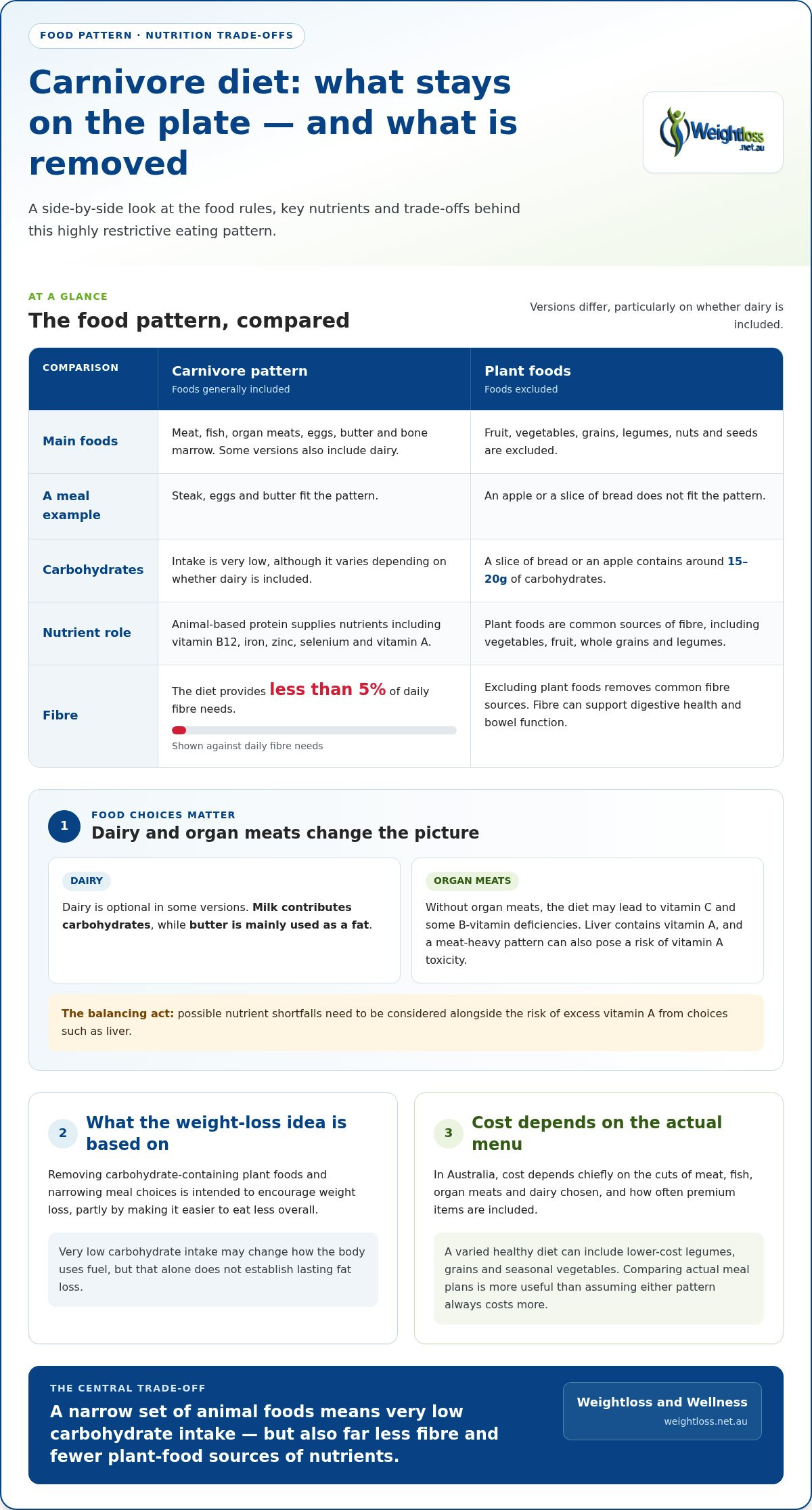
The carnivore diet is a restrictive eating pattern built around animal foods. Depending on the version, meals may include meat, fish, organ meats, eggs, butter and bone marrow, with some people also consuming dairy. Plant foods, including fruit, vegetables, grains, legumes, nuts and seeds, are excluded. That means a menu of steak, eggs and butter fits the pattern, while an apple or slice of bread does not.
Carbohydrate intake is therefore very low. A slice of bread or an apple contains around 15g to 20g of carbohydrates. Carbohydrate intake is typically very low, though it can vary depending on whether dairy is included. Dairy choices matter: milk contributes carbohydrates, while butter is mainly used as a fat. Versions differ, so the name alone doesn’t tell you exactly what someone eats.
Animal-based protein supplies nutrients such as vitamin B12, iron, zinc, selenium and vitamin A. However, excluding plant foods also removes common sources of fibre. The diet provides less than five per cent of daily fibre needs. Vegetables, fruit, whole grains and legumes provide fibre, which can support digestive health. Their absence is a significant trade-off to understand, not a minor menu adjustment.
Some Arctic Indigenous cultures have relied on carnivorous diets for hundreds of years. That history reflects particular food traditions and circumstances; it doesn’t show that the same restrictive menu suits everyone. For each individual, the practical questions are what the diet excludes and whether the remaining foods meet their nutritional needs.
In Australia, the cost depends chiefly on the cuts of meat, fish, organ meats and dairy chosen, and how often premium items are included. A varied healthy diet can include lower-cost foods such as legumes, grains and seasonal vegetables, while a menu centred on animal foods changes the shopping mix. Comparing actual meal plans is more useful than assuming either pattern always costs more.
For Australian readers, a key issue with this diet is its restriction of plant foods and fibre. A dietitian can assess the nutritional trade-offs in an individual’s overall eating pattern, including whether a meat-heavy menu provides enough variety. Consider the nutrient profile and potential risks alongside the diet’s rules, rather than treating high protein or carbohydrate restriction as a complete measure of health.
Potential nutrient deficiencies and vitamin A toxicity
Removing vegetables, fruit, grains, legumes, nuts and seeds narrows the sources of vitamins and fibre in a carnivore diet. It supplies less than five per cent of daily fibre needs, so meat, eggs and dairy cannot replace the variety of fibre found in plant foods. That matters for bowel function and gut health, not just for meeting a nutrition target. The diet’s nutrient profile depends heavily on which animal foods a person includes.
Meat and eggs provide useful nutrients, but eating them doesn’t automatically cover every need. A carnivore diet without organ meats may lead to vitamin C and some B-vitamin deficiencies. This is a particular concern when the menu relies mainly on muscle meat, such as steak, mince or chicken breast. The more foods a diet excludes, the more important it is to consider what those foods would otherwise contribute.
Organ meats change the picture, but they bring another consideration: the diet can also pose a risk of vitamin A toxicity. Liver, for example, contains vitamin A, so adding it to a meat-heavy pattern doesn’t resolve every nutritional concern. The challenge is balancing possible shortfalls against excess exposure. A varied diet is harder to achieve when nearly all plant foods are off the menu.
Fibre is one of the clearest differences. Vegetables, legumes and whole grains provide types of fibre that animal foods don’t supply. Gut bacteria use some dietary fibres, and changes in fibre intake can alter what reaches the gut. Since the carnivore diet provides less than five per cent of daily fibre needs, someone switching from meals with beans, oats or vegetables is making a substantial change to their usual fibre sources.
Potential problems depend on the foods chosen and how long the diet is followed. A menu built around steak and eggs differs nutritionally from one that also includes fish, dairy and organ meats. But adding more animal-food categories doesn’t restore plant fibre. Think beyond protein: consider fibre, vitamins and the variety of foods removed, rather than judging the diet by one nutrient alone.
If you’re comparing eating patterns, a broader selection of healthy diet products can support practical meal planning without making a highly restrictive approach the default. For the carnivore diet, the key takeaway is to weigh its limited fibre against potential vitamin shortfalls and the risk associated with vitamin A. Those trade-offs deserve attention before focusing only on the scales.
Blood sugar and type 2 diabetes
Carbohydrates from foods such as bread, rice and fruits are broken down into glucose, which enters the bloodstream. A carnivore diet removes most foods containing carbohydrates, so blood glucose may respond differently to meals. That mechanism helps explain its appeal to some people with type 2 diabetes, but it doesn’t establish that an all-animal diet is necessary for blood sugar management.
The idea of using meat to manage diabetes has a long history. Scottish military surgeon John Rollo first used a meat-only diet to treat patients with diabetes in the late 1700s. That historical use predates modern diabetes care and doesn’t demonstrate the diet’s safety or effectiveness by today’s standards. Current decisions need to consider the person’s treatment, blood sugar patterns and overall nutrition.
Survey reports can sound encouraging, but they need careful interpretation. In a survey of carnivore diet followers, 69 per cent reported improvements in chronic health conditions, including excess weight, blood pressure and blood sugar levels. These were participants’ reported experiences, not proof that the diet caused those changes. Reports from people who follow a diet also can’t show how it compares with other approaches.
For type 2 diabetes, carbohydrate reduction doesn’t have to mean eliminating every plant food. According to Diabetes UK, eating fewer than 130g of carbohydrates a day may help lower blood sugar levels in the short term for people with type 2 diabetes. This is a short-term finding, not a recommendation to adopt a meat-only pattern. Foods containing carbohydrates vary: fruit, legumes and whole grains also provide nutrients and fibre.
Medication makes major dietary changes especially important to plan. People using insulin for diabetes should seek medical advice before changing their eating pattern, because altering carbohydrate intake can affect blood sugar management and treatment needs. Diabetes UK also warns that people with type 1 diabetes should not follow a low-carbohydrate diet. These points make a self-directed switch to a restrictive diet a poor substitute for coordinated diabetes care, where healthcare providers such as Stay Medical Clinic can monitor key metabolic markers and guide treatment safely.
For someone weighing carnivore diet weight loss alongside blood sugar goals, separate the proposed mechanism from the evidence. Removing carbohydrate-rich foods can reduce the glucose entering the bloodstream from meals; it doesn’t establish that excluding vegetables, fruit and grains is required. A useful discussion focuses on meal composition, medication and glucose readings, rather than a single survey result or a historical example. Those details help keep the decision grounded in the realities of type 2 diabetes management.
Carbohydrate restriction and fat-burning claims
The carnivore diet is described as a zero-carbohydrate, high-fat, high-protein way of eating. Without carbohydrate-rich foods such as grains, fruit and legumes, the body has less glucose available from meals. It may then rely more on fat for energy, including stored body fat. This shift underpins the diet’s fat-burning claim, but using more fat as fuel doesn’t automatically mean losing body fat overall.
That distinction matters. The body can burn dietary fat as well as stored fat, so the balance between energy consumed and used still influences body weight. A high-fat menu can provide substantial energy, even without bread, rice or other grains. Cutting carbohydrates changes the mix of fuels; it doesn’t guarantee that the body will draw enough energy from its own stores to produce lasting weight loss.
Early changes on the scales can reflect more than fat loss. When carbohydrate intake falls sharply, the body’s use of stored carbohydrate and associated fluid can change. As a result, an initial drop in weight doesn’t necessarily show how much body fat has changed. Tracking the broader picture, including body composition and how the eating approach affects daily life, gives more context than a single weigh-in.
A six-week account illustrates why individual outcomes can differ from the headline claim. During that period, the author gained 1.5kg of fat, and body fat increased by around 2%. This example doesn’t predict what will happen to everyone. It does show that carbohydrate restriction alone doesn’t ensure fat loss, even when the diet is framed as a way to burn fat.
Carbohydrates also have a place in broader dietary guidance. According to the Dietary Guidelines for Americans, adults should get 45% to 65% of daily calories from carbohydrates. That recommendation isn’t specific to Australia, but it provides a contrast with a zero-carbohydrate pattern. Grains, fruit and other plant foods contain carbohydrates alongside nutrients and fibre, so excluding them changes more than the body’s immediate fuel source.
For a practical assessment, distinguish three ideas: eating fewer carbohydrate-containing foods, shifting towards using fat for fuel, and actually reducing body fat. They’re related, but not interchangeable. The six-week result mentioned above highlights the difference between a diet’s proposed mechanism and measured outcomes. A sustainable approach needs to account for food variety and overall intake, rather than treating carbohydrate removal as proof that fat loss will follow.
How the carnivore diet is intended to promote weight loss
The proposed effect combines restricted food choices, low carbohydrate intake and possible changes in appetite. These mechanisms explain the approach, but don’t establish that it causes fat loss independently.
Calories and protein for weight loss
Calories describe the energy food provides, while protein supplies building blocks for the body. Neither has a single fixed target for everyone following a carnivore diet; needs depend on personal factors and the overall eating pattern.
The diet’s limited food list may remove processed snacks, sweet drinks and other convenient foods. Fewer choices may also make it easier for some people to eat less overall, while meat, fish and eggs provide protein. However, fatty cuts, butter and large portions still contribute energy. A meat-only menu doesn’t automatically create the conditions for weight loss.
Compared with a keto diet, carnivore eating removes nearly all plant foods rather than focusing mainly on carbohydrate restriction. Low-carb approaches can include some vegetables and other plant foods, while Mediterranean-style eating includes a broader range of plants. Each pattern differs, so compare the foods included and how well the approach supports consistent eating, not just its label.
There’s no single calorie or protein amount that applies to everyone on a carnivore diet. Body size, activity, health needs, food choices and portion sizes all affect what a person eats. For example, a day of leaner meat and eggs differs from one with fatty steak and added butter. Those differences matter more than assuming the diet itself sets a weight-loss target.
Fat loss beyond calorie intake and appetite
The claim that the diet causes fat loss beyond changes in calorie intake and appetite suggests it has an additional effect on body fat. The information covered here doesn’t establish such an independent effect.
Restricting carbohydrates can change which fuels the body uses, but using more fat for energy isn’t the same as losing stored body fat. The body can also use fat from food. A change in fuel use alone therefore doesn’t show that a person’s body-fat stores are decreasing.
Appetite may change when meals centre on protein-rich animal foods and exclude familiar options such as bread or sweets. If that reduces overall intake, it could help explain weight change. Yet results still depend on portions and food choices. A six-week account mentioned earlier, in which body fat increased, illustrates why a proposed mechanism isn’t proof of a consistent outcome.
If you’re exploring structured support alongside nutrition choices, explore products that support medical weight loss as part of a considered approach.
Weightloss and Wellness: Affiliate Products from Amazon, Walmart and others
Weightloss and Wellness brings together affiliate links to products from Amazon, Walmart and other retailers for people exploring practical supports alongside weight-management decisions. If you’re comparing a restrictive eating pattern with broader routines, healthy diet products, wearables and health tech items, or apparel and accessories may help you organise daily habits around your goals.
These products don’t replace individual health advice or establish that the carnivore diet is right for you. They are options to consider as you build a routine around informed food choices and activity. Browse with your needs in mind, and focus on items relevant to the habits you want to maintain.
To explore the available affiliate products, visit weightloss.net.au.
Choose a next step that fits your routine
Let your next decision be guided by what you can sustain, not by the appeal of a strict rule. Consider which eating habits support your wellbeing, preferences and everyday life. A thoughtful approach leaves room to reassess and make changes without treating one diet as the only path forward. For readers seeking professional guidance to achieve lasting results, specialised providers such as Houston Medical Wellness Clinic illustrate how comprehensive medical wellness and weight-loss programs focus on sustainable health rather than rigid exclusions.
Choosing carnivore diet weight loss also means considering how you’ll build supportive habits around food and activity. Weightloss and Wellness features affiliate links to products from Amazon, Walmart and other retailers, as well as healthy diet products, wearables and health tech items to explore as part of a broader routine. These options can help you consider practical supports alongside your personal goals.
If you’d like to explore those options or discuss your next step, contact Weightloss and Wellness. Keep your focus on steady choices that feel workable for you, and give yourself permission to adjust your plan as your needs evolve.
Frequently Asked Questions
Are there any benefits?
Some followers report benefits, including improved overall health, but personal reports don’t prove the diet caused those changes. In a survey of 2,029 people recruited from online carnivore diet groups, 95 per cent reported better overall health. Participants had followed the diet for nine to 20 months. The survey reflects followers’ experiences, so it can’t establish how the diet compares with other eating patterns or predict an individual’s results.
How did I feel on Carnivore, and what were some of the measurable results?
The author of a one-month experiment reported feeling terrible and heavy, with reduced running performance during the first 2.5 weeks. Despite gaining 1kg of lean muscle, total weight increased by 2.5kg over the month. These measurements describe one person’s experience, not a typical result. They also show why scale weight alone can’t explain changes in body composition or how someone feels during a restrictive diet.
Why did I want to try Carnivore?
Someone might try the carnivore diet to simplify food choices or see whether removing particular foods changes how they feel. For example, a person who suspects certain foods affect their wellbeing may be drawn to its strict rules. That motivation doesn’t show that a meat-only pattern is needed to identify triggers. A structured elimination approach followed by reintroducing foods can help distinguish a specific response from the effects of broad restriction.
How much weight can you lose on the carnivore diet, and how quickly?
Individual reports vary, and they don’t provide a dependable forecast. Commenters have described losing 10 pounds after three months, 24lbs after four months, and almost 20lbs in a month. These are anecdotes, not results that predict what another person will experience. Weight change can also include shifts in water, muscle and fat, so the number on the scales doesn’t reveal which tissues changed.
What does a typical carnivore diet meal plan for weight loss include?
A day might include eggs for breakfast, fish for lunch and beef for dinner, with meals built from animal foods instead of plant-based sides. Portions and choices vary, and the diet itself doesn’t set a standard calorie or protein target. For a useful comparison, note what each meal contains, including added butter or dairy, and consider whether the pattern feels practical beyond a short trial.
What are the risks and side effects of the carnivore diet, including nutrient deficiencies and high LDL cholesterol?
Potential concerns include low fibre intake, possible vitamin C and some B-vitamin deficiencies without organ meats, and a risk of vitamin A toxicity. The diet may also be associated with increased LDL cholesterol, kidney stones and gout flare-ups. A high LDL result is relevant to cardiovascular health, while a history of kidney problems can affect how concerning the pattern may be. These risks mean the diet’s effects extend beyond changes in weight.
Is the carnivore diet safe for long-term weight loss, and who should avoid it?
There are no long-term data on the carnivore diet, so its safety for long-term weight loss isn’t established. It is especially risky for people with heart disease, stroke, kidney issues or a history of kidney stones. Diabetes UK warns that people with type 1 diabetes should not follow a low-carbohydrate diet. Anyone using insulin should seek medical advice before making major dietary changes.
What foods and drinks are allowed on the carnivore diet, and what should be excluded?
Common choices include meat, fish, organ meats, eggs, butter and bone marrow; some versions include dairy. Plant foods such as fruit, vegetables, grains and legumes are excluded. Water contains no carbohydrates, while milk changes the diet’s carbohydrate content. This page is for reference only, not medical advice or product endorsement. Consult a doctor before changing your diet or starting a weight-loss programme. It contains affiliate links, and a small commission may be earned at no extra cost to you.