
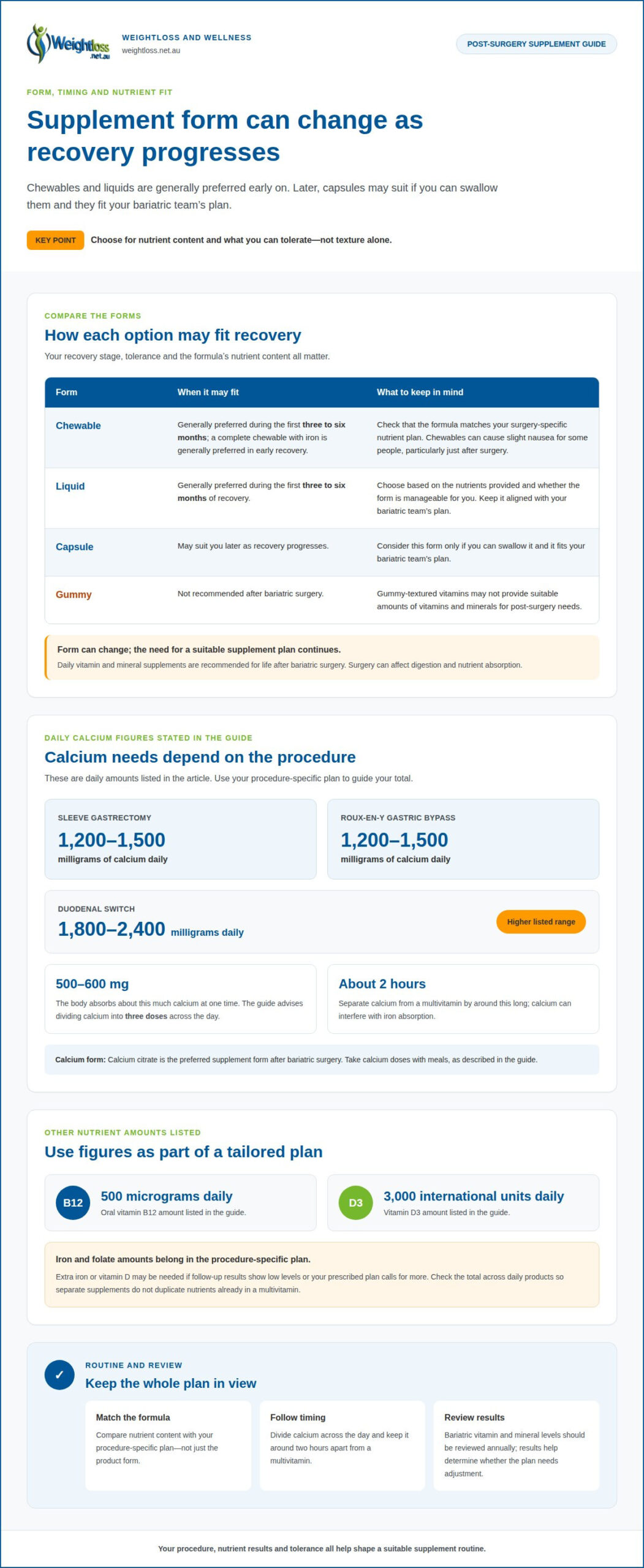
The best form of multivitamin after weight-loss surgery can change as recovery progresses. Chewable multivitamins for weight loss surgery, or liquid supplements, are generally preferred for the first three to six months; capsules may suit you later if you can swallow them and they fit your bariatric team’s plan. Gummy-textured vitamins aren’t recommended because they may not provide the amounts needed after surgery.
It’s understandable to want a manageable supplement form, especially while your eating and drinking habits are changing. You may not need to use the same form throughout recovery: tolerance, recovery stage and nutrient content all matter.
This guide explains how chewables, liquids and capsules may fit into recovery, why gummies can fall short, and when extra iron, calcium or vitamin D may be needed. It also explains how to consider changing forms while keeping your routine aligned with your nutritional needs.
Key Takeaways
- Plan for vitamin and mineral supplements as a long-term part of life after bariatric surgery, not just an early recovery measure.
- Choose a supplement for its nutritional content and a form you can tolerate; gummy texture alone doesn’t make it suitable.
- Iron, calcium and vitamin D needs can vary with the procedure and your nutritional results, so the right combination matters.
- As recovery progresses, consider whether your current form remains practical while keeping your supplement routine aligned with your care plan.
Why No Gummy Vitamins after Bariatric Surgery?
After bariatric surgery, daily vitamin and mineral supplements are recommended for life. Surgery can affect digestion and nutrient absorption, so a standard gummy may not meet post-surgery needs.
Gummy-textured multivitamins aren’t recommended because they may not provide suitable amounts of vitamins and minerals. A bariatric-specific formula, for example, may contain higher levels of iron, vitamin D, calcium and thiamine than a general over-the-counter multivitamin.
Bariatric multivitamin formulations and dosing
A bariatric multivitamin is formulated to support nutrient needs after weight-loss surgery. A complete chewable with iron is generally preferred during early recovery, while gummy vitamins may not provide an appropriate nutrient profile.
There isn’t one universal “best” chewable to rank in Australia. Compare the formula with your surgery-specific nutrient plan. Daily use matters: people who have had bariatric surgery are advised to take supplements every day for life. An over-the-counter multivitamin plan may advise one serving in the morning and one at bedtime.
Nutrient doses, side effects and monitoring
Daily amounts vary with the procedure: sleeve gastrectomy and Roux-en-Y gastric bypass are associated with 1,200-1,500 milligrams of calcium daily, while duodenal switch recommendations are 1,800-2,400 milligrams. Oral vitamin B12 is listed at 500 micrograms daily, and vitamin D3 at 3,000 international units daily. Iron and folate amounts belong in the procedure-specific plan.
Calcium is best divided across the day, with multivitamins taken around two hours apart from calcium. Chewables can cause slight nausea for some people, particularly just after surgery. Bariatric vitamin and mineral levels should be reviewed annually, and results help determine whether the current plan needs adjustment.
When additional iron, calcium and vitamin D may be needed
Your procedure and nutrient results help determine whether your supplement plan needs extra iron, calcium or vitamin D. The right balance supports recovery and helps address deficiencies without adding nutrients unnecessarily.
When extra iron and vitamin D may be needed
Additional iron or vitamin D may be needed if follow-up results show low levels or your prescribed plan calls for more. These nutrients aren’t one-size-fits-all: absorption changes after surgery, and the procedure affects which deficiencies are more likely.
A chewable multivitamin may already contain iron, so a separate iron supplement could duplicate what you take. Vitamin D may also be included in a multivitamin, while calcium can be taken separately. Check the total nutrient amounts across your daily products to ensure the combined plan matches your needs.
For example, someone whose results show low iron may need a different plan from someone whose levels are adequate. The same applies to vitamin D: results and surgery type help determine whether an additional supplement is appropriate.
Calcium options, dosing and timing
Calcium needs vary by surgery type, and supplements can help meet the prescribed daily amount. Sleeve gastrectomy and Roux-en-Y gastric bypass use one calcium range, while recommendations for duodenal switch are higher. Calcium citrate is the preferred supplement form after bariatric surgery.
The body absorbs about 500-600 milligrams of calcium at one time, so divide calcium into three doses across the day. Take doses with meals, and separate calcium from a multivitamin by around two hours. This timing matters because calcium can interfere with iron absorption.
Use your procedure-specific plan to guide the total amount, then choose a form you can take consistently. For practical recovery options, explore post-bariatric surgery essentials alongside your prescribed supplement routine.
Daily supplement recommendations after Roux-en-Y gastric bypass
Daily supplements help address the risk of nutritional deficiencies after bariatric surgery. The procedure matters because bypassing more of the gut can increase those risks.
Daily multivitamin use after surgery
A daily multivitamin is part of ongoing nutrition after weight-loss surgery, with the dose and formulation shaped by the operation. Adelaide Bariatric Centre recommends starting multivitamins two weeks after surgery and describes a double-dose multivitamin as part of an over-the-counter supplement plan.
That recommendation reflects increased nutrient needs after surgery. The stated thiamin requirement is 10 times the amount needed before surgery. A bariatric dietitian can consider your procedure and nutrient results when helping align your supplement routine with your needs.
Consistency is important, but a product label alone doesn’t show how it fits the whole plan. Account for separate calcium or vitamin B12 supplements when considering the daily regimen.
Recommendations for bypass and sleeve surgery
Roux-en-Y gastric bypass and sleeve gastrectomy can require different supplement combinations. For both procedures, the listed daily calcium recommendation is 1,200-1,500 milligrams. This is a total daily amount, not necessarily the amount contained in one supplement.
For gastric bypass, recommendations may include a multivitamin alongside separate calcium, with nutrient levels reviewed to guide the plan. Sleeve gastrectomy also calls for a procedure-specific combination. For example, a multivitamin containing iron may be paired with a separate calcium supplement.
These examples show why one product label may not represent your complete daily routine. Surgery type, the amount of gut bypassed and nutrient results all affect the combination. Follow your prescribed schedule consistently, and use follow-up results to guide changes rather than copying another person’s dose. A dietitian can help explain how each supplement contributes to your overall plan.
Chewable or liquid multivitamins during early recovery
Chewable or liquid multivitamins are preferred during the first three to six months after bariatric surgery. These forms may be easier to manage while swallowing feels difficult. Choose according to what you tolerate and the nutrients in your prescribed plan, not texture alone.
Supplement timing also depends on your recovery stage. Begin taking supplements when you start the blended-food stage of your diet, following your bariatric team’s instructions. Celebrate says many patients start with chewables immediately after surgery and transition to capsules later. There’s no single day for making that change: swallowing comfort and your plan both matter.
If you’re comparing chewable multivitamins for weight loss surgery, consider whether the form remains comfortable and provides the required nutrients. Capsules may suit you once you can swallow them and they fit your plan. Some people manage tablets soon after surgery, while others need a different form for longer.
Liquid supplements can be useful if larger tablets are difficult to swallow. Calcium tablets, for example, may be harder to take because of their size, making liquid calcium a more manageable option. Chewables can also cause slight nausea for some people just after surgery.
Before changing forms, consider how the new product fits with your other supplements. Assess chewable multivitamins for weight loss surgery as part of your full daily routine, not in isolation. Separate calcium and multivitamin supplements have different roles, and timing can matter. Keep your prescribed schedule in view to avoid a gap when changing formats.
Choose a format you can take consistently as your recovery progresses. Explore supplements and recovery products to support a practical routine through early recovery.
Weightloss and Wellness: Post-Bariatric Surgery Essentials
Weightloss and Wellness offers Post-Bariatric Surgery Essentials to help you find practical recovery products. If you’re organising your routine after surgery, these essentials can complement the supplement plan set by your bariatric team, not replace its nutrient advice.
The range also includes products that support medical weight loss, healthy diet products, and affiliate products from Amazon, Walmart and others. Consider these options if you’re looking for recovery or lifestyle products alongside your established care plan. Choose according to your needs and existing guidance, especially when selecting supplements.
For help exploring relevant options, contact Weightloss and Wellness.
Build a routine that can grow with you
Let consistency, not convenience alone, guide your choice. When comparing chewable multivitamins for weight loss surgery, consider whether the form suits your recovery stage and its nutrient profile matches your care plan. A routine you can maintain is more useful than choosing by flavour or format alone. Your bariatric team’s recommendations should guide decisions about supplements and nutrient needs.
As your recovery progresses, your practical needs may change too. Weight Loss and Wellness offers post-bariatric surgery essentials, wearables and health tech items to support different parts of your wellness routine. Choose products that complement your plan rather than replace personalised nutrition advice.
If you’re ready to explore options for your next stage, contact Weightloss and Wellness. Take each decision steadily, and keep building a routine that supports your wellbeing over time.
Frequently Asked Questions
Can I switch between chewables and capsules?
Yes, you can change forms when capsules are comfortable to swallow and still suit your prescribed nutrient plan. For example, someone who struggles with large tablets during early recovery may use a chewable or liquid form first. Consult your doctor before changing supplements or starting a wellness programme. Compare the nutrients and serving directions on both products to avoid gaps or accidental duplication.
Why do I need a bariatric multivitamin instead of a regular one?
A bariatric multivitamin is designed to provide a nutrient profile suited to post-surgery needs, which can differ from a general formula. Bariatric recommendations may include higher levels of iron, vitamin D, calcium and thiamine than standard over-the-counter multivitamins, for example. A regular product’s label may not match your surgery-specific plan, so assess the full nutrient profile rather than relying on the word “multivitamin”.
What vitamins and minerals are recommended after bariatric surgery in Australia?
Plans commonly include a multivitamin and may include iron, vitamin B12, folate, calcium and vitamin D. As examples, recommendations list vitamin D3 at 3,000 international units daily and oral vitamin B12 at 500 micrograms daily. Calcium amounts vary by operation, and individual iron or folate needs depend on your results. Use your procedure-specific plan to understand which nutrients and amounts apply to you.
Are chewable multivitamins suitable after gastric bypass or sleeve gastrectomy?
Yes, chewable forms can be suitable after gastric bypass or sleeve gastrectomy if their nutrients match the plan for that procedure. The distinction matters: the amount of gut bypassed can affect deficiency risk, while sleeve and bypass plans may use different supplement combinations. Consider the whole regimen, including separate calcium, rather than judging suitability by chewable texture alone.
When can patients start chewable vitamins after bariatric surgery, and how long should they use them?
Start supplements according to your post-operative schedule, which may introduce them when you begin the blended-food stage. Chewable or liquid forms are preferred during the first three to six months after surgery. Swallowing comfort and your prescribed plan guide any later switch. Vitamin and mineral supplementation is generally a lifelong part of bariatric care, even when the form changes.
How much do chewable bariatric multivitamins cost in Australia?
Prices vary by product and retailer, so there isn’t one Australian price that applies to every chewable. Weightloss and Wellness features affiliate products from retailers. This page contains affiliate links. We may earn a small commission at no extra cost to you if you purchase through these links. Information is for reference only, isn’t medical advice or product endorsement; consult your doctor and read the Terms of Use and Disclaimer.