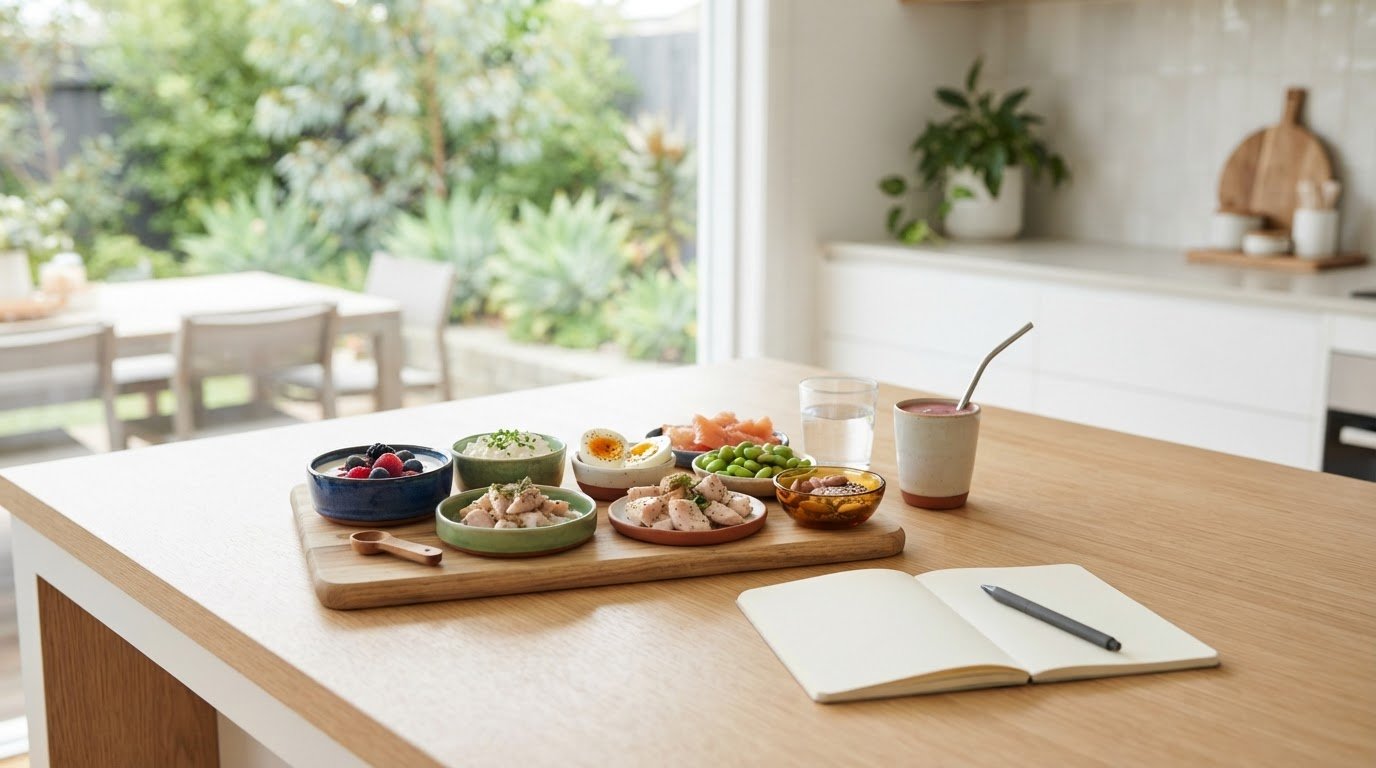
What if the best high-protein snack after bariatric surgery isn’t the one with the biggest number on its label? A search for “bariatric snacks high protein” can make protein seem like the whole answer, but portion size, texture and your recovery stage matter too.
Planning snacks can be tricky when portions are small, nutrition panels are crowded and foods that once suited you feel different during recovery. A little preparation can make it easier to find convenient options that fit your routine without guessing what’s right for your body.
This guide covers practical snack ideas, from soft choices to more textured options, that you can adapt to the eating stage set by your bariatric team. You’ll also find a straightforward way to compare protein, serving size and sugar on packaged foods, along with safety-minded planning tips. Use these ideas as general guidance, not a substitute for advice from your healthcare team. Their recommendations should lead the way. The most useful snack is one that suits your stage, tolerance and everyday life, not just its protein label.
Key Takeaways
- Start with your bariatric team’s food-stage guidance, because suitable textures and choices can change during recovery.
- Compare protein per serve with the serving size, sugar and ingredients to understand what a packaged option offers.
- Explore varied bariatric snacks high protein, including familiar food categories, and choose only options that suit your current tolerance.
- Build a flexible snack routine by following your instructions, preparing suitable choices and noticing how they work for you.
- Explore healthy diet and post-bariatric product categories with your nutrition needs in mind. Commercial links may earn the site a commission.
Why high-protein bariatric snacks can help with everyday planning
A protein-rich bariatric snack is a small, suitable food or drink that contributes protein towards the personal intake goal set for you after surgery. Its practical role is to provide another planned opportunity to include protein when meals are small or your day is busy. Searching for bariatric snacks high protein can bring up plenty of options, but the most useful choice isn’t necessarily the one with the highest protein number. It needs to suit your current food stage, texture needs and tolerance.
Protein is one part of a balanced post-operative eating plan, alongside other foods and fluids recommended by your care team. Needs differ between people, so a target that’s right for someone else may not be right for you. A snack can complement meals when it fits your plan; it shouldn’t routinely replace meals or override your bariatric team’s instructions. If you’ve been given a specific protein goal, use that as your guide rather than a general rule found online.
In brief: Planning a few small, suitable options can make it easier to include protein in your routine while keeping your personal guidance and tolerance in view.
What makes a snack protein-rich after bariatric surgery?
There isn’t one universal protein cut-off that makes a snack suitable for everyone after bariatric surgery. Consider how much protein a portion contributes to your prescribed goal, then look at the food as a whole. Its serving size, texture, other ingredients and how comfortably you can eat it all matter. A high number on a label doesn’t guarantee that the item is appropriate for your stage or needs.
Why food stage and tolerance come first
Eating plans commonly progress through different textures after surgery, from liquids and puréed foods to soft foods and, when advised, more regular textures. The timing and suitable foods vary, so follow your own team’s instructions before trying something new, even if it appears soft or protein-rich. If eating causes discomfort, stop and follow your care plan. Persistent difficulty eating warrants appropriate clinical advice from your care team.
That’s why a snack plan should be flexible, not a fixed checklist. On a busy day, prepare an option that your current instructions already allow rather than relying on an unfamiliar product or forcing yourself to finish a portion. Keep meals as the foundation of your routine, and use snacks only in the way your plan allows. If your stage or tolerance changes, revisit your choices instead of assuming yesterday’s option will suit you today. This makes everyday planning more manageable without treating general ideas as individual medical advice.
How to choose high-protein bariatric snacks that suit your needs
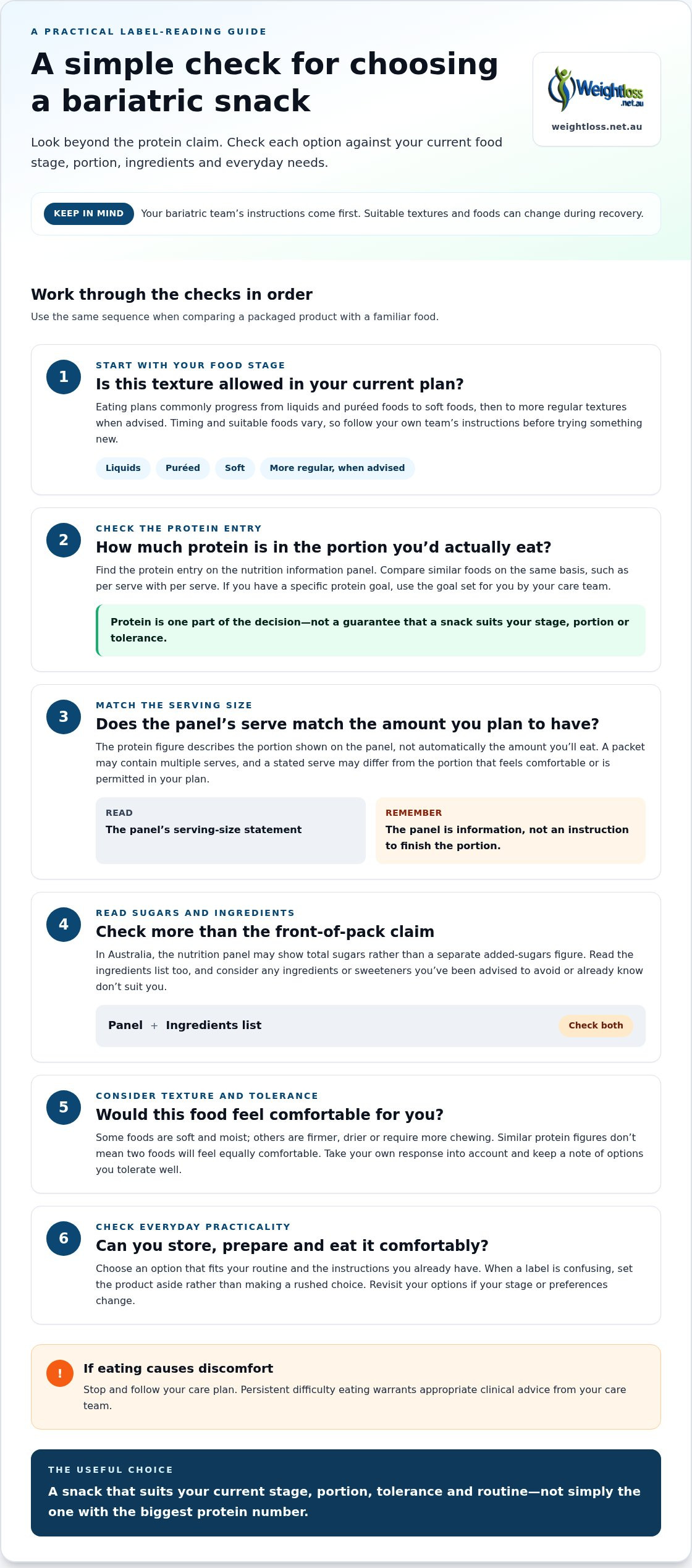
Choosing between bariatric snacks high protein options starts with more than spotting a prominent claim on the front of a packet. A quick, consistent check can help you compare products while keeping your own food-stage instructions, nutrition needs and tolerance in view. There’s no single snack that suits everyone.
Before adding an option to your shopping list, check:
- Food-stage fit: Is this texture and format allowed in your current plan?
- Protein per serve: How much protein is in the portion you’d actually eat?
- Serving size: Does the panel’s stated serve match the amount you plan to have?
- Ingredients and sugars: Are there ingredients or sweeteners you’ve been advised to avoid or already know don’t suit you?
- Practicality: Can you store, prepare and eat it comfortably as part of your routine?
Read the nutrition panel and ingredients list
On packaged foods, find the nutrition information panel and check its serving-size statement and protein entry. Compare similar items on the same basis, such as per serve with per serve, and note whether the listed portion reflects what you’d eat. In Australia, the panel may show total sugars rather than a separate added-sugars figure, so read the ingredients list as well. Protein is only one part of the decision.
The label’s serving size matters because the protein figure describes the portion shown, not automatically the amount you’ll eat. For example, if one packet contains multiple serves, the protein listed per serve may be less than the total for the whole packet. A large stated serve may also differ from the portion that feels comfortable or is permitted in your plan. Use the panel to understand the food, not as an instruction to finish it.
Match texture and format to your current stage
Consider texture alongside the label. Some foods are soft and moist; others are firmer, drier or require more chewing. These differences can matter after surgery, but no texture is universally suitable at a particular point in recovery. Follow your bariatric team’s stage-specific instructions and take your own response into account. Similar protein figures don’t mean two foods will feel equally comfortable to eat.
When comparing a packaged snack with a familiar food, ask the same questions: is it allowed now, does the portion align with your instructions, and are the ingredients suitable for you? Keep a note of options you tolerate well, and revisit it if your stage or preferences change. If a label is confusing, set that product aside rather than making a rushed choice. You can also browse healthy diet and post-bariatric resources for products to compare with your personal guidance.
High-protein bariatric snack ideas: simple options to consider
A useful shortlist gives you variety without turning snack planning into a rigid menu. The ideas below are examples to consider only if they fit your current eating stage, personal tolerance and care team’s guidance. You might find a soft option works best at one point, while another becomes manageable later. Focus on foods you can eat comfortably rather than trying to include every suggestion.
Soft and simple snack ideas
For a stage that allows soft or smooth textures, familiar foods may be easier to adapt than an elaborate recipe. Choose the texture and consistency your instructions permit, and remember that dairy or eggs won’t suit everyone.
- Plain or high-protein yoghurt: If dairy is suitable for you, yoghurt can be eaten as is or, if your plan allows, paired with a smooth addition. Check that the texture and ingredients suit your needs.
- Cottage cheese: Its soft texture makes it an option to consider when permitted. You could have it plain or with a flavouring that fits your plan, keeping the portion guided by your own instructions.
- Soft eggs: Softly cooked eggs may be worth considering at an appropriate stage. If egg texture feels difficult, don’t force it. Individual comfort matters as much as the food’s protein content.
- Smooth options: Where your plan permits, a smooth dairy-based snack may offer an alternative to chewing. Smoothness alone doesn’t make a food suitable, so check the ingredients and your stage guidance.
Portable and savoury snack ideas
For days out or busy stretches between meals, portability can help, but don’t let convenience outrank suitability. Pack foods safely and choose formats you can manage comfortably. Firmer or drier textures may be challenging for some people, particularly if their current instructions call for softer foods.
- Cheese portions: A suitable cheese portion can be easy to pack. Consider whether its firmness and texture work for you, and follow the portion guidance in your plan.
- Soft fish: Soft, moist fish may be an option if your stage guidance allows it. Keep preparation simple and don’t assume every fish dish will have a texture you tolerate.
- Other savoury choices: Depending on your instructions, consider a moist, protein-containing food you already know sits comfortably. Familiarity can make a new routine easier to manage.
- Packaged protein snacks: These can offer a portable format, but products vary in texture, ingredients and serving information. Treat them as a category to compare, not an automatic fit or a substitute for foods your plan recommends.
Searches for bariatric snacks high protein can surface plenty of sweet and savoury ideas, but no roundup can determine what’s suitable for you. Use these examples as prompts for planning, then choose from the options your current guidance allows. If a food feels uncomfortable, set it aside and follow your care team’s advice rather than pushing through.
How to plan bariatric snacks around your routine and food tolerance
A useful plan for bariatric snacks high protein starts with your own eating instructions, not a generic timetable. Snacks can be easier to manage when you’ve thought ahead, but they don’t need to be rigid. Your appetite, tolerance and schedule may shift from day to day, so build in options and room to adjust.
Build a flexible snack plan
Start with the eating pattern and protein guidance prescribed by your bariatric team. Then choose a few options that suit your current stage and fit different parts of your routine, such as time at home, work or travel. The aim is to make an appropriate choice easier to access, not to add eating occasions that aren’t part of your plan.
- Check your guidance: Note your current food stage, any portion or timing instructions, and your personal protein goal.
- Select suitable options: Keep a short list of foods you’re currently allowed and generally tolerate. A familiar choice can be more practical than an unfamiliar snack you’ve bought on impulse.
- Prepare for your day: Set aside an option before leaving home, where practical. Use a suitable container for foods that need one, and follow the product’s storage directions and ordinary food-safety guidance.
- Review and adapt: Notice whether the plan fits your routine. If your appetite, tolerance or instructions change, adjust your shortlist rather than sticking to a plan that no longer works.
Keep snacks in their proper place within your broader care plan. They don’t replace prescribed supplements, which have a separate role after surgery. Follow your team’s advice about supplements and speak with them before making changes. The post-op vitamin guide explains why vitamin planning is distinct from snack choices.
Notice tolerance and know when to pause
Eat slowly and attentively, following the pace and other instructions your care team has given you. Pay attention to how a snack feels as you eat and afterwards, not only to whether it fits your schedule. You don’t need to push through discomfort to meet a plan. Pause if a food feels troublesome, and avoid treating one difficult experience as a reason to change your whole routine without guidance.
A simple food note can help you spot patterns and have a clearer conversation with your care team. Record what you tried, its texture, how much you managed in line with your instructions, and any reaction or discomfort. If difficulty eating persists or symptoms concern you, seek clinical advice from your care team. In the meantime, set aside the troublesome food and return to options already known to suit you.
For more ideas and resources to support your post-surgery routine, explore post-bariatric wellness resources.
Find useful bariatric snack and wellness resources for your next step
Good snack choices aren’t decided by protein content alone. Your current eating stage, personal tolerance and the serving details on a label all help determine whether an option fits your routine. Keep those factors in view as you explore bariatric snacks high protein, and treat general ideas as a starting point rather than a personalised recommendation.
Explore product categories with a clear purpose
Weightloss and Wellness is an online affiliate marketplace for Australians, with product categories including healthy diet products and post-bariatric surgery essentials. Browsing categories can help you discover options, but compare each item’s nutrition panel, ingredients, serving information and texture with your own needs and stage guidance. A product description or protein claim can’t establish whether a food is suitable for you.
For broader product discovery, the Australian wellness products guide covers a wider range of wellness categories. Use it to explore products, not as a substitute for your care team’s instructions. If an option is unfamiliar, check its details carefully and set it aside if it doesn’t align with your current plan or known tolerance.
Some links to products from external retailers are affiliate links, which means Weightloss and Wellness may earn a commission if you make a purchase through them. This explains the site’s relationship with linked retailers; it doesn’t change the need to make choices based on your nutrition needs and post-operative guidance.
Choose a manageable next step
You don’t need to build a perfect snack list all at once. Save a short list of options that your current instructions allow and that you’ve found comfortable. Note useful details beside each one, such as its texture, relevant ingredients and the label’s serving size. That gives you a practical reference for planning at home or preparing for a busy day, without locking you into choices that may stop suiting you.
If you’re experiencing persistent difficulty eating or have questions about a food reaction, make a note of what happened and raise it with your bariatric care team. Their advice should guide any changes to your food choices. Steady, informed adjustments are more useful than trying to solve ongoing symptoms by switching snacks repeatedly.
Explore wellness resources and use your personal stage guidance and label checks to narrow down what may be worth considering. A small, suitable next step is enough.
Make your next snack choice feel manageable
Your next step doesn’t need to be a complete pantry overhaul. Choose one option you’re already comfortable with, then use your current care instructions to decide whether it belongs in your routine. This practical approach can make planning bariatric snacks high protein feel less overwhelming while leaving room for your needs to change.
Weightloss and Wellness is an online affiliate marketplace featuring healthy diet and post-bariatric product categories. Product referrals may connect you with external retailers, and affiliate links may earn the site a commission. Keep your own nutrition needs and stage guidance at the centre of any decision.
Explore Weightloss and Wellness wellness resources for product ideas to consider at your own pace. Save questions about ongoing food difficulties for your care team, and build your routine one manageable choice at a time.
Frequently Asked Questions
What are good high-protein snacks after bariatric surgery?
Good options are those that fit your recovery stage, tolerance and care plan. Yoghurt, cottage cheese, eggs, soft fish and selected packaged snacks may be possibilities when suitable. A search for “bariatric snacks high protein” can offer ideas, but treat online lists as inspiration, not instructions. Keeping a short list of foods you’ve already managed comfortably can make everyday planning easier.
Can I eat protein bars after bariatric surgery?
Some people may tolerate a protein bar, while others find its texture, size or ingredients difficult. Check the whole label, including how many serves are in the pack, and compare it with your current guidance. A front-of-pack protein claim doesn’t establish that a bar suits you. If you’re considering one for travel, choose only a format your plan allows and pause if it causes discomfort.
How much protein should a bariatric snack contain?
There isn’t one snack protein target that suits everyone after surgery. Your care team’s daily goal and advice on spreading protein across meals and snacks should guide your choices. A simple food record can help you see how a snack fits alongside what you eat over the day, without turning a single label figure into a pass-or-fail test. If your target is unclear, ask your bariatric team.
Are high-protein snacks suitable immediately after bariatric surgery?
No, a high-protein label doesn’t make a snack suitable immediately after surgery. Your discharge instructions set the foods, textures and timing for your recovery stage, so don’t use a general snack list to move ahead. If a food isn’t clearly covered in your plan, follow the written guidance and seek direction from your care team before trying it. Recovery plans can differ from person to person.
What should I look for on a bariatric snack nutrition label?
Start with the serving size and protein per serve, then review ingredients and other nutrition details that matter to your plan. When comparing two similar snacks, compare their figures on the same basis rather than relying on front-of-pack claims. Also consider whether the texture is manageable for you now and whether you have a known intolerance. A high protein figure alone can’t determine personal suitability.
Can high-protein snacks replace bariatric vitamins or meals?
No, don’t use a snack to replace meals or supplements prescribed for you after surgery. Keep snack choices within your eating plan, and follow your care team’s separate instructions for meals and vitamins. If you’re finding it difficult to manage a meal or take a prescribed supplement, note what’s getting in the way and discuss it with your bariatric team before changing your routine.