
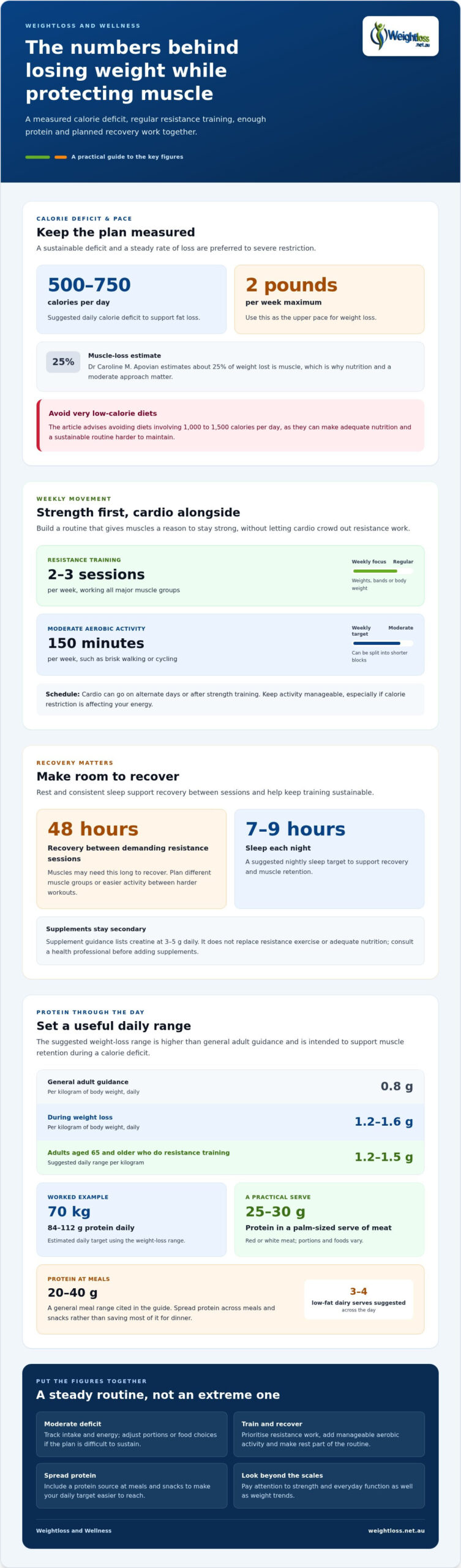
To support weight loss without losing muscle, create a sustainable calorie deficit of 500 to 750 calories per day and aim to lose no more than 2 pounds per week. Pair that measured approach with resistance training and enough protein to help your body retain muscle as you lose weight.
It makes sense to focus on the number on the scales, but how you lose weight matters too. A deficit that feels too restrictive can be hard to maintain, while a balanced plan leaves room to build steady habits and support your strength. For individuals who prefer dedicated clinical guidance throughout their journey, options like Dr. Harris Medical Weight Loss offer medically supervised programs designed to help support sustainable progress.
This guide covers setting a manageable deficit, combining cardio with resistance training, and spreading protein through the day. It also explains how recovery fits in, so you can make practical changes without turning every meal or workout into a test of willpower.
Key Takeaways
- Build a weekly routine around resistance training for all major muscle groups, then add manageable cardio that supports your overall activity.
- Spread protein across meals and snacks to make your daily intake easier to meet and support muscle repair.
- Pay attention to strength and everyday function, not only the scales, as changes in muscle can affect how capable you feel.
- Make recovery part of your plan: rest days and consistent sleep help you sustain training over time.
Calorie deficit and sustainable fat loss
Aim to lose no more than 2 pounds per week, a recommended pace for safe, effective, sustainable fat loss. A measured calorie deficit supports this goal better than severe restriction.
-
Understand how a calorie deficit can reduce muscle
Track what your body uses when you eat fewer calories. It first draws on stored glycogen; when that reserve is depleted, it burns fat and can also convert muscle protein into glucose for quick energy. Dr Caroline M. Apovian estimates about 25% of weight lost is muscle. This makes nutrition and a moderate approach important.
-
Avoid extreme calorie restriction
Check your eating plan for very low calorie intake before committing to it. Avoid diets involving 1,000 to 1,500 calories per day, which can make it harder to maintain adequate nutrition and a routine you can sustain. Instead of cutting out whole meals, consider where small, manageable changes could reduce excess energy intake.
-
Choose a moderate calorie deficit
Start with a daily deficit of 500 to 750 calories to support fat loss. This means taking in fewer calories than your body uses, while keeping meals nourishing enough to support your routine. Track your intake and energy, then adjust portions or food choices if the plan feels difficult to maintain across ordinary days.
-
Set a safe weekly weight-loss rate
Use no more than 2 pounds per week as your upper pace for weight loss. If your progress is faster, review the size of your calorie deficit and whether your nutrition has become overly restrictive. Weigh under consistent conditions and look at the trend over time, rather than changing your plan after one reading.
Combining aerobic and resistance exercise
To lose fat while preserving muscle, combine resistance training and aerobic activity with a manageable calorie deficit. Keep workouts regular and allow time to recover, rather than adding exercise without a plan.
- Schedule resistance training at least twice weekly, working all major muscle groups. A practical target is 2-3 sessions per week. Use weights, exercise bands or body weight as resistance, choosing movements you can perform with steady technique. Increase the challenge gradually as exercises become more comfortable. This gives your muscles a reason to remain strong while you lose weight.
- Build aerobic activity around your strength sessions. Aim for 150 minutes of moderate-intensity activity per week, such as brisk walking or cycling. You could split this into shorter blocks across the week. Place cardio on alternate days or after strength training, rather than letting it crowd out resistance workouts. Keep activity manageable, especially if calorie restriction is affecting your energy.
- Leave room for recovery between demanding sessions. Muscles may need 48 hours to recover after resistance training, so plan different muscle groups or easier activity between harder workouts. Make sleep part of the routine: aim for 7-9 hours each night to support recovery and muscle retention. How important are sleep and recovery? They help you recover between sessions and keep training consistently.
- Keep supplements secondary to training, food and rest. Creatine is listed at 3-5 g daily in supplement guidance, but it doesn’t replace resistance exercise or adequate nutrition. Can creatine help preserve muscle during weight loss? It may fit within a training routine, but don’t treat it as a substitute for the core habits. Consult a health professional before adding supplements. For home sessions, workout equipment can help you train with resistance.
Daily protein intake
For Australian readers, distinguish general adult protein guidance of 0.8 grams per kilogram daily from the 1.2 to 1.6 grams per kilogram suggested during weight loss. These figures serve different purposes: the higher range is intended to support muscle retention during a calorie deficit.
-
Set daily protein intake
Use your body weight to estimate a daily target of 1.2 to 1.6 grams of protein per kilogram while losing weight. For someone weighing 70 kilograms, that works out to 84 to 112 grams daily. Treat this as a planning range, not a reason to push intake higher without considering your overall nutrition and routine.
Adults aged 65 and older who do resistance training have a suggested range of 1.2 to 1.5 grams per kilogram. Match your target to your circumstances and keep it consistent alongside training. Protein supports muscle retention, but it works as part of a wider pattern, not as a replacement for regular meals or exercise.
-
Spread protein intake through the day
Spread your protein target across meals and snacks instead of saving most of it for dinner. Including a protein source each time you eat can make your daily intake easier to reach. For example, plan protein at breakfast, lunch and dinner, then add a protein-containing snack if meals alone fall short.
A palm-sized serve of red or white meat contains around 25 to 30 grams of protein. Use that as a practical guide, while remembering that portions and foods vary. A general meal range cited for protein is 20 to 40 grams, so spreading servings can help you build a balanced day rather than relying on one large meal.
- Keep the habit simple: plan tomorrow’s meals and decide where protein fits. One suggested starting point is a palm-sized serving at two meals, with protein included at other meals and snacks too. Low-fat dairy is another option, with three to four serves suggested to spread protein through the day.
- Review your eating pattern over several days, not just at one meal. Note your estimated protein intake in grams, whether each meal includes a source, and how the routine fits your calorie deficit. If tracking feels burdensome, choose repeatable habits, such as adding a familiar protein food at breakfast and lunch.
Effects of muscle loss during weight reduction
Muscle loss can affect more than appearance: it may change your strength, movement and body composition. Track how you function and progress in training alongside scale readings to notice changes early.
- Compare your strength in familiar activities. If your usual resistance exercises feel harder or you’re lifting less as your body weight falls, review your training, food intake and recovery. One difficult session doesn’t establish a pattern, so note your performance over time. Losing muscle can reduce physical capacity, making everyday tasks such as carrying groceries or climbing stairs feel more demanding.
- Notice changes in everyday tasks, not just how your clothes fit. Difficulty rising from a chair, carrying a shopping bag or completing a familiar workout can signal reduced strength. These signs don’t show exactly how much muscle or fat has changed, but they’re useful prompts to reassess your progress and habits.
- Remember that scale weight combines fat, muscle, water and other body tissue. Dr Caroline M. Apovian estimates that about 25% of weight lost is muscle. That estimate underlines why the number on the scales alone can’t show whether you’re losing fat while retaining muscle mass. Assess strength and body weight together for a more useful picture.
- If your strength is declining over time, review your approach. Check whether your meals provide enough protein, your resistance sessions are consistent, and your calorie deficit feels overly restrictive. These factors influence muscle retention during weight loss. Consider nutrition, training and recovery together rather than trying to speed progress by cutting more food.
- Use a simple weekly check-in: record body weight under similar conditions, note performance in familiar exercises, and write down any changes in daily movement. This won’t measure muscle mass directly, but it gives you practical information to guide your next steps. For added support with a medical weight-loss routine, explore practical weight-loss support.
Weightloss and Wellness: Affiliate Products from Amazon, Walmart and others
Weightloss and Wellness brings together practical products that can support the habits involved in weight management. If you’re organising meals, exploring healthy diet products may help you plan your routine. Wearables and health tech items can help you keep track of activity, while apparel and accessories can support your day-to-day exercise plans. The marketplace also features affiliate products from Amazon, Walmart and others, giving you options to explore alongside the guidance in this article.
Choose items that fit your routine and complement your approach to nutrition and training, rather than expecting a product to replace consistent habits. Explore Weightloss and Wellness when you’re ready to find products relevant to your next steps. Visit weightloss.net.au to browse the available options.
Make your next step easy to repeat
Choose one small change you can carry into next week, such as planning a protein-rich breakfast or setting out your training gear the night before. A routine for weight loss without losing muscle is more practical when it fits around work, family meals and activities you already enjoy. If your schedule changes, adapt the plan rather than treating one disrupted day as a reason to abandon it.
Useful tools can make those habits easier to organise. Weightloss and Wellness offers healthy diet products, wearables and health tech items, alongside affiliate products from Amazon, Walmart and others. Explore these options when they complement your routine, not as a replacement for consistent choices.
Ready to explore products that support your next steps? Visit Weightloss and Wellness and choose what suits your approach. Keep building at a pace you can sustain; each repeatable choice helps you move forward.
Frequently Asked Questions
What calorie deficit is best for losing weight without losing muscle?
A daily deficit of 500 to 750 calories is a suggested starting range for fat loss, alongside a weekly loss rate no higher than 2 pounds. Apply it by estimating your usual intake, then making measured changes rather than sharply cutting portions. If the approach disrupts normal meals or training, review the size of the deficit and your food choices.
How much protein should you eat while losing weight to preserve muscle?
Aim for 1.2 to 1.6 grams of protein per kilogram of body weight daily during weight loss. Calculate your target by multiplying your weight in kilograms by the range, then use food labels and portion information to estimate your intake. Fish, eggs, dairy, tofu and legumes can all contribute. Spread protein between meals instead of relying on one large serving.
What strength training routine helps maintain muscle during weight loss?
Plan resistance workouts that cover your main movement patterns, such as squatting, pushing, pulling and hinging. Complete two to three sessions weekly using weights, bands or body-weight exercises. For example, record each exercise and the load you use, then aim to maintain your performance as your plan continues. Adapt exercises to your ability and focus on controlled technique.
Does cardio cause muscle loss during a calorie deficit?
Cardio doesn’t automatically cause muscle loss; your overall plan matters. Combine aerobic activity with resistance training, and avoid letting long or frequent cardio sessions replace strength work or leave too little time to recover. Moderate aerobic activity can include brisk walking or cycling. If your strength declines as your body weight falls, review your exercise balance, food intake and recovery habits.