Cardio isn’t the only way to support weight loss: strength training for weight loss can help you build or maintain muscle while you work towards reducing body fat. Adults can aim for at least 150 minutes of moderate physical activity each week, including strength training on two days. Resistance exercise challenges your muscles, while cardio adds movement to your week. The number on the scales may not tell the whole story, so it helps to focus on a routine you can sustain.
If cardio has felt like the obvious choice, you’re not alone. The best approach isn’t necessarily choosing weights over cardio: combining strength training, other movement and healthy eating can create a more balanced plan. This guide explains how strength training for weight loss can help, how it compares with cardio, and how to build a routine that suits your starting point. You’ll also find practical ways to pair training with nourishing meals, so you can focus on steady habits rather than quick fixes.
Key Takeaways
- Build a manageable routine with strength sessions that challenge major muscle groups, then progress gradually as your technique and confidence improve.
- Rather than choosing weights or cardio, combine resistance exercise with regular movement to support a balanced approach to weight loss.
- Pair training with nourishing meals and consistent habits, focusing on a plan you can maintain rather than quick fixes.
- Use practical supports, such as home fitness equipment, healthy diet products or wearables, to help make your routine easier to follow.
Can you lose weight with strength training?
Yes. Strength training can support weight loss by helping maintain muscle mass as body fat decreases. Australian adults are recommended to do muscle-strengthening activities on at least two days each week.
-
Select strength-training exercises and repetitions
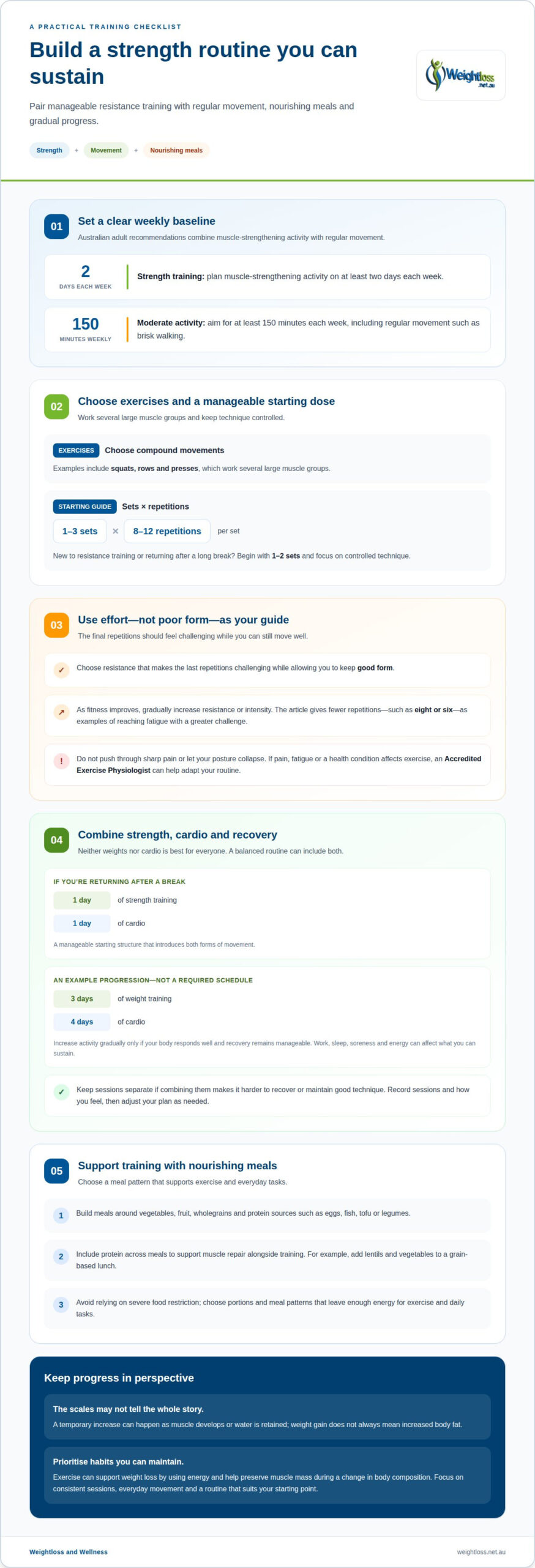
Choose compound exercises that work several large muscle groups, such as squats, rows and presses. The American College of Sports Medicine recommends starting with 1 to 3 sets of 8 to 12 repetitions per set. If you’re new to resistance training or returning after a long break, begin with 1 to 2 sets and focus on controlled technique.
-
Set exercise intensity around muscle fatigue
Use a resistance that makes the final repetitions challenging while allowing you to keep good form. As your fitness improves, gradually increase the resistance or intensity so fatigue occurs after fewer repetitions, such as eight or six. Avoid pushing through sharp pain or letting your posture collapse. An Accredited Exercise Physiologist can tailor resistance training around energy fluctuations, comorbidities and gradual progression without worsening fatigue.
-
Use exercise to support weight loss and maintenance
Pair strength sessions with aerobic exercise or cardio exercise, such as brisk walking, to add movement to your routine. Exercise supports weight loss by using energy and helps preserve muscle mass during a change in body composition. Strength training can also support long-term weight maintenance by keeping muscle-focused activity part of your regular routine. A temporary scale increase can happen as muscle develops or water is retained, so weight gain doesn’t always mean increased body fat.
-
Check Australian strength-training recommendations
Plan strength work on at least two days each week, alongside at least 150 minutes of moderate physical activity weekly. This answers the practical question: Australian adult recommendations combine muscle-strengthening activity with regular movement. To reduce injury risk, start with manageable resistance, use controlled movements and increase the challenge gradually. If pain, fatigue or a health condition affects exercise, an Accredited Exercise Physiologist can help adapt your routine.
Cardio or Weightlifting: Which Is Better for Weight Loss?
Neither option is best for everyone. Compare how each fits your activity levels, muscle-strengthening goals and weight-loss routine.
-
Connect muscle with metabolism and insulin sensitivity
Include resistance exercise to challenge your muscles, and add cardio for sustained movement. Muscle uses glucose as fuel, while insulin helps move glucose from the bloodstream into cells. Insulin sensitivity describes how responsive those cells are to insulin. These processes matter for metabolic health, but neither exercise type is a guaranteed shortcut to weight loss. Choose a routine you can maintain, and don’t judge progress by calorie burn alone.
-
Relate muscle size to resting metabolic rate
Think about muscle as part of your body’s resting energy needs, not a rapid weight-loss tool. The research estimates that losing one kilogram of muscle reduces resting energy expenditure by approximately 13 kcal per day; losing one kilogram of fat reduces it by 4 kcal per day. These estimates illustrate why preserving muscle can matter during a loss journey, but they don’t predict an individual’s metabolic rate. Body composition is only one influence among several.
-
Consider strength training’s effect on resting metabolism
Keep strength work in your plan alongside cardio, rather than expecting lifting alone to drive results. Resting metabolic rate accounts for 60-75% of total energy expenditure in non-exercising people, and a review of 18 studies found resistance training increased resting metabolic rate. The size of that change varies, so focus on consistent sessions and everyday movement, including walking or standing more. If home workouts help you lift regularly, explore home fitness equipment suited to strength exercise.
Combining resistance training with a healthy diet
Pair resistance training with nourishing meals and aerobic movement. A practical plan can support body composition while being easier to sustain.
- Build meals around filling, nutritious foods, such as vegetables, fruit, wholegrains and protein sources like eggs, fish, tofu or legumes. Include protein across meals to support muscle repair alongside training. Rather than relying on severe food restriction, choose portions and meal patterns that leave you with enough energy for exercise and daily tasks. For example, add lentils and vegetables to a grain-based lunch.
- Combine resistance training and cardio in a weekly routine that matches your current fitness. If you’re returning after a break, begin with one day of strength training and one day of cardio. This provides a manageable starting structure while introducing both forms of movement. Keep sessions separate if doing them together makes it harder to recover or maintain good technique.
- Increase activity gradually if your body responds well and recovery remains manageable. One possible progression is three days of weight training and four days of cardio. Treat this as an example, not a required schedule: work, sleep, soreness and energy can all affect what you can sustain. Keep a simple weekly record of sessions and how you feel, then adjust your plan before missed workouts become a pattern.
- Review your habits together rather than judging food or exercise in isolation. For example, if an evening workout leaves you tired, prepare a balanced meal beforehand and make your next session easier. Resistance training challenges muscle, while aerobic activity adds movement; meals provide energy for both. Changes in body weight alone don’t show the full picture, so consider your consistency, strength and how well the routine fits everyday life.
Strength training and weight loss
During weight loss, preserving lean tissue matters alongside changes on the scales. Without appropriate interventions, up to 40-60% of total weight lost may come from lean body mass.
- Use resistance training to give your muscles a reason to stay active as your body changes. Choose exercises such as squats, rows and presses, which challenge multiple muscle groups. The goal isn’t to burn the most calories in one session. Instead, make resistance exercise a consistent part of your activity and progress gradually as your strength improves.
- Track improvements beyond body weight. For example, note whether you can complete a familiar set with steadier technique or slightly more resistance. These changes can reflect progress in strength and endurance even when the scales move slowly. Don’t treat a single weigh-in as a measure of muscle or fat, because body weight alone cannot show which has changed.
- Keep expectations realistic about calories burned during lifting. A 30-minute weightlifting session may burn around 110 calories, but the amount varies with the workout and effort. Strength training’s value also includes helping you build muscle and maintain function. Pair it with other movement you enjoy, rather than extending every session just to chase a higher calorie figure.
- Make the routine workable at home or in a gym, and increase the challenge only when your form stays controlled. Circuit training can use 30 to 60 seconds of rest between sets to keep your heart rate elevated. If equipment would help you follow a regular plan, choose workout equipment that suits your exercises and available space. Consistent training, not an exhausting one-off workout, is the useful takeaway.
Weightloss and Wellness: Products that support medical weight loss
Weightloss and Wellness offers products that support medical weight loss, alongside healthy diet products, wearables and health tech items. These options may suit you if you’re building a routine and want practical products to support your broader habits, such as organising meals or tracking activity. They complement your plan; they don’t replace exercise, balanced eating or medical care.
You can also explore affiliate products from Amazon, Walmart and other retailers. Choose products that fit your needs and the routine you can sustain, rather than adding equipment or diet items without a clear purpose. If you’re following a medical weight-loss plan, align product choices with advice from your healthcare professional.
Explore product options that support your next steps with Weightloss and Wellness.
Make your next step one you can sustain
A routine doesn’t need to be perfect to be worthwhile. If you’re using strength training for weight loss, choose a manageable next step that fits your schedule, such as setting aside time for your next session or preparing a meal that supports your day. Small, repeatable choices can help turn an intention into a lasting habit.
As your routine takes shape, consider what would make it easier to stay engaged. Wearables and health tech items can help you track activity and notice patterns in your everyday movement. Use that information as a practical prompt, not a measure of your worth or a reason to push through discomfort.
Weightloss and Wellness brings together products to support health and wellbeing, including wearables and health tech items. If you’d like to explore options that fit your routine, contact Weightloss and Wellness. Keep your next step simple, give yourself time to build consistency, and recognise each effort along the way.
Frequently Asked Questions
How much should you exercise per week?
For general health, adults can aim for at least 150 minutes of moderate physical activity weekly, or 75 minutes of vigorous activity, plus strength work on two days. You could split moderate activity into brisk walks across the week and add two short resistance sessions. Choose activities that fit your schedule, then build a pattern you can maintain rather than cramming movement into one day.
Which types of exercise should you do to lose weight?
Combine aerobic activity with resistance exercise to include both sustained movement and muscle-strengthening work. For example, walk or cycle on some days and do body-weight squats, wall push-ups and resistance-band rows on others. If you’re short on time, a brisk walk during a lunch break still adds movement. Choose activities you enjoy and can repeat: a routine you keep doing is more useful than one you quickly abandon.
How does strength training help with weight loss?
Strength training for weight loss can help you maintain muscle as you reduce body fat, particularly when paired with suitable eating habits and regular activity. Muscle also supports everyday tasks, from carrying groceries to climbing stairs. Track more than scale weight: note changes in strength, how your clothes fit and whether daily movement feels easier. These observations provide useful context as your body composition changes.
How many days per week should beginners strength train for weight loss?
If you’re returning after a break, start with one strength-training day and add a separate cardio day. Once that schedule feels manageable and you’re recovering comfortably, work towards strength sessions on two days each week. Leave space between demanding sessions for rest, and avoid increasing frequency and resistance at the same time. A simple full-body session can make the first step easier to organise.
What strength training exercises are best for weight loss?
Choose exercises that involve large muscle groups and several joints, such as squats, hip hinges, rows and presses. For a home session, try a chair squat, a hip hinge with a light household object, and a resistance-band row. Keep movements controlled and use a range of motion you can manage comfortably. The best choices are exercises you can perform consistently with sound technique.
How many sets and reps should I do for fat loss?
For general muscle-building, the American College of Sports Medicine recommends starting with 1 to 3 sets of 8 to 12 repetitions. Use a resistance that lets you maintain good technique. This information is for reference only, isn’t medical advice and doesn’t endorse any product. Consult your doctor before starting a weight-loss or wellness programme, and read the Terms of Use and Disclaimer. This page contains affiliate links. We may earn a small commission at no extra cost to you if you purchase through these links.