
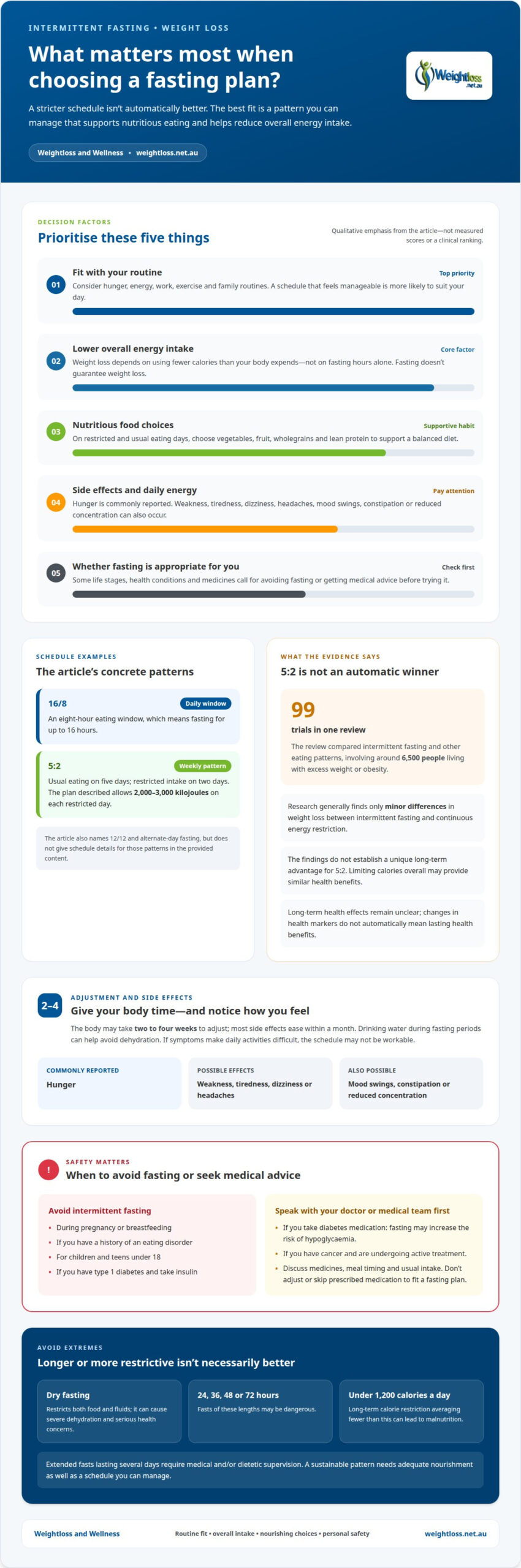
The best approach to intermittent fasting for weight loss is the one that fits your routine and helps you eat fewer calories overall. Fasting alone doesn’t guarantee weight loss, and the 5:2 plan isn’t automatically better than other approaches. What matters is whether the pattern feels manageable and supports nutritious eating.
It’s understandable to look for a clear winner when intermittent fasting for weight loss can mean anything from daily eating windows to whole days with restricted intake. But a stricter schedule isn’t necessarily a better fit: hunger, energy levels, work and family routines all affect how sustainable a plan feels.
This guide compares popular approaches, including 12/12, 16/8, 5:2 and alternate-day fasting, and explains what the evidence suggests about 5:2 and weight loss. You’ll also learn about possible side effects and who should avoid fasting or seek medical advice before trying it, so you can make a more informed choice about what may suit you.
Key Takeaways
- Compare daily eating windows, 5:2 and alternate-day fasting to see which schedule may fit your routine.
- On eating days, prioritise vegetables, fruit, wholegrains and lean protein to support nourishing food choices.
- Consider possible effects such as hunger, tiredness or dizziness, and pay attention to how fasting affects you.
- Fasting may not be appropriate for everyone; pregnancy, breastfeeding, a history of eating disorders and some health conditions call for extra caution.
Are there side effects to intermittent fasting?
Daily time-restricted eating sets a window for eating, rather than specific foods. Common schedules allow eating for six to eight hours daily, while daily time-restricted fasting often uses an eight-hour eating window. That can mean fasting for up to 16 hours. Time-restricted eating schedules can vary in how long the fasting period lasts. A narrower window may make meals harder to fit around work, exercise or family routines, so consider how the schedule affects your day.
Hunger is the most commonly reported side effect. Some people also experience weakness, tiredness, dizziness, headaches, mood swings, constipation or reduced concentration. The body may take two to four weeks to adjust, and most side effects ease within a month. Drinking water during fasting periods can help avoid dehydration. If symptoms make daily activities difficult, the schedule may not be a workable fit. Considering energy, focus and mood alongside eating patterns gives a fuller picture than watching calories alone.
Weight loss depends on using fewer calories than the body expends, rather than on fasting hours alone. Research comparing intermittent fasting with continuous energy restriction generally finds only minor differences in weight loss. A daily fasting window therefore isn’t automatically more effective than consistently reducing energy intake. Mayo Clinic notes that a 16-hour fast with an eight-hour eating window may raise heart disease risk compared with other time-restricted eating cycles. That makes the schedule’s potential drawbacks relevant, not just its convenience.
Avoid dry fasting, which restricts both food and fluids and can cause severe dehydration and serious health concerns. Longer fasts aren’t necessarily better: fasting for 24, 36, 48 or 72 hours may be dangerous. Long-term calorie restriction averaging fewer than 1,200 calories a day can lead to malnutrition. Extended fasts lasting several days require medical and/or dietetic supervision. If you’re trying time-restricted eating, don’t assume that extending the fasting period or sharply reducing the amount of food will improve results. A sustainable pattern needs adequate nourishment as well as a schedule you can manage.
Intermittent fasting: is the 5:2 diet good for weight loss?
The 5:2 plan may support weight loss if it helps reduce overall energy intake. Whether intermittent fasting for weight loss suits you also depends on food choices and whether the routine feels manageable.
Food choices on fasting and non-fasting days
The 5:2 diet combines usual eating on five days with restricted intake on two. On each restricted day, the plan described here allows 2,000 to 3,000 kilojoules. Choose vegetables, fruit, wholegrains and lean protein on both restricted and usual eating days. Nutritious choices help maintain a balanced diet, rather than treating non-fasting days as an opportunity to compensate with less nourishing foods.
Potential weight-loss and health benefits
The main potential benefit is weight loss if the schedule helps you consume fewer calories overall. A review compared intermittent fasting and other eating patterns across 99 trials, involving around 6,500 people living with excess weight or obesity. These findings don’t establish a unique long-term advantage for 5:2. Limiting calories overall may provide similar health benefits, so the plan’s value depends partly on whether its structure works for you.
Short-term health effects and marker changes
Restricted days can bring hunger or low energy, while changes to health markers don’t automatically indicate lasting health benefits. The long-term health effects of intermittent fasting remain unclear. If you take diabetes medication, speak with your doctor before trying 5:2, because fasting may increase the risk of hypoglycaemia. Discuss your medicines, meal timing and usual intake to understand how the restrictions may affect your health.
Effects on muscle, metabolism and exercise
Intermittent fasting for weight loss doesn’t guarantee that muscle mass, metabolism or exercise performance will be unaffected. Outcomes can depend on nutrition, food intake, and how fasting fits around training and recovery. A restricted day may feel especially difficult alongside demanding exercise. Pay attention to changes in your energy and performance, and discuss concerns with a healthcare professional before making substantial changes to your eating pattern.
Who should avoid fasting
Intermittent fasting isn’t suitable during pregnancy or breastfeeding, or for anyone with a history of an eating disorder. Children and teens under 18 should not try it. People with type 1 diabetes who take insulin should avoid intermittent fasting, while anyone taking diabetes medication should speak with their doctor first.
Some health situations need extra care. People with cancer undergoing active treatment should speak with their medical team before fasting. This includes considering a 5:2 plan, a daily eating window or alternate-day fasting. The schedule changes when food is eaten, which can matter when managing a condition or treatment. A normal eating routine may be a safer choice until the medical team has considered the person’s needs.
Diabetes medication deserves specific attention because fasting may increase the risk of hypoglycaemia, or low blood glucose. Before trying a fasting schedule, discuss the medication, meal timing and usual intake with your doctor. Don’t adjust or skip prescribed medication to fit a fasting plan. The same principle applies to the 5:2 diet: restricted days are still fasting days, even if you eat a small meal.
A history of disordered eating also matters when considering plans that divide days into restricted and normal eating. Rules about when or how much to eat may be unhelpful for someone with that history. Pregnancy and breastfeeding are also times to avoid fasting. If any of these circumstances apply, prioritise regular nourishment rather than alternating between restriction and eating normally. Protein-rich foods can be part of balanced meals, but they don’t make fasting appropriate for someone advised to avoid it.
Trials of fasting don’t establish that it suits everyone or every medical circumstance. If you have a health condition, take medication or are receiving cancer treatment, discuss the plan with your healthcare team before changing meal timing. Their advice can account for your condition, treatment and medication, rather than relying on a general fasting schedule.
Popular intermittent fasting approaches
Fasting plans differ in timing and how much food is consumed. The popular options below range from daily eating windows to full-day fasts, so compare their routines before deciding what may suit you.
- 12/12: Fast for 12 hours, then eat within a 12-hour window. This beginner option can fit around a usual overnight break from eating.
- 14/10: Fast for 14 hours and eat during a 10-hour window. It extends the fasting period while leaving more daily eating time than 16/8.
- 16/8: Fast for 16 hours, followed by an eight-hour eating window. The daily schedule may suit people who prefer consistent meal timing.
- 5:2: Eat normally on five days each week, then limit intake on two non-consecutive days. The restricted days need planning around work and regular activities.
- Alternate-day fasting: Alternate a normal, healthy eating day with a day of restricted calories or one small meal. Research suggests it is about as effective for weight loss as a typical low-calorie diet.
- Eat-Stop-Eat: Fast for 24 hours on one or two days per week. This is a more demanding pattern than daily time-restricted eating.
No schedule is automatically best for people living with obesity or seeking weight loss. The key difference is how often restriction occurs: a daily window limits eating time, while 5:2 and alternate-day plans restrict intake on selected days. Weight loss still depends on consuming fewer calories than the body expends, so a fasting label alone doesn’t determine results.
For a gentler starting point, consider whether a 12-hour fast fits your normal routine before weighing more restrictive approaches. A plan that disrupts meals, social commitments or exercise may be difficult to maintain. Explore weight-management support options as you consider what fits your routine.
Weightloss and Wellness: Post-gastric sleeve fast recovery products
Weightloss and Wellness offers post-gastric sleeve recovery products for people looking for practical support during recovery. Its range also includes products that support medical weight loss and healthy diet products, which may help organise everyday routines alongside guidance from your healthcare team.
After gastric sleeve surgery, follow the eating and recovery plan provided by your treating team. Products are not a substitute for personalised medical advice, and fasting schedules may not suit your recovery needs. For broader weight-management goals, explore options that align with your nutrition and lifestyle priorities rather than expecting a product to determine results.
If you’d like help finding relevant products, contact Weightloss and Wellness.
Choose a routine you can build on
A thoughtful approach to intermittent fasting for weight loss starts with noticing how a schedule fits your energy, commitments and relationship with food. Instead of chasing the strictest plan, focus on a pattern that leaves room for nourishing meals and fits comfortably into ordinary life. Small, considered adjustments make it easier to learn what supports your wellbeing over time.
Notice when meals naturally fit your day, then consider whether a fixed eating window works with work, movement and shared meals. Keep the reflection simple. A steady routine is more useful than an abrupt change that clashes with everyday life.
Keep your next step practical: identify what you’d like help organising, whether that’s healthier food choices or tracking everyday habits. Weightloss and Wellness offers healthy diet products, wearables and health tech items, alongside affiliate products from Amazon, Walmart and others. These options can support your routine, while decisions about fasting and medical care remain separate.
For help exploring relevant wellbeing and weight-management products, contact Weightloss and Wellness. Build your approach at a steady pace, with your health and long-term wellbeing at the centre.
Frequently Asked Questions
Which way of fasting is best?
The best approach is one that fits your routine without disrupting nourishing meals, sleep or daily responsibilities. A regular eating window may suit people who prefer structure, while selected restricted days may suit those who dislike daily timing rules. Consider your work hours, family meals and exercise habits. If fasting makes those routines difficult, another approach to weight management may be more suitable.
What are the benefits of the 5:2 diet?
The 5:2 diet offers a weekly structure: eat normally on five days and restrict intake on two. Some people may find planned restricted days easier to organise than daily fasting. Any weight-related benefit depends on whether the pattern helps reduce overall energy intake. It doesn’t make food quality irrelevant, and the plan’s restrictions may not suit everyone or every health circumstance.
Which style is best for beginners?
A 12/12 schedule is a gentler starting point: fast for 12 hours, then eat during the remaining 12-hour window. For example, someone who finishes dinner in the evening could wait until breakfast the next morning. Keep the routine steady before considering a longer fasting period. If you have a relevant health condition or take medication, discuss fasting with your doctor first.
How does intermittent fasting help with weight loss?
Intermittent fasting for weight loss may help by limiting eating opportunities, which can make it easier to consume fewer kilojoules overall. The schedule itself doesn’t determine the result: food choices and total intake still matter. A shorter eating window won’t help if meals compensate for the fasting period. For lasting progress, build supportive food and activity habits alongside any meal-timing approach.
What intermittent fasting schedules are most effective for weight loss?
No single schedule is established as the most effective for everyone. Daily time-restricted eating, 5:2 and alternate-day fasting use different patterns, but weight change still depends on overall energy intake. A schedule that fits your usual commitments may be easier to maintain than one that repeatedly clashes with meals or activities. Choose based on practicality, not on how extreme the fasting period seems.
How much weight can you expect to lose with intermittent fasting?
There isn’t one reliable amount of weight loss to expect; results depend on food intake, activity and how consistently habits change. Sustainable weight loss requires habit changes and motivation. This information is for reference only, isn’t medical advice and doesn’t endorse products. Consult your doctor before starting a weight-loss or wellness programme, and read the Terms of Use and Disclaimer. Welcome to Weightloss and Wellness. This page contains affiliate links. We may earn a small commission at no extra cost to you if you purchase through these links.