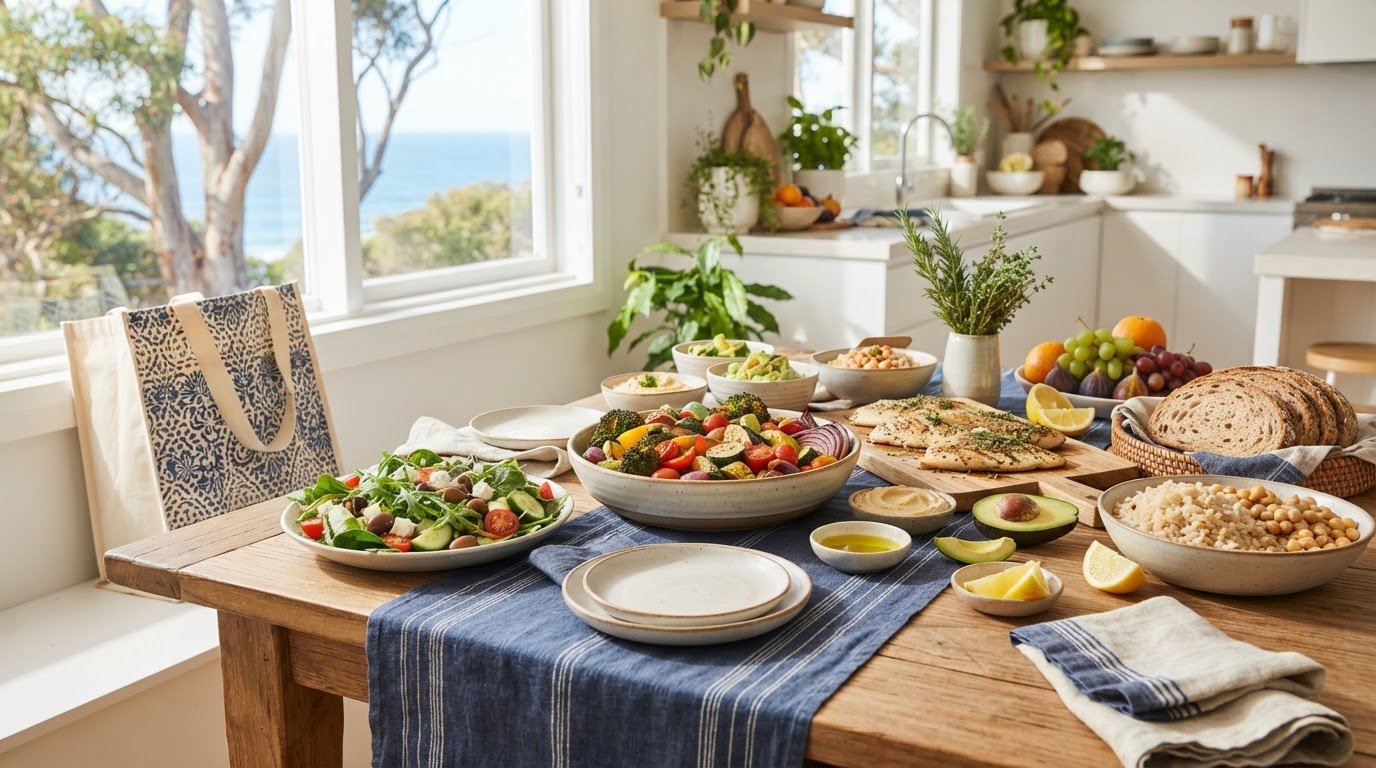
What if the mediterranean diet isn’t a strict menu to follow, but a flexible pattern you can shape around the foods you already enjoy? It’s easy to see why the advice can feel confusing: health and weight-loss claims are everywhere, while unfamiliar ingredients may make the approach seem difficult to sustain.
You don’t need to overhaul every meal or buy specialty foods to explore Mediterranean-style eating. The central idea is to build meals around vegetables, fruit, legumes and whole grains, with healthy fats and other foods included in a balanced way. In Australia, familiar options such as canned fish, frozen vegetables and supermarket-brand grains can make that practical.
This guide explains what the evidence can and can’t tell us about potential health benefits, which foods commonly fit the pattern, and how to build balanced meals with accessible ingredients. You’ll also learn how to adapt the principles to your preferences and health needs, without treating them as rigid rules. The aim is a clear, informed starting point you can make your own.
Key Takeaways
- The mediterranean diet is a flexible eating pattern, not a fixed menu or a promise of weight loss.
- Consider the overall pattern of foods rather than expecting one ingredient or supplement to deliver health benefits.
- Build everyday meals with accessible Australian staples, including vegetables, legumes, whole grains and fish.
- Start with one manageable change that fits your preferences and routine, then build consistency over time.
- If you have a health condition, take medication, have allergies or have had surgery, seek individual advice before making significant dietary changes.
What Is the Mediterranean Diet? Understand the Pattern Before the Food List
The mediterranean diet is a flexible eating pattern inspired by traditional food habits across countries bordering the Mediterranean Sea. It centres on plant foods and balanced meals, rather than a prescribed menu or a list of foods you must eat every day.
That distinction matters. The pattern is sometimes presented as a branded programme with strict rules, but there’s no single official menu that everyone needs to follow. Instead, it offers broad principles for choosing and combining foods. Many meals feature vegetables, grains or legumes, with other foods added according to appetite, preference and circumstance.
Nor is there one uniform cuisine across the region. Food traditions differ between countries and communities, and have changed over time. The Mediterranean Diet on Wikipedia provides an overview of the pattern’s history and components, but the name shouldn’t be mistaken for one exact way of eating. The useful starting point is the overall approach, not copying a particular country’s dishes.
Which foods form the foundation of Mediterranean eating?
Vegetables and fruit, legumes such as lentils and chickpeas, and whole grains such as oats, barley or brown rice are common foundations. Nuts and seeds add variety, while olive oil is often used as a source of unsaturated fat. These are guiding examples, not a checklist that every meal must satisfy.
Fish, eggs, dairy foods and poultry can also be included in varying amounts. Their place depends on individual preferences and food traditions. In Australia, the pattern can take shape with familiar options such as canned legumes, seasonal vegetables and wholegrain bread. Fresh, frozen or canned foods can all be practical choices.
Is the Mediterranean diet a strict meal plan?
No. It doesn’t prescribe exact recipes, fixed meal times or a required sequence of foods. Think of it as a set of adaptable principles: include a range of plant foods, choose minimally processed options where practical, and build meals that feel balanced and satisfying. You can apply those principles to dishes you already enjoy.
Some people may draw inspiration from Greek, Lebanese, Turkish, Italian or other regional cuisines, but no single cuisine represents the whole Mediterranean. You don’t need unfamiliar ingredients to get started, and you don’t need to exclude every food that isn’t traditionally associated with the region.
A sustainable approach should work with your food preferences, budget, access to ingredients, culture and health needs. For one person, that might mean adding legumes to a familiar meal; for another, it may mean choosing wholegrain options more often. The aim is a flexible pattern you can maintain, not perfect adherence to someone else’s menu.
How the Mediterranean Diet Works: Core Principles and What Research Can Show
The mediterranean diet is studied as a combination of food choices, not a prescription to add one celebrated ingredient. Its principles overlap with the 2013 Australian Dietary Guidelines, which recommend a varied pattern including vegetables, fruit, whole grains and lean protein foods. Evidence about a whole pattern can’t show that one food, such as olive oil, causes the same outcome on its own.
What does evidence say about possible health benefits?
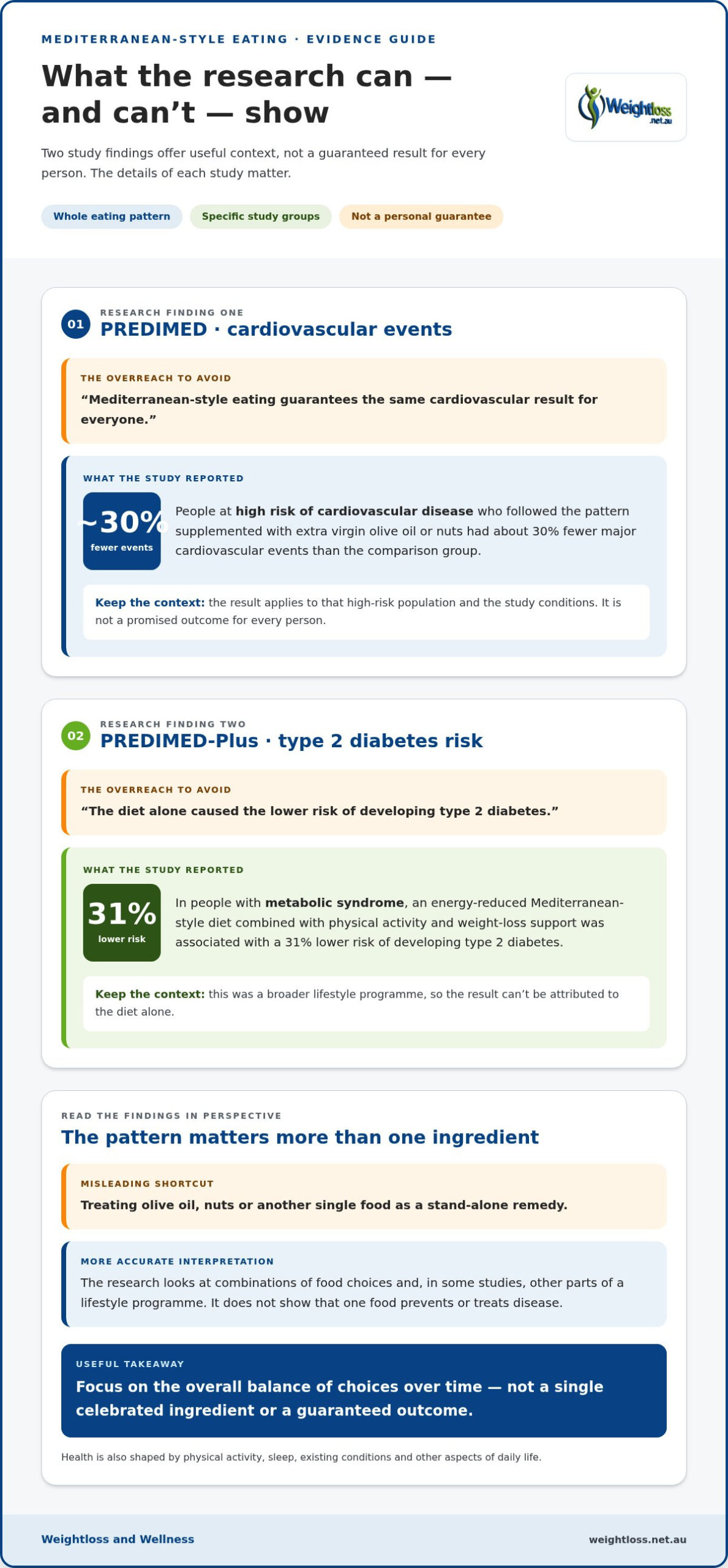
Research suggests that Mediterranean-style eating may support cardiovascular health, but study results need to be understood in context. In the PREDIMED trial, people at high risk of cardiovascular disease who followed the pattern supplemented with extra virgin olive oil or nuts had about 30% fewer major cardiovascular events than the comparison group. That finding applies to the high-risk population and study conditions, not as a guaranteed result for every person.
PREDIMED-Plus studied people with metabolic syndrome. An energy-reduced Mediterranean-style diet combined with physical activity and weight-loss support was associated with a 31% lower risk of developing type 2 diabetes. Since this was a broader lifestyle programme, the result can’t be attributed to the diet alone. The MedlinePlus guide to the Mediterranean diet offers a clear overview of its principles and potential benefits.
Why does the overall eating pattern matter?
Foods work together across meals. Fibre from plant foods, for example, is part of a varied diet that can include legumes, vegetables and whole grains, while unsaturated fats can replace some sources of saturated fat. Neither fibre-rich foods nor olive oil should be treated as a stand-alone remedy. The pattern’s value lies in the combination and balance of choices over time.
Evidence for Mediterranean-style eating relates to the overall dietary pattern and specific study populations; it doesn’t prove that any single food prevents or treats disease. This distinction helps separate promising findings from claims that go beyond the research. It also keeps expectations realistic: health is shaped by more than food, including physical activity supported by home gym equipment for small spaces, sleep, existing conditions and other aspects of daily life.
For a practical next step, focus on one change you can maintain, such as including a plant-based ingredient in a familiar meal. Meal-planning tools or other healthy diet products may help you organise your approach, but they don’t replace individual health advice or guarantee an outcome. Keep the overall pattern in view rather than relying on a single food or claim.
Mediterranean Diet Myths: What It Does Not Require or Guarantee
Conflicting diet claims can make a flexible eating pattern sound like a rigid prescription. The mediterranean diet doesn’t require living near the Mediterranean, copying one country’s cuisine or eating a particular food at every meal. Nor does olive oil, a supplement or any single ingredient define the whole approach. The focus is the wider pattern and how it fits your life.
Myth: One special food or supplement delivers the benefits. Reality: The approach is about the combination of food choices, not a shortcut ingredient. Myth: Following it guarantees weight loss. Reality: Weight change varies, and the pattern isn’t a promise or a substitute for individual medical care.
Do you need to eat Mediterranean foods at every meal?
No. There’s no requirement to eat a traditional Mediterranean dish each day or follow a perfect menu. You can adapt the broad balance to familiar meals: add beans to a vegetable soup, choose wholegrain bread with a meal, or include vegetables alongside a dish your household already enjoys. These are options, not rules, and specialty ingredients aren’t essential.
Regional cuisines and food traditions vary, so there isn’t one definitive set of dishes to copy. The Mayo Clinic’s overview of the Mediterranean diet can help clarify the broad foods commonly included and limited. Use that information as a guide, then make choices that suit your preferences, culture, budget and access to food.
Does the Mediterranean diet guarantee weight loss?
No eating pattern can promise the same weight change for everyone. Weight is influenced by overall food intake, individual circumstances, health and other factors, so neither a particular result nor a timeline can be assumed. Some research examines Mediterranean-style eating alongside energy reduction and lifestyle support, but that doesn’t mean the diet alone guarantees weight loss.
It also shouldn’t replace medical care or a personalised plan. If you have a medical condition, take medication, or have a history of disordered eating, seek individual guidance from a qualified health professional before making substantial changes. Your needs may call for adjustments, and a supportive approach should protect wellbeing rather than add pressure or rigid food rules.
Keep the goal practical: choose changes that feel manageable and can fit your routine, rather than chasing perfection. If organising meals is a hurdle, healthy diet products may support your planning, but they can’t guarantee a health or weight outcome. A flexible pattern should make room for real life, including meals that don’t match an idealised menu.
How to Follow the Mediterranean Diet in Australia: Build Flexible Everyday Meals
Putting the mediterranean diet into practice doesn’t mean starting from scratch. Use a simple meal-building method, then adjust it to suit what you enjoy, what’s available and how much preparation time you have.
- Start with vegetables or fruit. Choose fresh, frozen or canned options, such as leafy greens, tomatoes, carrots, pumpkin or fruit in season.
- Add a filling plant food. Try lentils, chickpeas, beans, oats, brown rice, wholegrain bread or pasta. These are useful anchors for vegetarian meals, too.
- Choose a protein to suit the meal. Options might include eggs, fish, poultry, yoghurt, tofu or legumes. You can combine foods, such as beans with grain, rather than relying on meat.
- Bring it together with flavour. Use olive oil if you like, alongside herbs, spices, lemon, garlic or vinegar. There’s no need for specialist ingredients or a prescribed amount.
What could a Mediterranean-style day of eating look like?
Here’s an example, not a prescription. Breakfast could be oats with fruit and seeds, or wholegrain toast with eggs and tomato. For lunch, try a salad with canned chickpeas, chopped vegetables and wholegrain bread; swap in tuna or leftover chicken if that suits you. Dinner might be a tray of roasted vegetables with brown rice and fish, or with beans or tofu instead. Fruit or yoghurt could be an optional snack. Portions and meal timing should reflect your appetite, routine and individual needs.
How can you make meals practical and budget-aware?
Plan a few adaptable meals rather than a full week of different recipes. For example, roast vegetables for one meal, then add leftovers to a grain bowl or lunch the next day. Cook extra rice or lentils if that works for your household, and use suitable leftovers promptly and safely.
Fresh produce can be a good fit when it’s in season, while frozen vegetables and canned tomatoes or legumes can make cooking simpler. Rinsing canned legumes can help adjust their taste and texture. Compare supermarket options, including store-brand grains and pulses, and choose what works for your budget, storage space and preferences. Costs and access vary, so there’s no single shopping list that suits every household.
Keep the first step small: add a vegetable to a meal you already make, or try one legume-based dish this week. Once it feels familiar, build from there. For practical support as you shop, explore healthy diet products and choose options that suit your meals and routine.
Make Mediterranean Eating Sustainable: Adapt It to Your Health and Routine
A sustainable mediterranean diet should fit your life, not become another source of pressure. Rather than changing every meal at once, choose one manageable adjustment, such as adding a vegetable to dinner or keeping a simple meal option on hand for busy evenings. Once that feels routine, decide whether you’d like to build on it.
How can you keep the approach realistic over time?
Plan for the week you actually have. A few flexible meal ideas can help on busy days, while a back-up option, such as eggs on toast or a quick bean-based meal, can make it easier to avoid an all-or-nothing mindset. Leave room for social meals and household favourites. An occasional meal that differs from your usual choices doesn’t undo the habits you’re building.
Review what’s working and what gets in the way. Is preparation time limited? Are certain ingredients hard to find or not to your taste? Use those answers to adjust your approach, perhaps by simplifying recipes or choosing more convenient alternatives. Repeatable choices matter more than perfect adherence or rapid results. If routines change, your food plan can change with them.
When should you seek tailored nutrition advice?
Individual guidance is especially important if you have a medical condition, are pregnant, have food allergies, take medication that may be affected by dietary changes, or plan to make a significant change to how you eat. A doctor or Accredited Practising Dietitian can help you consider your specific needs and make changes safely. Don’t alter prescribed medication or treatment based on general diet information.
If you’ve had bariatric surgery, follow the nutrition plan from your treating team. Your needs after surgery can differ from general eating guidance, including what foods and supplements are appropriate. A broad dietary pattern shouldn’t replace post-operative instructions. If you’re looking for general information about post-surgery vitamins, use it as background only and discuss any decisions with your treating team.
To get started, choose one small action for the coming week. You might plan a meal you enjoy, make a short shopping list or identify an easy option for a busy night. Then notice what made that choice manageable and build from there. The goal is a pattern that respects your health needs, preferences and circumstances, not a perfect record.
If practical products would help you put your plan into action, explore the healthy diet and wellness items in this marketplace. Treat them as options for supporting everyday choices, not as a substitute for personalised health advice or a promise of a particular result.
Make Your Next Step Work for You
Let your next step be an experiment, not a test of willpower. Choose one small food or planning habit that feels worthwhile, then give yourself time to see how it fits your day-to-day life. Does it make meals easier to organise? Is it enjoyable enough to keep? Your answers can help you shape an approach that feels personal, rather than following someone else’s idea of what the mediterranean diet should look like.
Progress can be quiet: finding a meal you enjoy, feeling more organised at the shops or making a choice that suits your health needs. Keep adjusting as life changes. There’s no need to force a routine that doesn’t work for you, and seeking tailored guidance is a sensible step if your circumstances call for it.
For practical ideas as you plan your next move, explore this Australian-focused health and wellness marketplace, with healthy diet products among its categories. Explore healthy diet and wellness products and choose what genuinely supports your routine. A steady, considered start is enough.
Frequently Asked Questions
Is the Mediterranean diet healthy?
It can be a nutritious way of eating, but whether it suits you depends on the overall pattern and your health needs. Research has linked the mediterranean diet with some health outcomes, but an association doesn’t guarantee an individual benefit. Variety, food quality and consistency matter. If you have a medical condition or specific nutrition needs, an Accredited Practising Dietitian or another qualified health professional can help tailor food choices to you.
Can the Mediterranean diet help with weight loss?
It may support weight management for some people, but it doesn’t guarantee weight loss. Results can vary with overall eating habits, activity, health, preferences and other circumstances. Rather than treating it as a short-term weight-loss programme, consider whether its habits could fit your routine over time. If weight management is medically complex, or you have a condition that affects eating, seek individual guidance from a qualified health professional.
Do you have to eat fish on the Mediterranean diet?
No, fish isn’t essential. If you don’t eat it, meals can still include variety from foods such as lentils, chickpeas, nuts and seeds, alongside other suitable choices. These foods aren’t exact nutritional replacements for fish in every situation, so consider your overall needs rather than relying on one swap. If you have specific nutrition concerns or exclude several food groups, an Accredited Practising Dietitian can help you plan appropriately.
Does the Mediterranean diet require red wine?
No, red wine isn’t required, and you shouldn’t start drinking for a perceived health benefit. Alcohol carries health risks, and its effects can depend on your health history, medicines and personal circumstances. You can follow the broader food pattern without alcohol by focusing on foods such as vegetables, legumes, whole grains and unsaturated fats. For current advice about alcohol in Australia, refer to national health guidance or speak with a qualified health professional.
Can I follow the Mediterranean diet if I am vegetarian?
Yes. A vegetarian version can use legumes, whole grains, vegetables, fruit, nuts and seeds as everyday ingredients, with eggs or dairy if these suit your preferences. For example, add lentils to a tomato-based dish or use chickpeas in a grain salad. Nutritional needs vary, especially if you exclude several food groups. If you’re concerned about deficiencies, have a medical condition or need help balancing your diet, seek advice from a qualified dietitian.
Is the Mediterranean diet suitable after bariatric surgery?
It may need significant changes after surgery, so general meal ideas shouldn’t replace your bariatric team’s instructions. What’s appropriate can depend on your stage of recovery, food tolerance and nutrient needs. Follow the plan from your treating team and get individual advice before changing foods or supplements. A post-operative vitamins guide can offer general background, but it can’t determine which supplements or eating approach is right for your recovery.
Can the Mediterranean diet be gluten-free?
Yes, it can be adapted, but some commonly used grains contain gluten. If you need to avoid gluten, choose suitable alternatives and check the ingredient and allergen information on packaged foods. Gluten-free doesn’t automatically mean more nutritious, so consider the whole food choice. If you have coeliac disease or another diagnosed condition, follow your clinician’s advice and use reliable Australian guidance on food selection and labelling.