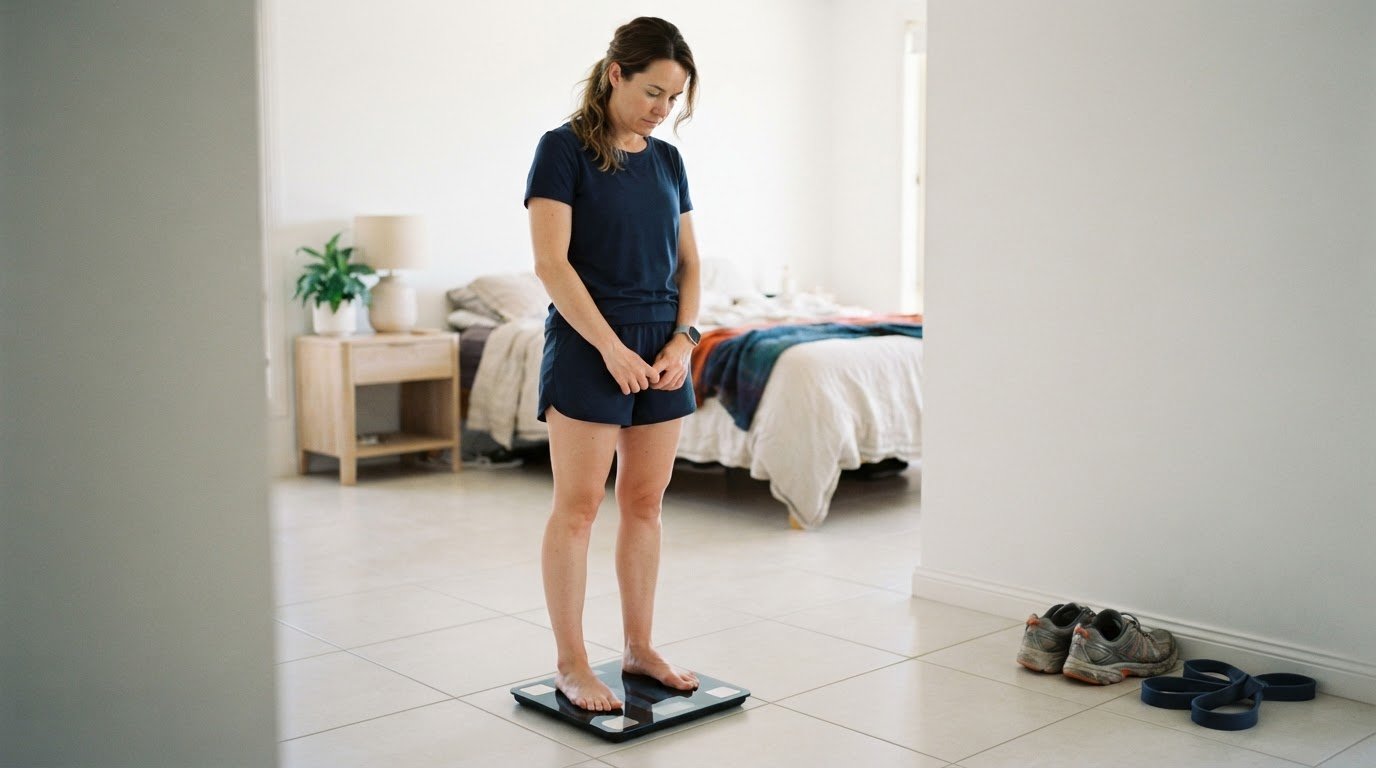
A steady number on the scales can be a reason to pause, not a sign that your efforts have failed. A weight-loss plateau is generally described as weight remaining stable for two to three weeks, so one unchanged weigh-in isn’t enough to identify one. Useful weight loss plateau solutions start with reviewing the trend and your routines, rather than making drastic changes.
If your progress has stalled, it’s understandable to wonder whether your eating or activity needs a reset. Should you cut back further, move more, or give your current approach time? The answer depends on your day-to-day habits and how long your weight has stayed stable.
This guide explains what a plateau is, how to recognise one and why progress can slow. You’ll also find sustainable ways to review your eating, add movement and build activity into your routine, without relying on crash diets or punishing workouts. The aim is a steady, realistic approach that supports your wellbeing as well as your goals.
Key Takeaways
- Look for a stable weight trend over two to three weeks before treating a pause as a plateau.
- Review your eating routines and activity, then focus on sustainable adjustments rather than a crash diet.
- Build movement into everyday life and consider adding resistance exercises to support your routine.
- Explore practical diet, wearable and fitness products that can help you put consistent habits into action.
1. Developing sustainable eating habits
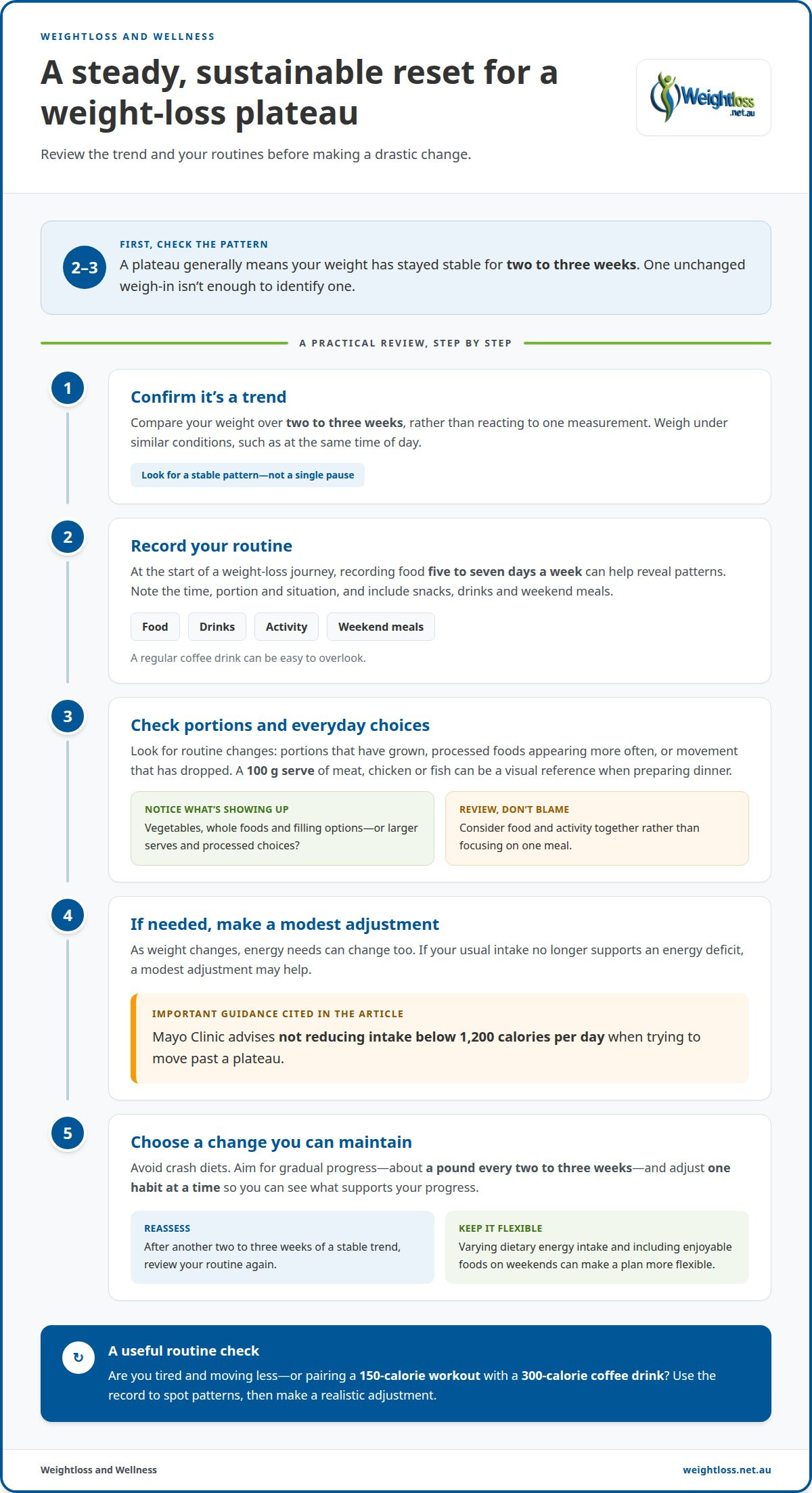
When progress slows, start with a practical review instead of a strict new diet. If your weight has stayed stable for two to three weeks, compare your food and activity records. Note whether portions have grown, processed foods appear more often, or movement has dropped. These are useful weight loss plateau solutions because they help you identify a routine change before making a larger adjustment.
During a plateau, record what you eat, including the time, portion and situation. At the start of a weight-loss journey, recording food five to seven days a week can reveal patterns. Include snacks, drinks and weekend meals. A regular coffee drink, for example, can be easy to overlook.
Use simple visual cues to review portions. A 100g serve of meat, chicken or fish can act as a reference when preparing dinner. Then consider whether vegetables, whole foods and filling options feature regularly, or whether larger serves and processed choices have become routine.
Your energy needs can change as you lose weight, partly because resting metabolism decreases. If your usual intake no longer supports an energy deficit, a modest adjustment may help. Mayo Clinic advises not reducing intake below 1,200 calories per day when trying to move past a plateau. Review food and activity together rather than blaming one meal.
A gradual target is about a pound every two to three weeks. Avoid crash diets and choose lasting changes you can maintain. Varying your dietary energy intake and including enjoyable foods on weekends can make your plan more flexible.
Reflect on your routine if the scales remain unchanged. Are you tired and moving less, or rewarding a 150-calorie workout with a 300-calorie coffee drink? Reassess after two to three weeks of a stable trend, then adjust one habit at a time. Such weight loss plateau solutions make it easier to see which changes support progress.
2. What is a weight-loss plateau?
A plateau means your weight remains stable for two to three weeks, despite continuing your usual plan. It may last a few weeks or a few months, and it doesn’t automatically mean your efforts have stopped working. Weight can fluctuate, so consider the overall pattern alongside your eating, activity, sleep and stress.
Hunger can make consistent eating harder. Try building meals around high-fibre foods, such as vegetables, fruit, legumes and wholegrains, and choose lower-sugar options more often. For example, add beans to a meal or choose plain yoghurt with fruit instead of a sweetened snack. Fibre-rich foods can help meals feel more satisfying, while a planned snack may make grazing easier to manage.
Stress and sleep also affect daily routines. Stress can increase cortisol, while poor-quality sleep has been associated with weight-loss stalls and weight gain. A regular bedtime, such as going to bed at the same time each night, can support a steadier routine. Aim for 7-8 hours of sleep per night, and notice whether tiredness leads to skipped activity or unplanned eating.
Some medicines and health conditions can affect appetite, energy or body weight. If your weight stalls alongside new symptoms, a medication change or concerns about your health, book an appointment with your GP. They can review these factors and discuss whether further assessment is appropriate.
Detoxes don’t provide a reliable shortcut for changing established habits, and supplements may interact with medicines or be unsuitable for some people. Ask your GP or pharmacist before adding a supplement, particularly if you take prescription medicines. In Australia, an accredited practising dietitian can help adapt meals to your preferences and health needs. Tools that make routines easier to monitor, such as health tracking tools, may also help you notice patterns.
3. Resistance training and incidental movement
A frustrating plateau can be a prompt to review how your body moves, not simply to add harder cardio. Mayo Clinic recommends exercises such as weightlifting to build muscle mass and help burn more calories. Muscle-strengthening work also adds a different challenge from repeating the same walk or jog.
Include resistance training alongside cardio, using movements you can perform with good control. Bodyweight exercises such as wall push-ups, sit-to-stands and supported lunges need no specialist equipment. A 15-minute session with bodyweight movements or resistance bands can help build muscle. Start with manageable movements, then adjust the challenge as your strength and confidence develop.
A practical target is at least three resistance-training sessions a week. Plan sessions around your existing routine, leaving time to recover between workouts that use the same muscle groups. If you already exercise or do resistance training, consider adding 1-2 days per week, rather than making every session longer or more intense. An accredited exercise physiologist can tailor an exercise plan to your needs and abilities.
Movement outside formal workouts matters too. Set a reminder to get up and move around every hour or two, depending on your day. A short walk to refill your water bottle, taking the stairs, or standing during a phone call can interrupt long periods of sitting. Choose an option that fits your work and home routine, then repeat it consistently.
Track the activity you actually complete, not the session you intended to do. A wearable can help you notice movement patterns across the day, while a simple workout record can show when strength sessions happen. If your routine has become repetitive, change one element, such as the exercise, resistance or walking route. Gradual variety can keep activity purposeful without turning each workout into a test of willpower.
4. How to identify a weight loss plateau
Look for a pattern, not a single unchanged weigh-in. A plateau is generally described as weight staying stable for at least two to three weeks. Record each measurement and compare the trend across that period. Weighing under similar conditions, such as at the same time of day, makes entries easier to interpret.
Timing varies. A plateau is commonly experienced about six months into a diet and exercise plan, but it can appear as early as four weeks or as late as four months. It may continue for a few weeks or a few months. These timeframes are context, not a deadline for losing weight.
Consider what the scales can’t show. Early weight loss can include water released as the body uses glycogen for energy. Later, changes in body weight may become less obvious even while routines continue. If you’ve added resistance exercise, note that alongside your weight record. The scales alone don’t describe every change in your activity or body composition.
Use a simple review before changing your plan. Compare your recent weight entries, food record and movement routine. Ask whether portions have shifted, daily walking has dropped, or workouts have become less frequent. A calendar can help connect a stable weight trend with a routine change, such as a busier work week or interrupted sleep.
If the trend is stable for two to three weeks, review one habit at a time and continue recording. Avoid reacting to one reading with severe food restriction or extra exercise. If your efforts aren’t working, Mayo Clinic recommends discussing other approaches with a health care provider or registered dietitian. A wearable can help record activity patterns; explore wearable activity trackers as one way to support that review.
Weightloss and Wellness: Products that support medical weight loss
Weightloss and Wellness offers practical products to support the routines you’re building around eating and activity. If you’re looking for useful tools to make those habits easier to follow, explore healthy diet products, wearables and health technology, or apparel and accessories.
Weightloss and Wellness provides informational content to help you think through eating, activity and healthy habits. Use it as reference material, not medical advice or a product endorsement. The opinions on the site do not constitute product endorsements. Before changing your diet or starting a weight-loss program, consult your doctor.
For guidance about a plateau, speak with your GP or an accredited practising dietitian. For product information and help finding options that fit your routine, contact Weightloss and Wellness.
Choose a next step that fits your life
Your next move doesn’t need to be a complete reset. Choose one change that feels realistic alongside work, family and your existing routines. You might plan a more filling breakfast, take a short walk after lunch or set a regular time to review your activity. Keep the change manageable, then notice how it fits before adding another.
It can also help to define progress more broadly than a number on the scales. Consistency with meals, everyday movement and maintaining your routine are useful signs to reflect on as you work towards your goals. Effective weight loss plateau solutions focus on choices you can sustain, not pressure to change everything at once.
If you’d like practical products to support your next step, contact Weightloss and Wellness to explore options suited to your routine. Keep moving forward at a pace that feels workable, and give each steady choice room to become a lasting habit.
Frequently Asked Questions
What is a weight-loss plateau?
A weight-loss plateau is a period when your weight stays stable despite maintaining your usual approach. A single reading can’t establish a trend, so consider several measurements alongside changes in your routine. For example, note whether travel, a different work schedule or a break from regular activity coincided with the pause. This context can help distinguish a temporary fluctuation from a sustained stall.
What causes a weight loss plateau, and how long does it usually last?
As body weight decreases, the body may use less energy at rest, so an eating pattern that previously supported weight loss may no longer create the same energy deficit. Activity changes and routine disruptions can also contribute. A plateau may occur at different points in a weight-loss journey and last from a few weeks to a few months. Look for patterns before making a major adjustment.
How can I tell whether I’ve reached a true weight loss plateau?
Look for a stable trend over two to three weeks, rather than judging progress from one weigh-in. Record measurements under similar conditions and note relevant changes, such as a new exercise routine or disrupted sleep. If the trend stays level, review your food and activity records for shifts. This gives you a clearer basis for adjusting a habit than reacting to one reading.
What changes to exercise can help break a weight loss plateau?
Change the stimulus gradually instead of simply pushing every workout harder. If you usually walk the same route, add a brisk interval or choose a hillier path. You can also include resistance exercises, such as sit-to-stands or band rows, alongside cardio. If you already exercise regularly, adding sessions may be an option. Build changes around your current fitness and recovery.
How do sleep, stress, hydration and menstrual cycles affect weight loss plateaus?
Poor-quality sleep is associated with weight-loss stalls, and stress can increase cortisol. Changes in hydration or menstrual-cycle-related fluid shifts may also affect short-term scale readings. Record sleep, stress and cycle timing beside weigh-ins to see whether fluctuations follow a pattern. A short-lived change on the scales doesn’t necessarily reflect a change in body fat. Discuss persistent concerns or unusual symptoms with your GP.