
What if a useful weight-loss journal helped you notice more than changes on the scales? Wellness journals for weight loss can make everyday patterns easier to see, but tracking can feel like one more task or a reason to judge yourself. You don’t need to record every bite or turn each day into a pass-or-fail test.
A gentler approach is to note a few details that matter to you, such as meals, movement, sleep, energy or mood, alongside small wins that have nothing to do with weight. These notes won’t guarantee weight loss, but they can help you reflect on routines and wellbeing over time. What’s worth tracking depends on your needs and what feels manageable.
This guide covers what to include, how to choose between paper, digital and simple note-taking formats, and how to review entries without getting caught up in daily fluctuations. You’ll also find a practical template and an easy review routine. Start with the smallest version you can sustain, then adjust it as you learn what’s useful.
Key Takeaways
- Wellness journals for weight loss can help you reflect on everyday routines and changes, but they can’t guarantee weight loss or replace professional care.
- Choose a few prompts about wellbeing, meals, movement or personal reflections that feel useful rather than tracking everything.
- Compare paper, digital and notebook formats to find an option that suits your routine, privacy needs and preferred way to review entries.
- Adapt the weekly template to set an intention, jot down optional daily notes and reflect on what you noticed.
- Use a realistic check-in rhythm and focus on helpful patterns, not perfect records or more data for its own sake.
What wellness journals for weight loss can, and cannot, help you notice
Not sure what belongs in a journal, or whether you need to record your weight at all? A wellness journal is a place to note routines, experiences and changes over time. For some people, a scale entry is useful; for others, it can feel stressful or offer too narrow a picture. The aim is to gather observations that help you reflect, not to create a daily scorecard.
Writing things down may help you notice what tends to happen around your routines and how you feel. That’s the idea behind self-monitoring in behavioural change: observing and recording behaviour can support awareness, but this general concept isn’t proof that journalling will cause weight loss. A journal can help you reflect and plan small adjustments; it can’t guarantee an outcome or replace care from a qualified health professional.
Weight is only one possible measure. Notes about energy, mood, sleep, movement and consistency can add context that a number on the scales can’t show. For instance, a week with disrupted sleep might coincide with lower energy or a change in your usual movement routine. Record what you notice without assuming you know why it happened.
What can you track besides body weight?
Choose prompts that fit your goals and circumstances. You might jot down a meal or how satisfied you felt, movement that felt comfortable, sleep quality, mood, hunger, energy or a personal win. You don’t need to track food, weight or every category. A short note such as “Walked at lunchtime; felt more settled afterwards” can be more useful than a long record that’s hard to maintain.
Keep entries descriptive rather than judgemental. For example: “Busy afternoon, ate later than planned, felt hungry and tired; took a short walk after dinner.” This captures context and feelings without labelling food choices as good or bad. If a prompt doesn’t help you understand your routine, leave it out.
When can tracking start to feel unhelpful?
Pay attention to how keeping a journal affects you, not just what it records. Guilt after missing an entry, rising anxiety about numbers, or feeling compelled to write down every detail may be signs that your approach needs to change. Tracking more information isn’t automatically better. The useful amount is what supports reflection without taking over your day.
You can simplify your record, switch to occasional check-ins or pause altogether. If tracking continues to cause distress, or concerns about eating, weight or wellbeing persist, consider discussing them with an appropriately qualified health professional. Your journal should support your wellbeing, not become a test you have to pass.
What to put in a wellness journal: useful prompts for everyday patterns
A journal works best when its prompts help you notice something you care about, rather than asking you to record everything. Wellness journals for weight loss can include different kinds of observations, but there’s no universal checklist. Choose a few prompts that fit your circumstances, try them for a while, then keep, change or drop them based on whether they’re useful.
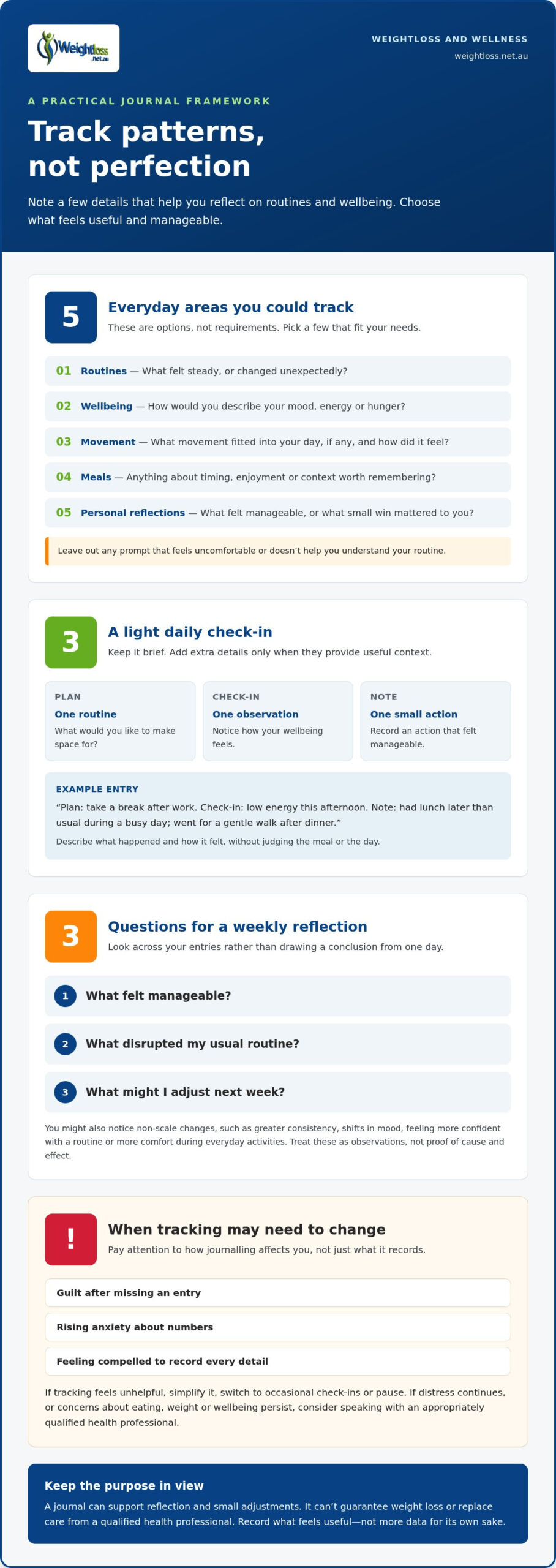
For ideas, group prompts into everyday areas:
- Routines: What part of your day felt steady, or changed unexpectedly?
- Wellbeing: How would you describe your mood, energy or hunger?
- Movement: What movement, if any, fitted into your day, and how did it feel?
- Meals: Is there anything about meal timing, enjoyment or context you’d like to remember?
- Personal reflections: What felt manageable, or what small win mattered to you?
These are options, not requirements. You can leave out food notes if they don’t support your goals or feel uncomfortable. Avoid treating a prompt as a target you must meet.
Daily prompts that take only a few minutes
Keep a daily check-in light: note one routine you plan to make space for, one wellbeing observation and one small action. Add meal, movement or sleep details only if they provide useful context. There’s no need to set a prescribed quantity or target.
Example: “Plan: take a break after work. Check-in: low energy this afternoon. Note: had lunch later than usual during a busy day; went for a gentle walk after dinner.” The entry describes what happened and how it felt without judging the meal or the day.
Weekly reflections that reveal patterns
At the end of the week, look across your entries rather than drawing a conclusion from one day. Ask: What felt manageable? What disrupted my usual routine? What might I adjust next week? You could also note non-scale changes, such as feeling more confident with a routine, greater consistency, shifts in mood or more comfort during everyday activities. Treat these as observations, not proof of cause and effect.
If the same circumstances appear in several entries, consider whether they offer a useful prompt for planning. For instance, you might notice that busy afternoons make a planned break harder to remember. Try choosing a convenient time for that break. Keep the focus on curiosity, not blame.
Keep health information in perspective: general prompts aren’t individual clinical advice, and health claims or recommendations should be based on reputable sources. If you’re managing a health condition or need tailored guidance, discuss your needs with an appropriately qualified health professional. For broader wellbeing ideas that may complement your routine, explore wellness resources and products and choose only what feels relevant to you.
Paper, digital or notebook: choose a journal format you will use
The best format isn’t the one with the most features. It’s the one you can return to without much effort. Wellness journals for weight loss can be kept on paper, in a digital document or spreadsheet, or in an ordinary notebook. Each option has trade-offs, so consider where you’ll write, how you’ll revisit your notes and what feels comfortable to record.
Use this comparison as a starting point, not a ranking:
- Paper journal: Convenient if you like handwriting and a screen-free pause. You can customise the pages, though finding an old entry may mean flicking through them. Reminders are up to you, and privacy depends on where you keep it.
- Digital notes or spreadsheet: Useful if you already use a device to write. Entries can be edited and searched, and a spreadsheet can make it easier to review notes by date or topic. Your device may offer reminders, but consider who can access it and how you want to protect your notes.
- Plain notebook: A flexible, low-fuss choice with no special layout to follow. You can change prompts as your routine shifts, but searching past entries may take longer. It won’t provide digital reminders, and its privacy depends on where it’s stored.
An undated or adaptable approach can help if your schedule changes or you sometimes skip a check-in. You won’t be faced with blank dated pages that feel like missed tasks. Start with a few short entries, then see whether the format makes it easy to record and review what matters to you.
When might a paper journal suit your routine?
Handwriting may appeal if you prefer a tactile, screen-free moment to reflect. A paper journal can be customised with headings, prompts or open pages, but finding a past note can take time. If writing by hand feels slow, keep entries brief. A few words about a routine, how you felt and anything you want to remember can be enough.
When might a digital journal or basic notebook work better?
Digital notes can be edited and searched, while a spreadsheet may help you organise entries by date or prompt. Think about device access and privacy before storing personal reflections. A plain notebook offers flexibility without a specialised layout or extra tracking features. Test either option with a few entries before deciding whether you want a more detailed system.
Try this simple decision rule: choose the format that feels easiest to return to consistently. If you’re unsure, test one for a short period using the same few prompts. Notice whether recording feels straightforward and whether you can find useful observations when you look back. If it’s a hassle, change the format. The journal should fit around your routine, not demand that your routine revolve around it.
A simple weekly wellness journal template you can adapt
A helpful template gives you a starting point, not another set of rules to follow. The example below works in a plain notebook or digital document, and you can copy only the prompts that suit your priorities. For wellness journals for weight loss, the focus can be on routines and wellbeing as well as any progress you choose to note.
A useful journal template is adaptable, brief and centred on what matters to you. Set one gentle intention for the week, use the daily check-in when it’s helpful, then take a few minutes to reflect at the end. You don’t have to fill in every prompt or record something each day.
The daily check-in: a short fill-in template
Use this flexible starting point. It includes a routine, movement or rest, and a wellbeing observation, with an optional note about meals or hunger. Leave any line blank if it doesn’t feel relevant.
- Today’s intention: What would I like to make space for?
- One routine: What happened, or what would support my day?
- Movement or rest: What felt suitable for me today?
- Wellbeing check-in: What did I notice about my mood or energy?
- Optional meal or hunger note: Is there anything about context, timing or appetite I want to remember?
Sample entry: “Intention: take a proper break at lunchtime. Routine: meetings ran over. Movement or rest: took a short walk after work. Wellbeing: felt more settled afterwards. Optional note: lunch was later than usual, and I noticed I was hungry by mid-afternoon.” This records events and feelings without labelling choices as good or bad.
The weekly review: reflect, then choose one adjustment
At week’s end, scan the notes you have and look for something worth learning from. Ask which routine felt easiest to repeat and what made it manageable. Then name one challenge and consider one small adjustment for the coming week. Keep it practical and within your control, such as setting out what you need for a routine or choosing a more convenient time for it.
- A routine that felt manageable: What helped it fit into my week?
- A challenge I noticed: What was happening around it?
- One adjustment to try: What small change could make the routine easier?
- A non-scale observation: Did I notice a shift in confidence, consistency, mood or everyday comfort?
For example, you might notice that a routine felt easier on days when you had more time between commitments. That’s a clue to consider, not a firm conclusion from one entry. Missed notes aren’t failure; pick up again whenever it suits you. The review is there to support reflection, not to grade your week.
If you’re looking for other ways to support your broader wellbeing routine, explore wellness resources and products and consider what feels relevant to your needs.
Keep your wellness journal supportive, sustainable and personal
A journal should fit around your life, not become another standard you have to meet. There’s no single check-in schedule that works for everyone: you might write a few lines each day, review your notes once a week or add an entry only when something feels useful to remember. Choose a rhythm you can return to without pressure.
Journal consistency can support reflection, but it can’t guarantee weight loss. More entries, measurements or prompts don’t automatically mean better progress. A short note that helps you understand a routine may be more valuable than a detailed record that leaves you feeling overwhelmed. Keep what serves your priorities and let the rest go.
How often should you write in your journal?
Choose a rhythm that suits your routine and preferences. If a daily check-in feels natural, you might link it to an existing moment, such as winding down in the evening. If that feels like too much, a weekly reflection or occasional note can still help you look back. Missed days aren’t something to catch up on; simply pick up again when it feels useful.
Give yourself enough time to notice what repeats. One difficult day can’t tell the whole story, so try not to make a sweeping judgement based on a single entry. Look across several notes and ask what circumstances seemed to support or interrupt a routine. If the entries don’t reveal a clear pattern, that’s fine too. Your journal isn’t an exam with a right answer.
What if tracking feels stressful or stops helping?
Notice whether writing leaves you feeling more informed or more self-critical. If a prompt feels burdensome, remove it. You can return to a simpler check-in, such as noting how you felt or what routine you want to remember. If the journal starts increasing distress, guilt or anxiety, pause or try a different form of support. Your wellbeing matters more than keeping a record.
Personal needs can change, so it’s reasonable to adjust your approach over time. If concerns about tracking, eating or weight persist, consider discussing them with an appropriately qualified health professional. A journal can offer observations to reflect on, but it can’t provide individual clinical guidance.
Once your journalling approach feels manageable, you may also want to explore other resources that support broader wellbeing. The Australian wellness products guide offers a separate starting point for exploring wellness options; it isn’t a journal or a substitute for professional advice. Keep your next step personal and practical, whether that means continuing with a few notes, changing your prompts or taking a break.
Choose a next step that feels right for you
Before adding more prompts or setting a bigger goal, ask what would make your next step manageable. Perhaps it’s keeping a notebook within reach, reviewing a note at the end of the week or taking a break from tracking. The point of wellness journals for weight loss isn’t to create another measure of worth; it’s to make room for thoughtful choices that fit your life.
Your journal can sit alongside other forms of support without needing to do everything on its own. Weightloss and Wellness curates health, fitness and wellness products for Australians, including wearables, home fitness and recovery products. Explore those options at your own pace and focus on what feels relevant to your personal wellbeing.
Explore Weightloss and Wellness’s wellness resources and products to find options that may complement your routine. Start small, adjust as life changes and give yourself credit for choosing an approach that feels sustainable.
Frequently Asked Questions
Can a wellness journal help with weight loss?
Yes, a wellness journal can help you notice routines, reflect on what feels manageable and plan small adjustments, but it can’t guarantee weight loss. The value of wellness journals for weight loss depends on whether recording observations suits you. For example, you might notice that a change in your work schedule affects a routine you hoped to keep. Focus on learning from that context rather than judging the day as a success or failure. If tracking causes distress, simplify it, pause or seek guidance from an appropriately qualified health professional.
What should I write in a weight-loss journal each day?
Start with a few optional prompts, such as your intention, one routine you followed, movement or rest, and a note about your energy or mood. You could add a meal or hunger observation if that feels useful. For example, after a late shift, you might note that dinner happened later than usual and how you felt. You don’t need a complete record or someone else’s template; use notes to learn what matters in your circumstances.
Do I need to track calories in a wellness journal?
No, calorie tracking isn’t necessary for a wellness journal. You can use it to reflect on sleep, mood, movement, energy or routines without counting food. If meal notes feel useful, keep them general, such as noting that lunch was interrupted by a busy afternoon. If you’d rather leave food out, that’s a valid choice too. For a health condition or specific dietary needs, discuss suitable tracking with a qualified health professional.
Is a paper or digital wellness journal better?
Neither format is right for everyone. Paper may suit you if you prefer writing away from a screen; digital notes can be easier to edit or search when you want to find an older observation. A basic notebook is another option if you want to change your prompts freely. Consider where you’ll write and how you’ll keep personal notes private. Try a simple format first, then switch if it adds friction.
How often should I use a weight-loss journal?
Choose a schedule that fits your life: a daily note, a weekly check-in or occasional entries are all possible starting points. You might use a regular event, such as planning the week ahead, as a reminder to reflect. If your routine changes during a busy period, you can write less without making up missed entries. Look back across several notes before deciding whether a pattern is meaningful.
What happens if journalling makes me feel anxious about food or weight?
Your wellbeing comes first. If entries leave you anxious, guilty or focused on criticising yourself, remove food or weight prompts, switch to broader reflections or pause journalling. You could note how you’re feeling without recording details that increase pressure. If distress persists, speak with an appropriately qualified health professional for individual support. A journal is optional, and you don’t need to keep using an approach that isn’t helping you.
Can I use a wellness journal after weight-loss surgery?
You can use a journal to record personal reflections or questions, but post-surgery needs and advice vary. Follow the guidance of your bariatric care team, particularly for nutrition, symptoms and supplements, and don’t use a general template to set food or exercise targets. If you’re preparing questions for a follow-up, noting them as they arise may help you remember what you want to discuss. For general background, see the Australian post-op vitamin guide.