
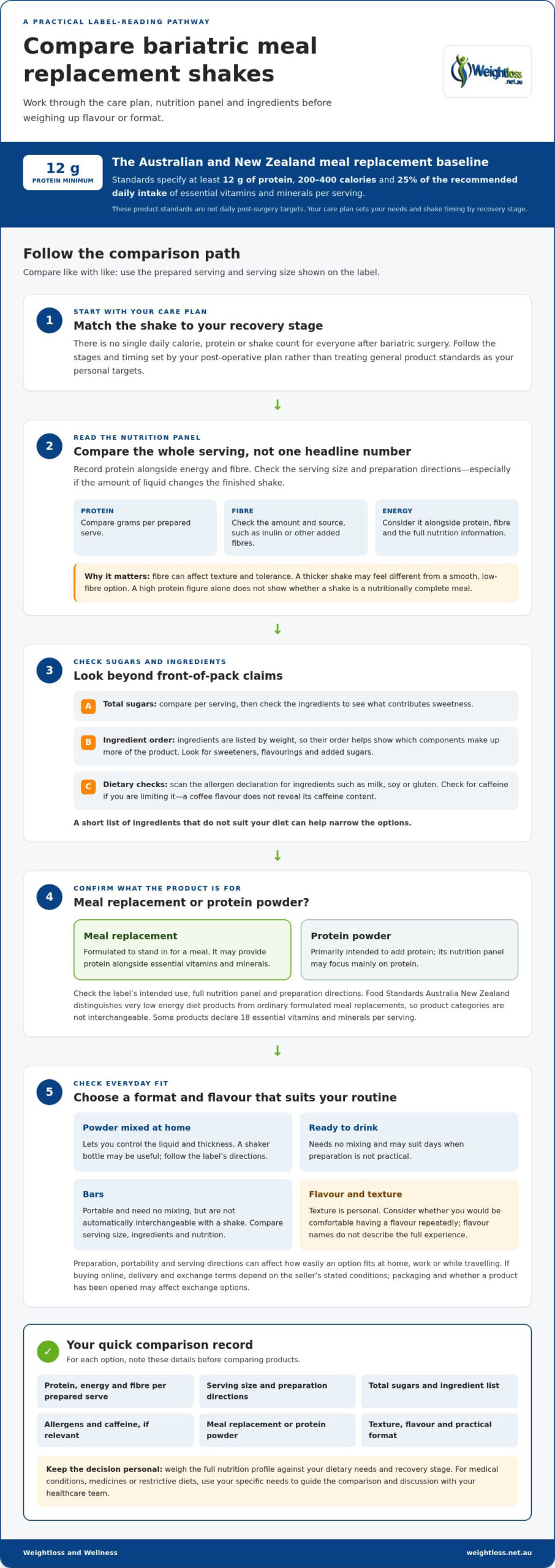
The shake with the most protein isn’t automatically the right choice after bariatric surgery. When comparing bariatric meal replacement shakes in Australia, start with your treatment stage and dietary needs: Australian and New Zealand meal replacement standards specify at least 12 g of protein and 200-400 calories per serving, plus 25 % of the recommended daily intake of essential vitamins and minerals. Your care plan matters too, particularly if you’re recovering from surgery.
When comparing bariatric meal replacement shakes in Australia, it’s understandable to focus on flavour or a familiar brand, but ingredients and nutrition are more useful measures of whether a shake suits your routine. This guide compares protein, fibre, sugars, ingredients and flavours, then outlines what to consider if you have a medical condition, take medicines or follow a restrictive diet. You’ll have a clearer way to compare options and identify questions to discuss with your healthcare team.
Key Takeaways
- Compare protein, energy and essential vitamins and minerals per serve, then look beyond the front-of-pack claims to the ingredient list.
- Check for allergens, caffeine, fibre and added sugars that may affect how a shake fits your preferences and routine.
- Flavour and preparation features can influence whether a shake is practical to use consistently, so weigh them alongside nutrition.
- After bariatric surgery, follow the stages and timing in your care plan rather than choosing a shake based on a general product comparison.
- For medical conditions, medicines or restrictive diets, use your specific dietary needs to guide the comparison and discussion with your healthcare team.
Comparing protein, fibre, sugars and ingredients
After bariatric surgery, there’s no single daily calorie, protein or shake count for everyone; the post-operative plan sets these by recovery stage. Meal replacement products may have nutritional standards, but these should not be treated as daily post-surgery targets.
Comparing Protein and Fibre
Compare protein and fibre per prepared serve, not just per scoop or 100 g of powder. Australian and New Zealand standards set a minimum of 12 g protein per meal replacement serving, giving you a useful baseline when reading labels. Then consider fibre: check the amount and source, such as inulin or other added fibres, if listed.
Fibre can affect texture and tolerance, so a thicker shake may feel different from a smooth, low-fibre option. Compare the fibre and protein figures per serving, and check the serving size, especially if the mixing instructions change the amount of liquid. A high-protein shake may support a protein-focused goal, but protein alone doesn’t show whether it provides a nutritionally complete meal.
Sugar and Ingredient Choices
Compare total sugars per serving, then read the ingredients to see what contributes sweetness. Ingredients are listed by weight, so their order can help you understand which components make up more of the product. Check for sweeteners, flavourings and added sugars, and compare similar serving sizes rather than relying on front-of-pack claims.
Scan the allergen declaration for ingredients such as milk, soy or gluten, and check for caffeine if you’re limiting it. A coffee-flavoured shake, for example, still needs a label check because the flavour doesn’t reveal its caffeine content. Keep a short list of ingredients that don’t suit your diet, then use it to narrow your options.
Shakes Versus Protein Powders
A meal replacement shake is formulated to stand in for a meal, while a protein powder is primarily intended to add protein. Food Standards Australia New Zealand distinguishes very low energy diet products from ordinary formulated meal replacements, so these product categories aren’t interchangeable. Check the label’s intended use and nutrition panel before treating a powder as a meal.
Meal replacements may provide protein alongside essential vitamins and minerals. For example, some products declare 18 essential vitamins and minerals per serving, while a protein powder’s panel may focus mainly on protein. Compare the full nutrition information, not just the protein figure, and follow the product directions for preparation.
Protein Content and Satiety
Protein contributes to fullness, but the highest-protein option isn’t automatically the most suitable. Consider the serving’s energy, fibre, texture and overall nutritional content alongside its protein. These details help you work out whether a shake is intended as a meal replacement or simply adds protein to a meal.
For a practical comparison, record protein per serving alongside fibre and calories. Then consider how the shake fits your planned eating pattern and recovery stage. If you’re choosing a high-protein shake, make sure its other ingredients and nutrients also suit your needs. A large protein figure alone doesn’t describe the whole serving.
Meal replacement shake features and flavours
A shake’s flavour, texture and preparation can determine how easily it fits into everyday eating. Compare these practical details alongside the nutrition information, especially if you expect to use the same option regularly during weight loss.
Start with preparation. A powder mixed at home lets you control the liquid and thickness, while a ready-to-drink format can suit days when mixing isn’t practical. Follow the label’s directions and consider whether you can prepare it at work, while travelling or at home. A shaker bottle may be useful for powder; a ready-to-drink pack needs no mixing.
Texture is personal. A shake that feels too thick may be harder to enjoy, while a thinner blend may feel more like a drink than a meal. Try the recommended preparation before changing the amount of liquid, since additions can alter the finished shake. Coffee-style flavours may suit someone who likes a familiar breakfast taste, while chocolate or salted caramel can feel more like a sweet treat.
Bars offer a different format from shakes. They’re portable and don’t need mixing, which can make them convenient when eating away from home. However, a bar isn’t automatically interchangeable with a shake: compare its serving size, ingredients and nutrition panel. Consider texture, too. A dense bar may suit a planned snack, while a shake may be easier to consume when a drink better fits your routine.
Flavour names can help narrow a shortlist, but they don’t describe the whole experience. Optislim VLCD Classic Chocolate and True Protein Salted Caramel Meal Replacement are examples of named options in the Australian market. Compare each product’s directions, ingredients and nutrition information, then consider whether you’d be comfortable having that flavour repeatedly. “Delicious” is subjective; where available, a sample or smaller pack can make trying an unfamiliar flavour less of a commitment.
Delivery and flavour exchanges are practical considerations when buying online. Dispatch timing, delivery arrangements and exchange terms depend on the seller’s stated conditions. Packaging and whether a product has been opened may affect exchange options. Consider storage space and when you’ll need the product before ordering, especially if you’re planning meals around a particular flavour or format.
Make a simple comparison list: preferred flavours, preparation style, portability and serving directions. Then weigh each option against your eating routine rather than choosing on taste alone. If you’re looking for products that support medical weight loss, use those practical preferences to guide your shortlist, while keeping your care plan central to the decision.
Medical conditions, medicines and restrictive diets
A shake’s ingredients and intended use matter more when surgery, medicines or dietary restrictions affect your choices. First, match the product to your current recovery stage and care plan.
Restrictive Diet Considerations
For allergies or intolerances, read the ingredient list and allergen statement for each formula. A vanilla flavour, for example, doesn’t reveal whether the product contains milk, soy or gluten. Check each time you change brands, because ingredients can differ between formulas and flavours.
If you follow a vegetarian, vegan, lactose-free or other restrictive diet, assess the complete ingredient list rather than relying on front-label claims. Consider whether the shake fits your eating plan and provides the nutrition specified by your care team. A product that excludes one unsuitable ingredient may still contain another that conflicts with your restrictions.
Australian health insurance coverage is policy-specific, and prescription status depends on the particular product. Don’t assume every shake is covered or requires a prescription.
Guidance After Sleeve or Bypass
After weight loss surgery, patients are advised to follow a liquid diet immediately after surgery to support healing before returning to solid foods. This makes the product’s texture and suitability for your current stage important. Don’t assume a standard meal replacement is suitable for the immediate post-operative period.
Follow the staged eating plan provided for gastric sleeve or bypass recovery. The plan guides when liquids, puréed foods and solids fit, and which products are appropriate at each stage. Food Standards Australia New Zealand distinguishes very low energy diet products from ordinary formulated meal replacements; they serve different purposes.
Australian bariatric guidance after sleeve or bypass centres on post-operative diet stages, including liquids immediately after surgery. Use the shake type and timing specified in your care plan rather than applying a general product comparison to your recovery.
Risks and Side Effects
A shake may be unsuitable if an ingredient conflicts with an allergy, intolerance or medical dietary requirement. For example, a formula containing milk proteins won’t suit someone who must avoid milk. Check ingredients and allergen declarations before use, and keep the product packaging available for reference.
Replacing meals outside your prescribed plan can also leave your intake mismatched to your recovery needs. A shake’s nutritional profile doesn’t automatically make it suitable for every stage after surgery. Follow your plan’s instructions for the product, amount and timing.
If you take medicines, include the product’s ingredients and directions in your medication review with your healthcare team. This is especially relevant when a shake contains caffeine or your plan sets specific timing for food and medicines. Record the product name and preparation method so the discussion is precise.
Buying additional shakes
Before ordering another supply, compare the label with your current eating plan. A familiar flavour can make a repeat purchase tempting, but your recovery stage, ingredient needs and planned use should guide the choice. Treat weight-loss shakes as products with specific serving directions, not interchangeable pantry staples.
Start with the serving format. A 900 g pouch of True Protein Meal Replacement contains 15 serves, while pack sizes and serving counts differ across products. Work out how many serves the pack provides, then compare that with the number of shakes in your plan. This gives you a practical way to judge whether one pack fits your routine without guessing from its weight alone.
Next, check whether the formula still suits you. Re-read the ingredients and nutrition panel before buying, even if you’ve used the same product before. Switching from chocolate to vanilla, for example, can mean a different ingredient list. Look for allergens, sweeteners or artificial ingredients relevant to your diet, and compare the serving directions with your current plan.
Flavour matters when choosing a product to buy again. If a large pouch commits you to one taste, consider whether you’ve enjoyed that flavour at different times of day. A coffee-style shake might suit a morning routine, while a sweeter flavour could become less appealing after repeated servings. Base your decision on your own experience, rather than a “delicious” description.
Check the pack’s storage and preparation instructions before choosing a size. Powder that needs mixing suits a different routine from a ready-to-drink format. For example, someone preparing a shake at home can plan around the mixing steps, while a workday routine might depend on carrying a prepared drink. Keep the package available so the directions are easy to refer to.
For a repeat order, use this simple checklist:
- Confirm the serving count and serving size on the package.
- Match the flavour and format to your actual routine.
- Recheck ingredients against allergies and dietary restrictions.
- Compare the product’s role with your clinical eating plan.
- Review storage and preparation directions before opening the pack.
A clinical plan takes priority over buying in bulk or choosing a familiar product. If your plan changes after surgery, reassess the shake’s intended use before ordering more. This can help prevent a cupboard full of shakes that no longer match your recovery stage, taste preferences or dietary requirements. A product that fits your present routine is more useful than an oversized supply chosen out of habit.
Choosing bariatric meal replacement shakes
Australian options include formulated meal replacements and very low energy diet products, with examples such as True Protein Meal Replacement and Optislim VLCD Classic Chocolate. The bariatric meal replacement shakes Australia offers differ in category and purpose, so check whether each option fits your current meal plan. After surgery, patients follow a liquid diet immediately after surgery to support healing before returning to solid foods; the timing and type of shake should fit their staged care plan.
Use a product comparison to narrow your options, not replace clinical guidance. Food Standards Australia New Zealand distinguishes very low energy diet products from ordinary formulated meal replacements.
Available Shake Options
Australian choices include powders and products designed as meal replacements, as well as very low energy diet formulas. True Protein Meal Replacement and Optislim VLCD Classic Chocolate are examples, but their product categories and ingredient profiles differ. Read the label for intended use, serving directions and nutrition rather than assuming every shake serves the same purpose.
For comparison, Australian and New Zealand meal replacement standards specify 200-400 calories per serving, at least 12 g of protein and 25% of the recommended daily intake of essential vitamins and minerals. These standards help assess a formulated meal replacement; they aren’t a personal daily target or a post-surgery prescription.
Before choosing, match the category to your meal plan. A very low energy diet product has a different purpose from an ordinary formulated meal replacement. If your goal is to lose weight before surgery, most bariatric surgeons and dietitians recommend a very-low-calorie diet for 2-3 weeks before weight loss surgery. Discuss that diet with a health professional instead of starting one from an online ranking.
When to Start Shakes
Immediately after surgery, patients are advised to follow a liquid diet to support healing before returning to solid foods. This doesn’t mean any retail shake is suitable straight away. Your post-operative plan determines which liquids fit each stage and when other textures can be introduced.
Use your meal plan’s instructions to decide whether a particular shake is suitable, how it should be prepared and when it fits. This matters after both gastric sleeve and bypass procedures, because recovery involves staged changes in food texture. A product’s general label can’t replace instructions for your individual stage.
Compare bariatric meal replacement shakes Australia has available by product category, serving information, ingredients and flavour, then match your shortlist to your plan. For help finding bariatric support products, browse options that fit your comparison criteria, while keeping your clinical plan central to the decision.
Weightloss and Wellness: Affiliate Products from Amazon, Walmart and others
Weightloss and Wellness brings together affiliate products from Amazon, Walmart and other retailers, alongside healthy diet products for readers comparing options after bariatric surgery. Once you’ve identified the nutritional and ingredient criteria that fit your plan, browse the marketplace’s relevant product categories while keeping those priorities in view.
You can also browse wearables and health tech items, as well as apparel and accessories, as part of a broader approach to daily wellbeing. Let your care plan guide health-related product choices, and compare product information with your needs before deciding what suits your routine.
Ready to explore? Visit Weightloss and Wellness and browse the available categories.
Make your next choice part of a steady plan
A considered approach to bariatric meal replacement shakes in Australia starts with one useful question: does this option support the routine you’re building now? Keep your care plan at the centre, and use your day-to-day experience to notice what feels practical, enjoyable and manageable. A shake is one possible part of a broader approach, not a measure of your progress or commitment.
As your needs change, revisit what supports your routine instead of relying on old habits. Weightloss and Wellness features affiliate products from Amazon, Walmart and other retailers, healthy diet products, and wearables and health tech items. These categories can help you explore options aligned with your wider wellbeing goals.
Take the next step at a pace that feels right for you. Explore Weightloss and Wellness and find practical options for your ongoing health and wellness journey.
Frequently Asked Questions
Which shake to take?
Choose a shake that suits your current recovery stage and the role assigned to it in your meal plan. Start by comparing the product’s intended use and serving directions, then consider ingredients you need to avoid and flavours you’ll enjoy. A high-protein label alone doesn’t make a shake suitable for every situation. If your plan specifies a particular type or texture, use that as your first filter.
Which Australian bariatric shakes meet recommended protein and vitamin requirements?
Australian and New Zealand meal replacement standards specify at least 12 g of protein and 25% of the recommended daily intake of essential vitamins and minerals per serving. True Protein Meal Replacement contains 18 essential vitamins and minerals, but that figure alone doesn’t establish its protein per serve. Compare both values on the nutrition panel before deciding whether a product meets your criteria.
How do popular bariatric meal replacement shakes compare by ingredients and nutrition?
Compare the full ingredient and nutrition panels, not just flavour or protein claims. Optislim VLCD Classic Chocolate includes gluten, milk and soy, and declares caffeine. A 60 g serve of True Protein Salted Caramel Meal Replacement provides 526 mg of sodium. These examples show why serving size, allergens and nutrients can distinguish products. Check the exact flavour and preparation directions you intend to use.
How can you choose a bariatric shake if you have lactose intolerance, allergies, or diabetes?
Check the allergen statement and ingredient list for each flavour, and look specifically for milk ingredients if you have lactose intolerance or a milk allergy. For diabetes, compare total carbohydrate and sugars per prepared serving, including any ingredients added during preparation. Keep the product label available when discussing suitability with your healthcare team, particularly if your eating plan or medicines affect how you manage meals.
How much do bariatric meal replacement shakes cost in Australia, and where can you buy them?
Shakes are available to buy online, but delivery arrangements and exchange terms depend on the seller.